The Allegiance Test
What happened
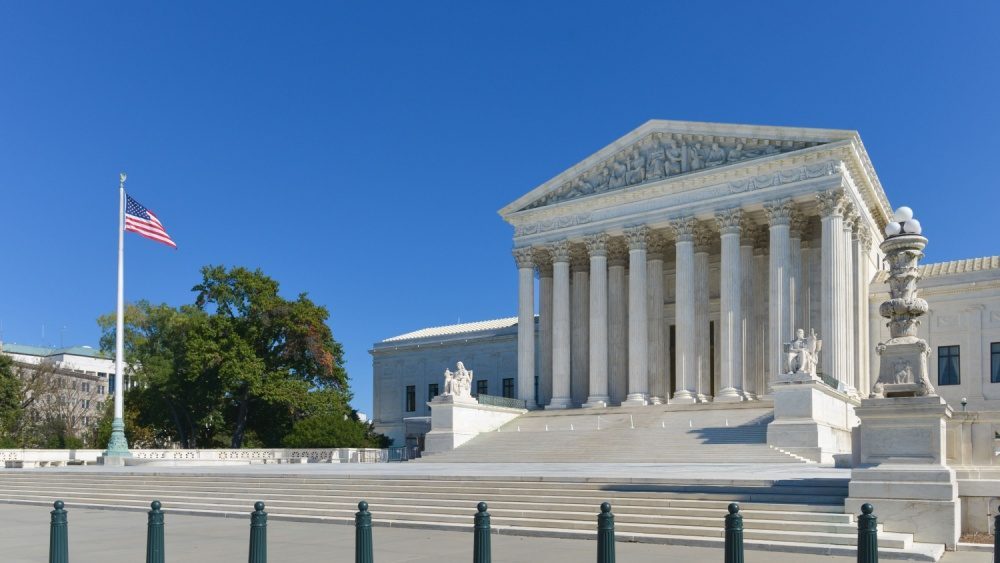
The Supreme Court heard oral arguments on Trump's 2025 executive order seeking to restrict birthright citizenship to children of US citizens or lawful permanent residents, a direct challenge to the standard interpretation of the 14th Amendment. Trump attended roughly 90 minutes of the proceedings, the first sitting president to observe Supreme Court arguments in person, and left before ACLU counsel finished. Chief Justice Roberts dismissed the administration's case with 'It's the same Constitution.' Conservative Trump appointees Amy Coney Barrett and Neil Gorsuch both pressed the Solicitor General hard on the historical foundations of the argument, with Gorsuch questioning whether the cited sources actually support the government's position. A ruling is expected by late June or early July. Polymarket currently prices the executive order being struck down at 91.5%.
Trump lost this case in oral arguments. When three of your own nominees spend 90 minutes telling the government's lawyer his sources do not support his position, the court is not signaling uncertainty. The 91.5% Polymarket probability of the EO being struck down reflects that clearly.
Prediction Markets
Prices as of 2026-04-28 — the analysis was written against these odds
The Hidden Bet
Striking down the EO settles the birthright citizenship question for Trump's term
A SCOTUS loss narrows but does not eliminate executive routes. The administration could pursue a constitutional amendment push, use the ruling as a midterm election issue to drive base turnout, or attempt statutory redefinition through Congress, none of which require the EO.
The 'allegiance' theory is a fringe legal position with no serious support
While the Solicitor General argued it poorly under questioning, a minority of legal scholars has argued the 'subject to the jurisdiction' clause in the 14th Amendment was not meant to confer citizenship on children of all foreign nationals. The argument lost badly today, but its intellectual lineage is longer than its courtroom performance suggests.
Trump's physical presence at oral arguments was a display of confidence
Trump left before opposing counsel finished, which is the opposite of confidence. The presence may have been a media event designed to generate footage of the president at the Supreme Court, regardless of outcome, to show the base that he fought.
The Real Disagreement
The actual fork is not whether this EO is constitutional. It is almost certainly not. The deeper question is what the administration's end goal actually is: a policy outcome or a political signal. If the goal is policy, this is a catastrophic waste of political capital on a losing legal theory. If the goal is signal, then losing at the Supreme Court generates exactly the base-mobilizing outrage the administration needs heading into midterms, with a 6-3 court that is perceived as conservative being the foil. The lean here is toward the signaling interpretation, because the legal team clearly knew the oral argument was weak and pressed forward anyway.
What No One Is Saying
Trump's physical presence in the gallery while his Solicitor General was visibly losing the argument served one audience: the conservative base watching coverage of a president who 'fights.' A courtroom loss, publicly witnessed by the president himself, can be reframed as institutional betrayal rather than legal failure. The court becomes the obstacle, not the arbiter.
Who Pays
Children born in the US under the EO's excluded categories
Uncertainty resolved by late June ruling; retroactive status questions could persist longer
If the EO had been enforced, children born to undocumented or visa-holding parents would have been stateless or held in citizenship limbo, unable to access federal benefits, passport travel, or eventually voting rights. An unknown number are already in administrative uncertainty pending the ruling.
Federal agencies
Avoided cost if the EO is struck down as expected
Any enforcement of the EO would have required building entirely new birth-certificate verification systems, hiring additional personnel, and creating a parallel citizenship documentation regime. The court ruling avoids this administrative burden.
Scenarios
EO struck down 6-3 or 7-2
The Court rules the executive order unconstitutional, affirming the long-standing interpretation of the 14th Amendment. Trump frames the decision as judicial overreach, launches a legislative push for a constitutional amendment, and uses the loss as a midterm mobilization tool.
Signal Trump tweets within hours of the ruling calling for a constitutional amendment and asking donors to fund the effort.
Narrow ruling limits but doesn't eliminate
The Court rules against the EO on procedural or narrow grounds without resolving the underlying constitutional question, creating ambiguity that the administration exploits through new regulatory action.
Signal The opinion contains a footnote or concurrence that gestures toward the 'allegiance' theory without endorsing it.
Legislative push gains traction
Post-ruling, Senate Republicans bring a constitutional amendment proposal to a floor vote, not expecting to pass it but forcing Democratic senators in competitive states to vote against it ahead of midterms.
Signal McConnell or Graham announces a Senate floor vote on a birthright citizenship amendment within 30 days of the SCOTUS ruling.
What Would Change This
If the Court produced a surprise ruling upholding the EO, or issued a sufficiently ambiguous opinion that the administration could exploit through new regulatory guidance, the bottom line analysis would shift entirely. At 91.5% odds of a strike-down, the surprise outcome is priced at near-zero.
Related
SCOTUS Will Strike Down Trump's Birthright Citizenship Order. The Real Question Is What It Lets Happen First.
powerBirthright Citizenship: SCOTUS Will Almost Certainly Rule Against Trump, But the Ruling Will Do More Than That
powerThe Supreme Court Looks Poised to Rule Against Trump. His Own Party Is Already Moving Past It.
ethicsSCOTUS vs. the 14th Amendment