The Federal Government Just Declared War on State AI Regulation, and Colorado Folded Before the Battle Started
What happened
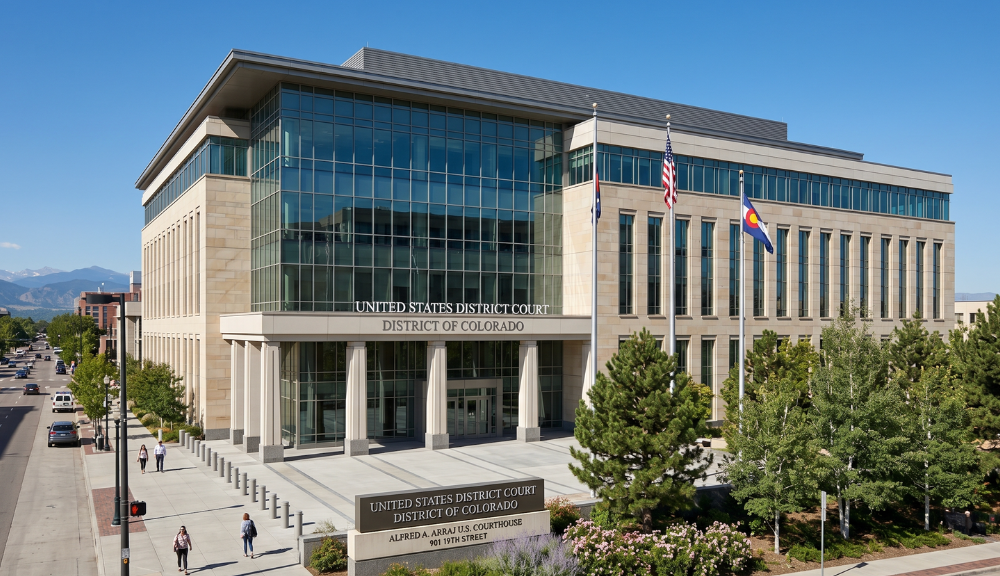
On Friday, April 25, the US Department of Justice moved to intervene in xAI's federal lawsuit challenging Colorado's AI consumer protection law, Senate Bill 24-205, which was set to take effect June 30. The law requires developers of high-risk AI systems to disclose operations, take reasonable care to prevent algorithmic discrimination, and notify consumers when AI affects decisions on employment, housing, healthcare, and financial services. The DOJ's intervention, filed by Acting AG Todd Blanche, argues the law's diversity carve-out violates the Fourteenth Amendment's equal protection clause: it exempts from 'algorithmic discrimination' any AI system used to increase diversity or redress historical discrimination, while requiring mitigation of unintended discrimination. Colorado's AG Philip Weiser agreed the same afternoon to voluntarily halt enforcement. Chief Judge Domenico granted both the intervention and the enforcement freeze within hours. Colorado's legislature has 16 days remaining in its session to pass a replacement bill that has not yet been formally introduced.
Colorado blinked before the court even ruled: the AG's voluntary enforcement freeze signals the administration's intervention changed the political calculation faster than any legal argument could, and the AI Litigation Task Force is now established as a credible deterrent against other states.
The Hidden Bet
The DOJ intervention is primarily a legal argument about constitutional text
Harmeet Dhillon's public statement framed the intervention as opposing 'woke DEI ideology.' The Fourteenth Amendment equal-protection argument is legally real, but it is also a vehicle for a political message aimed at other states considering similar laws. The DOJ is not just litigating Colorado. It is broadcasting to California, Illinois, and the 1,000-plus state AI bills introduced in 2025 what happens to states that include diversity provisions in AI regulation.
Colorado's AG agreed to halt enforcement because the legal argument is strong
Weiser agreed to halt enforcement voluntarily, not because a court ordered him to. That decision was political: facing simultaneous DOJ intervention and a 16-day legislative window, Weiser chose to freeze enforcement rather than fight and possibly win a preliminary injunction fight, lose the legislative push, and end up with a voided law anyway. The legal merits of the DOJ's argument are genuinely contested. The political calculus was simple.
The Florida AI Bill of Rights and other state efforts will proceed independently of this precedent
The Rocky Mountain Voice reporting explicitly notes this is the first action by the White House AI Litigation Task Force. The task force was created with a mandate to challenge state AI laws inconsistent with federal policy. Florida's special session starts April 28. Any state bill that includes diversity-related provisions or mandatory disclosure requirements is now on notice that the DOJ will enter the litigation, fast.
The Real Disagreement
The genuine fork is whether AI regulation is fundamentally a federal question or whether states can fill the vacuum created by Congress's failure to pass a federal AI framework. Both sides have a real argument. Federal preemption provides consistency for companies operating nationally; state experimentation surfaces real harms before they become national. Colorado's law was designed precisely to catch the kind of algorithmic discrimination in housing and employment that federal civil rights law was never written to address. The DOJ's counterargument is that requiring companies to audit for unintended discrimination while permitting intentional pro-diversity discrimination is itself unequal. I'd lean toward the state having the stronger long-run position, because the federal vacuum is structural: there is no federal AI law and the current administration has no interest in passing one. But the litigation task force has a veto over any state law that touches diversity, and that veto is effectively absolute as long as Trump is in office.
What No One Is Saying
Colorado's AG voluntarily froze enforcement of his own state's law before the legislature could act. That is not a legal concession. It is a governor-level signal that Colorado's Democratic leadership calculated that fighting the federal government on AI regulation in this political environment is not worth the cost of losing the broader relationship with Washington on other priorities. The law's advocates were not consulted.
Who Pays
Job seekers and tenants affected by algorithmic discrimination in Colorado
Immediately; the June 30 effective date will pass with no enforcement mechanism in place
The law that would have required companies to audit and disclose AI systems affecting their housing and employment decisions is frozen; harms that would have been documented will instead be invisible
State legislatures with AI bills in progress
Immediate chilling effect; particularly acute for Florida's session starting April 28
The DOJ's speed in joining the xAI suit signals every state AI bill that touches diversity or compelled disclosure is a litigation target; state legislators face the choice between a bill the DOJ will challenge and no bill at all
EU companies operating in the US
Structural problem that compounds from August 2026 onward
EU AI Act high-risk provisions become enforceable August 2, 2026; EU law and US DOJ policy are now in direct opposition for the same companies; the compliance burden of operating in both jurisdictions without a US federal framework is entirely on companies
Scenarios
Colorado Legislature Passes a Stripped Bill
Colorado removes the diversity carve-out and the strongest compelled-speech elements in the next 16 days. A weaker law passes. The DOJ drops its intervention because the constitutional hook is gone. The law takes effect June 30 but does substantially less than the original.
Signal Colorado introduces a replacement bill in the next 72 hours that omits the diversity carve-out.
Task Force Veto Holds Nationally
Colorado fails to pass a replacement. The litigation proceeds, the law is enjoined pending appeal, and the AI Litigation Task Force uses the victory to send warning letters to Florida, Illinois, and California. State AI regulation stalls nationally until 2028.
Signal Colorado's legislature adjourns May 13 without passing a replacement bill.
First Amendment Challenge Fails
A different court in a different state finds that mandatory AI disclosure requirements do not constitute compelled speech, splitting circuit precedent. The DOJ's task force faces a circuit split that eventually reaches the Supreme Court. State regulation continues in circuits where the task force loses.
Signal A California or Illinois court denies a preliminary injunction in a parallel AI regulation case.
What Would Change This
If Congress passes even a minimal federal AI transparency framework before the August EU enforcement deadline, the entire state-federal dynamic shifts: federal preemption becomes a floor rather than a ceiling, and states can supplement but not undercut federal standards. That scenario requires a Congress that cannot currently agree on DHS funding.