Two Parties, Two Theories of What AI Is
What happened
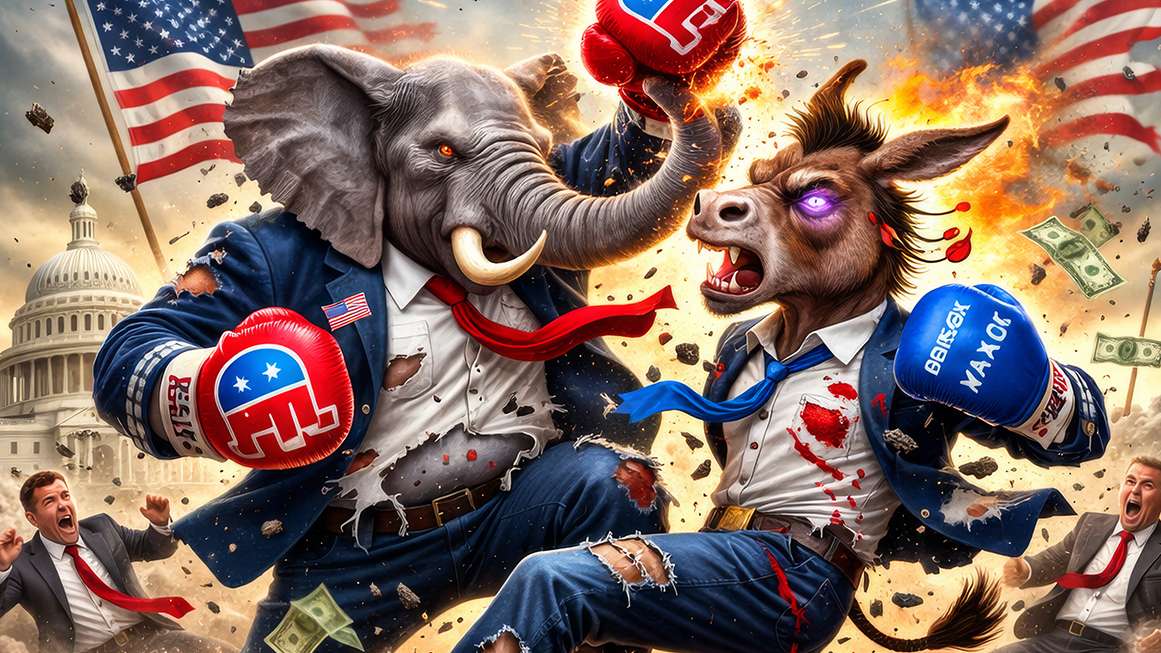
As of April 11, Congress has no comprehensive federal AI law. Both parties have introduced competing bills, but the approaches are structurally incompatible: Republican-written legislation focuses on regulating the development and deployment of large language models themselves, while Democratic bills focus on policing individual harms like deepfakes and AI-generated disinformation. The Trump administration is simultaneously pushing federal preemption to override state AI laws. xAI filed a First Amendment lawsuit against Colorado's AI safety law, challenging whether government can constrain how AI systems are designed if those systems produce speech. The case could eliminate state-level AI regulations across the country.
The AI regulation debate is not stalled because Congress can't agree on rules. It's stalled because the two parties have fundamentally different theories of what AI is: Republicans think it's a technology to govern; Democrats think it's a behavior amplifier to constrain. Until that prior disagreement is resolved, no bill can satisfy both.
The Hidden Bet
Federal preemption would simplify the regulatory environment for AI companies.
Federal preemption without substantive federal standards means the most permissive interpretation wins by default. If the Trump administration succeeds in voiding state laws without passing federal replacements, AI companies operate in a de facto unregulated environment, which is precisely the outcome some of those companies are financing lobbying to achieve.
The xAI v. Colorado case is primarily about Colorado.
If xAI prevails on First Amendment grounds, every state AI safety law that constrains model outputs or design choices faces a constitutional challenge. California's suite of AI laws, Texas's deepfake statutes, and New York's hiring algorithm laws are all potentially in scope. The case is a structural nationwide challenge dressed as a local dispute.
The partisan divide means nothing passes.
The areas of genuine agreement, export controls on AI chips and national security applications, have moved through committee with bipartisan support. A narrow bill covering only those areas could pass before broader AI governance gets resolved, creating a two-tier regulatory environment: strict controls on military/national security AI and nothing else.
The Real Disagreement
The core tension is whether AI outputs are more like a product or like speech. If AI is a product, government can mandate design standards, safety testing, and liability the same way it regulates cars or pharmaceuticals. If AI outputs are speech, the First Amendment severely limits what government can do, and the entire Democratic approach to content harm regulation becomes unconstitutional. You cannot have both. xAI's lawsuit is forcing this to a judicial answer before Congress can paper over the disagreement with ambiguous legislation. The side I'd lean toward: courts will carve out a middle position where AI infrastructure is regulated as a product but AI outputs receive partial First Amendment protection, leaving both parties partially satisfied and fully unable to build a comprehensive system on either framework.
What No One Is Saying
The companies most aggressively lobbying for federal preemption of state laws are the same companies that would benefit most from replacing California's and Colorado's restrictive standards with a weaker federal baseline. When an industry funds campaigns for federal oversight to replace state oversight, it is usually because the federal version will be more lenient, not stricter.
Who Pays
Workers displaced by AI automation in states with strong labor AI laws
Medium-term; within 12-18 months if preemption moves forward
If federal preemption voids state laws requiring disclosure or human review of AI-driven employment decisions, workers in affected states lose the procedural protections those laws provided, without any federal replacement.
Independent AI safety researchers and state attorneys general
Contingent on xAI case outcome; 1-3 year timeline
The xAI case, if successful, removes the primary enforcement mechanism state AGs have used to bring actions against AI companies for discriminatory or harmful outputs. Federal enforcement under the current administration is not a substitute.
AI startups building on state-law compliance assumptions
Slow-burn; depends on legislative and judicial timelines
Startups that raised money on the premise of building California or Colorado compliant AI products face a sudden market shift if preemption passes. Their compliance infrastructure has no federal analog to sell.
Scenarios
xAI wins, state laws collapse
A federal circuit court rules that AI model design choices constitute protected expressive activity. State AI safety laws in California, Colorado, and elsewhere face injunctions. Congress is forced to act but cannot agree on a replacement.
Signal Preliminary injunction granted against Colorado's law within six months of the xAI filing.
Narrow federal bill passes, everything else stalls
Congress passes a limited bill covering AI in national security and chip export controls. No comprehensive content or deployment rules are enacted. The state regulatory patchwork remains and accelerates.
Signal Senate AI subcommittee markup of a bill scoped to defense applications only, with bipartisan support.
Stalemate continues, EU law becomes de facto US standard
No federal law passes in 2026. US companies operating in Europe comply with the EU AI Act. That compliance architecture becomes the highest-common-denominator internal standard, which large companies voluntarily adopt for US operations too.
Signal Major US AI companies publishing voluntary compliance frameworks based on EU AI Act risk tiers.
What Would Change This
If the xAI lawsuit is dismissed on procedural grounds before reaching the First Amendment question, the timeline for a judicial resolution extends by years, and Congress gets more time to find a legislative compromise. That would make the bottom line wrong by removing the forcing function.
Related
The Federal Government Just Declared War on State AI Regulation, and Colorado Folded Before the Battle Started
powerZero Federal AI Laws, 1,561 State Bills, and a White House Framework Nobody Has to Follow
powerThe Federal Government Just Told States They Cannot Regulate AI Bias
powerTrump Wants a Single AI Law for All 50 States. He's Lost the Senate 99 to 1.