Congress Moves to Ban China From the Factory Floor, Not Just the Chip Aisle
What happened
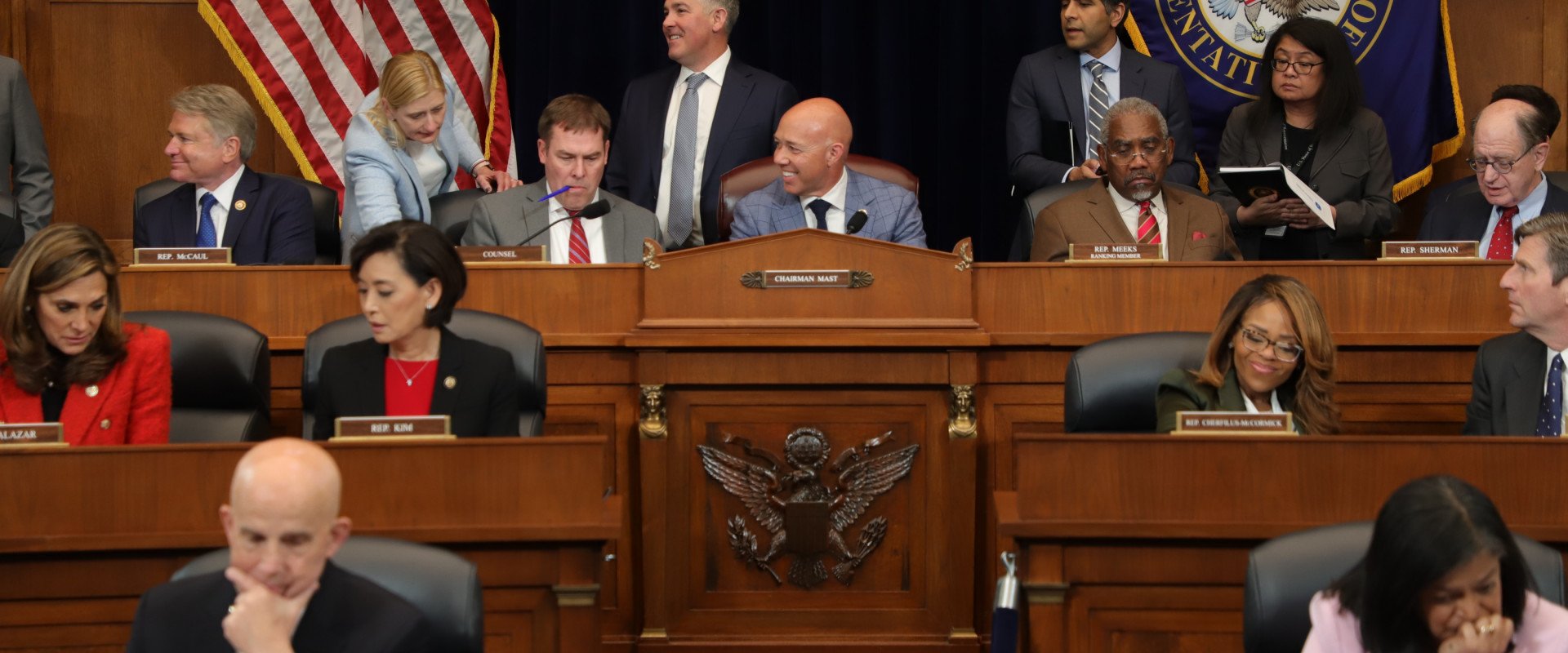
The House Foreign Affairs Committee advanced the MATCH Act on April 22, in what lawmakers described as the largest markup on semiconductor export controls in congressional history. The bill targets not advanced chips but the manufacturing equipment used to make them, including cryogenic etching tools and DUV lithography machinery that China cannot domestically produce. A companion bill, the AI Overwatch Act, would give Congress direct veto power over AI chip export licenses issued to adversaries including China, Russia, and Iran. Beijing responded Saturday, warning that the legislation threatens to destabilize global semiconductor supply chains and amounts to an abuse of national security justifications.
The US is no longer trying to stop China from buying advanced chips. It is trying to prevent China from ever building a factory that makes them. That is a fundamentally different bet, and it is not obviously winnable.
The Hidden Bet
Restricting tool exports will meaningfully slow Chinese chip production.
China has been investing aggressively in domestic alternatives since the first round of export controls in 2022. SMIC and new entrants have made real progress on DUV workarounds. The window to block them with equipment controls may have already closed.
Allied countries will follow US export control rules and not fill the gap.
ASML, the Dutch monopoly on EUV and DUV lithography tools, operates under its own government's export rules. The Netherlands has restricted some exports but the MATCH Act cannot unilaterally bind European or Japanese equipment makers. China will pressure them directly.
Tightening controls makes the US safer without meaningful economic blowback.
US Commerce Secretary Lutnick already admitted to Congress that China declined to buy a single approved H200 chip once the US added revenue-sharing conditions. China is accelerating domestic production partly because US policy has made external dependence feel like a national security liability. Controls may be accelerating the problem they are meant to solve.
The Real Disagreement
The actual fork is between two theories of the same problem. One says China is still dependent enough on Western tooling that aggressive controls can freeze their chip industry at a level too primitive to challenge US AI leadership. The other says China is already past the point of no return on domestic capacity, and that control escalation now just destroys global supply chains and reduces US influence over the trajectory without changing the outcome. The market evidence leans toward the second view: China did not buy chips it was legally allowed to buy. The policy assumption is the first view. That gap between market behavior and policy premise is where the real bet lives.
What No One Is Saying
The MATCH Act gives Congress oversight over export licenses. The executive branch has never accepted that constraint. If Trump wants to sell chips to someone Congress has blocked, this law creates a constitutional confrontation no one in either chamber has fully thought through.
Who Pays
US semiconductor equipment manufacturers
Immediate, once the bill becomes law
Loss of China revenue from sales of manufacturing tools. China is a large market for companies like Lam Research and Applied Materials. Export restrictions mean those contracts disappear with no guaranteed domestic replacement.
Global consumer electronics manufacturers
Medium-term, 12-24 months as equipment maintenance cycles come due
Supply chain disruption if Chinese fabs operating on restricted equipment are cut off from servicing or upgrades. Production slowdowns ripple into everything from smartphones to automotive components.
Taiwan's TSMC and South Korean fabs
Slow-burn, as legal exposure accumulates
Forced to choose between US compliance and Chinese market access. The AI Overwatch Act creates licensing uncertainty that makes long-term contracts with Chinese firms legally risky.
Scenarios
Controlled Squeeze
The MATCH Act passes, allied governments align within 12 months, and Chinese fabs hit real capacity ceilings by 2027-2028. China's military AI development slows measurably.
Signal ASML announces voluntary compliance with MATCH Act-equivalent restrictions before being legally required to.
Acceleration Trap
Controls pass but China responds by pouring another $100 billion into domestic tool production, replicating DUV capability by 2028-2029. The US ends up having broken global supply chains without achieving the delay it sought.
Signal CXMT or SMIC announces a domestically-produced etching tool that matches 80% of US-controlled equipment capability.
Allied Fracture
The Netherlands or Japan refuses to match US restrictions, citing economic damage. China routes around US controls by purchasing from European or Japanese equipment makers. The MATCH Act functions as a unilateral US economic handicap.
Signal ASML reports record China revenue in the quarter after MATCH Act passage.
What Would Change This
If Chinese fabs began producing advanced nodes at commercial scale using purely domestic tooling, the premise of equipment-based controls collapses entirely. The entire MATCH Act strategy assumes China is still in the dependency window. That window is closing faster than the legislation acknowledges.
Related
The US Is Trying to Cut Off ASML from China While Its President Is in Beijing Asking China for Favors
powerThe MATCH Act Would Let the US Cut Off Allies Who Don't Follow Its Chip Rules
powerChina Blocked Nvidia's H200 Chips Even After Trump Gave the Green Light
powerThe Chip War Is Now a Two-Front Battle, and the US Is Losing the Material That Wins It