China's Green Weapon
What happened
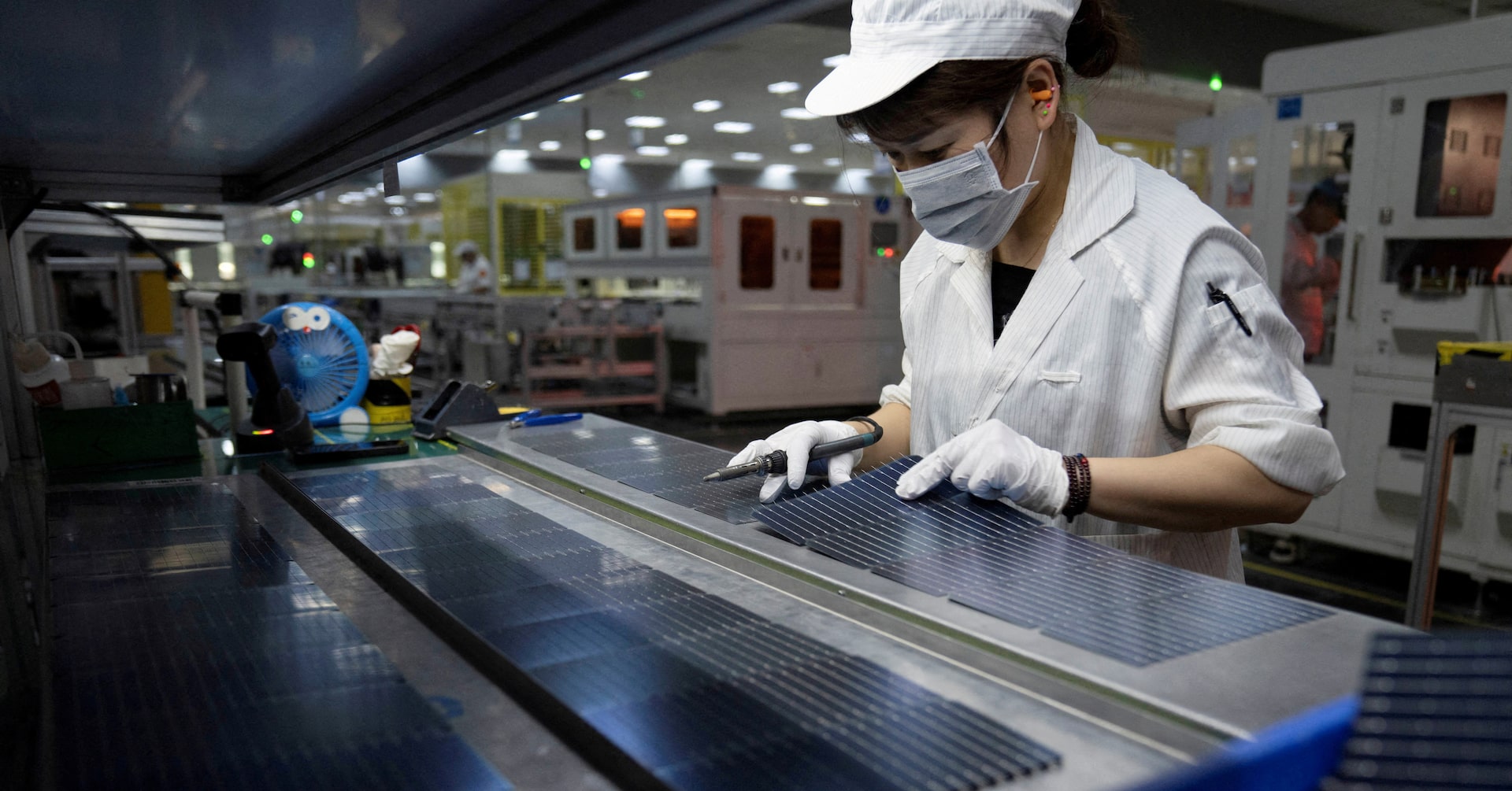
Chinese officials have held preliminary discussions with providers of solar panel manufacturing equipment about limiting exports of the most advanced technology, including heterojunction solar cell equipment, to the United States. Five people familiar with the consultations confirmed the talks to Reuters. No rule has been finalized and the discussions have not advanced to formal industry consultation. China produces more than 80 percent of global solar panel components and is home to the world's top 10 suppliers of equipment used to manufacture solar cells. If restrictions are implemented, US companies including Tesla, Google, and Amazon, all of which have announced or are planning domestic solar manufacturing capacity, would face either substantial delays or a fundamental redesign of their supply chains.
The US bet on domestic clean energy manufacturing while leaving the manufacturing equipment entirely in Chinese hands. The proposed restriction is not a trade weapon; it is the natural consequence of that strategic gap coming into contact with a trade war.
The Hidden Bet
The US can substitute non-Chinese solar equipment suppliers within a reasonable timeframe.
The top 10 solar cell equipment suppliers are all Chinese. Non-Chinese alternatives, primarily from Germany, Japan, and South Korea, exist but operate at smaller scale and with longer lead times. Spinning up equivalent capacity outside China would take 3-5 years and would require both capital investment and technology transfer that China would work to prevent.
China would not weaponize solar equipment because it would hurt Chinese equipment companies.
China's solar manufacturing sector has massive overcapacity, a direct result of years of aggressive subsidized expansion. Export curbs on advanced equipment would hurt Chinese equipment exporters, but those companies are already under margin pressure from overcapacity. The state can absorb that loss strategically while achieving a foreign policy objective.
This is leverage designed to produce a negotiating concession, not an actual restriction.
Previous Chinese export control actions, including rare earth processing curbs and semiconductor material restrictions, were characterized as leverage until they were implemented. The pattern is: signal, dismiss as leverage, implement. Assuming this is only leverage because previous moves also started as leverage is circular.
The Real Disagreement
The fork is between two readings of what clean energy manufacturing independence actually means for the US. Reading one: domestic solar capacity requires domestic or allied-country supply chains throughout. Any dependency on a strategic adversary's tooling is a national security vulnerability that must be closed before investment in factories makes sense. Reading two: the US transition to clean energy is urgent enough that maintaining Chinese supply chain dependencies is acceptable in the medium term while alternatives develop; restrictions are manageable costs in a larger energy transition that is worth accelerating regardless. Both readings are internally consistent. The first reading implies the US Inflation Reduction Act subsidized manufacturing capacity that is strategically hollow without a parallel push on supply chain independence. The second implies that clean energy transition should not be held hostage to geopolitical purity. The Trump administration, which both opposes IRA climate investment and is conducting the trade war that prompted this threat, holds the incoherent middle: using trade war tactics that threaten the domestic manufacturing buildout it claims to want.
What No One Is Saying
US clean energy investment, much of it from IRA funds that the Trump administration is trying to claw back, created the factory capacity that is now exposed to this exact restriction. The administration is simultaneously threatening to gut the subsidies that fund the factories and conducting the trade war that threatens the factories' supply chains. Both damage the same thing. Neither creates alternative supply chains. There is no US solar equipment manufacturing policy to speak of.
Who Pays
US solar factory developers, especially in swing states
Immediate uncertainty; concrete disruption if restrictions are finalized within 6-12 months
Factories under construction or recently announced for states like Georgia, Michigan, and Ohio that depend on Chinese equipment face investment uncertainty. The IRA incentives remain contested, and now the equipment supply is also contested. The business case for announced factories weakens on both ends simultaneously.
Google, Amazon, Microsoft data center operators
12-24 months
Hyperscaler clean energy commitments depend on solar buildout to meet net-zero targets. Equipment restrictions delay the solar capacity they need, extend their reliance on fossil-fuel grid power, and create regulatory and reputational exposure for missing sustainability commitments.
US grid operators and utilities planning solar integration
18-36 months; slow-burn grid planning impact
Utility-scale solar installations that are planned for 2026-2028 grid integration depend on equipment procurement happening now. If procurement stalls due to restriction uncertainty, grid reliability planning assumptions become invalid.
Scenarios
Leverage succeeds, restrictions not implemented
The US and China reach a trade accommodation, possibly tied to tariff adjustments or another sector, that causes China to shelve the solar equipment restriction discussions. US clean energy manufacturing proceeds with Chinese equipment supply intact.
Signal No formal Chinese government notice on solar equipment restrictions by Q3 2026, and bilateral trade talks resume at ministerial level.
Restrictions implemented, supply chains reorganize
China formalizes restrictions on HJT and advanced solar cell equipment exports. US companies spend 12-24 months qualifying alternative suppliers from Germany, Japan, and South Korea at 30-50 percent cost premium. Domestic solar manufacturing expansion slows by 2-3 years.
Signal A formal notice from China's Ministry of Commerce on solar manufacturing equipment export licensing requirements, published in the official gazette.
Escalation into full solar supply chain war
Equipment restrictions are followed by polysilicon and wafer curbs. The US solar value chain is cut off at multiple points simultaneously. The US responds with tariffs or procurement restrictions on Chinese solar panels. Global solar panel prices increase 20-40 percent.
Signal China's state council convenes discussions on polysilicon export controls involving the same consultative framework as the equipment restriction discussions.
What Would Change This
A US government announcement of emergency funding for domestic or allied-country solar equipment manufacturing capacity, with specific timelines and named partners. That would create an alternative supply chain on a credible timeline and reduce the leverage value of the Chinese restriction significantly. No such announcement has been made.