Orban Falls
What happened
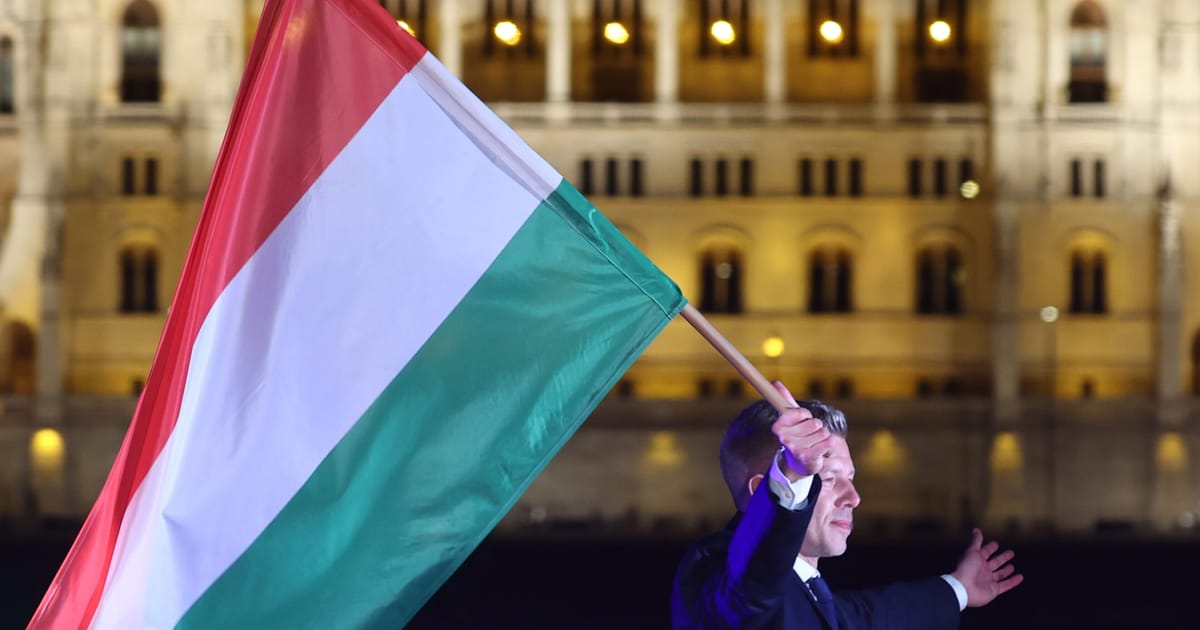
On April 12, Hungarian voters handed Viktor Orban a landslide defeat after 16 years in power. Peter Magyar's Tisza party won approximately 138 seats in the 199-seat parliament, a two-thirds constitutional majority that grants him the power to amend Hungary's constitution. Orban's Fidesz received roughly 55 seats, a collapse from its previous dominance. Voter turnout was 77.8%, a record. JD Vance had visited Budapest days before the election in what was widely understood as a show of support for Orban. European leaders, including European Commission President Ursula von der Leyen, congratulated Magyar within minutes of the concession. Magyar's platform focused on EU alignment, anti-corruption, health care, and infrastructure. He is a former Fidesz insider who left the party after allegations against his ex-wife, a former justice minister, became public.
Orban spent 16 years building a political system designed to be impossible to lose. Magyar won it anyway with a supermajority. That is not just an electoral result; it is a proof of concept: illiberal state capture is reversible through elections if the opposition unifies and turnout is high enough.
The Hidden Bet
Magyar's win is a win for liberal democracy.
Magyar ran as a conservative, not a liberal. Tisza is a center-right party. Magyar has not committed to undoing all of Orban's constitutional changes, only to fighting corruption and repairing EU ties. The media landscape Orban built, where state and allied outlets dominate, remains intact. The judiciary Orban packed remains packed. A two-thirds majority can change the constitution, but changing the institutions that constitution empowers takes years, not a mandate.
The Ukraine aid blockade ends immediately.
The 90 billion euro EU loan to Ukraine that Orban vetoed requires a government transition that takes weeks. Magyar needs to be formally confirmed, a cabinet formed, and then the EU process restarted. Orban remains as caretaker prime minister until then. There is also a caveat on Ukraine: Magyar has not been as unambiguously pro-Kyiv as EU leadership implies. He supports EU rules and diplomacy, not necessarily unconditional military support.
This is a setback for the global populist movement.
Populism's track record in elections is mixed, not terminal. Orban's defeat came from specific Hungarian conditions: a corruption scandal involving a close ally, an organized opposition with a compelling candidate, and record turnout. It does not mean Marine Le Pen, Giorgia Meloni, or the US Republican Party faces the same trajectory. Each has different structural advantages. Hungary's result is a data point, not a trend.
The Real Disagreement
The real split inside the EU is about what Magyar is actually expected to do. The Brussels reading is that Hungary will now align with EU rules, unblock Ukraine aid, and stop vetoing critical decisions. Magyar's reading of his mandate is anti-corruption and domestic renewal; foreign policy alignment with the EU follows naturally from rule-of-law reform, but it is not the point. These readings can diverge quickly. If the EU tries to use Hungary's return to extract fast movement on Ukraine or migration policy, Magyar faces a choice between his EU allies and his electorate. Orban built a coalition partly by resisting EU pressure. Magyar cannot simply invert that without understanding why it worked.
What No One Is Saying
JD Vance flew to Budapest to help Orban days before Vance's own talks with Iran collapsed in Pakistan. The US had its two closest foreign allies. both of them authoritarian leaders who were useful as counterweights to liberal institutions. One fell to a democratic election. The other is six days from a ceasefire expiring. The week is not a coincidence; it is a portrait of what happens when the US organizes its foreign policy around strong men who have domestic opponents.
Who Pays
Hungarian citizens under captured institutions
Years; institutional reform is a 4-8 year project at minimum
Orban built courts, media, and electoral systems to entrench Fidesz. Those institutions do not change with a new prime minister. Magyar's supermajority can amend the constitution, but the courts that enforce it are still Orban's judges.
Ukraine
Weeks to months, depending on EU administrative process
The 90 billion euro EU loan Orban vetoed can now proceed. That is immediate budget relief for a country still fighting a war. However, the timeline depends on how fast the Hungarian government transition happens and whether Magyar prioritizes it.
Trump's foreign policy narrative
Immediate; the symbolism is already being used by European centrists
Orban was the flagship example that illiberal democracy was durable and popular. His landslide loss, days after JD Vance flew to campaign for him, is a direct blow to that argument.
Scenarios
Clean transition, EU alignment
Magyar forms a government quickly, uses the supermajority to reverse the most egregious constitutional changes, and Hungary unblocks the Ukraine loan. Relations with Brussels normalize. Hungary functions as a standard EU member state again.
Signal A new Hungarian government formed within six weeks; announcement that Hungary will not block the Ukraine aid package
Institutional resistance
Magyar's government runs into packed courts, a hostile civil service, and media structures that Orban built. Implementing policy becomes a grinding institutional fight. Anti-corruption prosecutions of Orban-era officials produce political backlash.
Signal Constitutional court blocks a Magyar government initiative within the first six months
EU overreach creates backlash
Brussels treats Magyar's victory as a mandate to impose EU demands quickly. Magyar resists the pressure to maintain domestic credibility, tensions rise, and the narrative shifts to Brussels trying to control Hungary's new government.
Signal Magyar publicly rejects an EU demand on migration or economic policy within the first year
What Would Change This
If Magyar's government is blocked by Orban-era courts or fails to prosecute significant corruption cases, the bottom line changes: the election proved democracy is reversible in one direction but not necessarily in the other. If Magyar succeeds in institutional reform, the proof of concept strengthens.