Putin's Easter Ceasefire Is a Trap, and Both Sides Know It
What happened
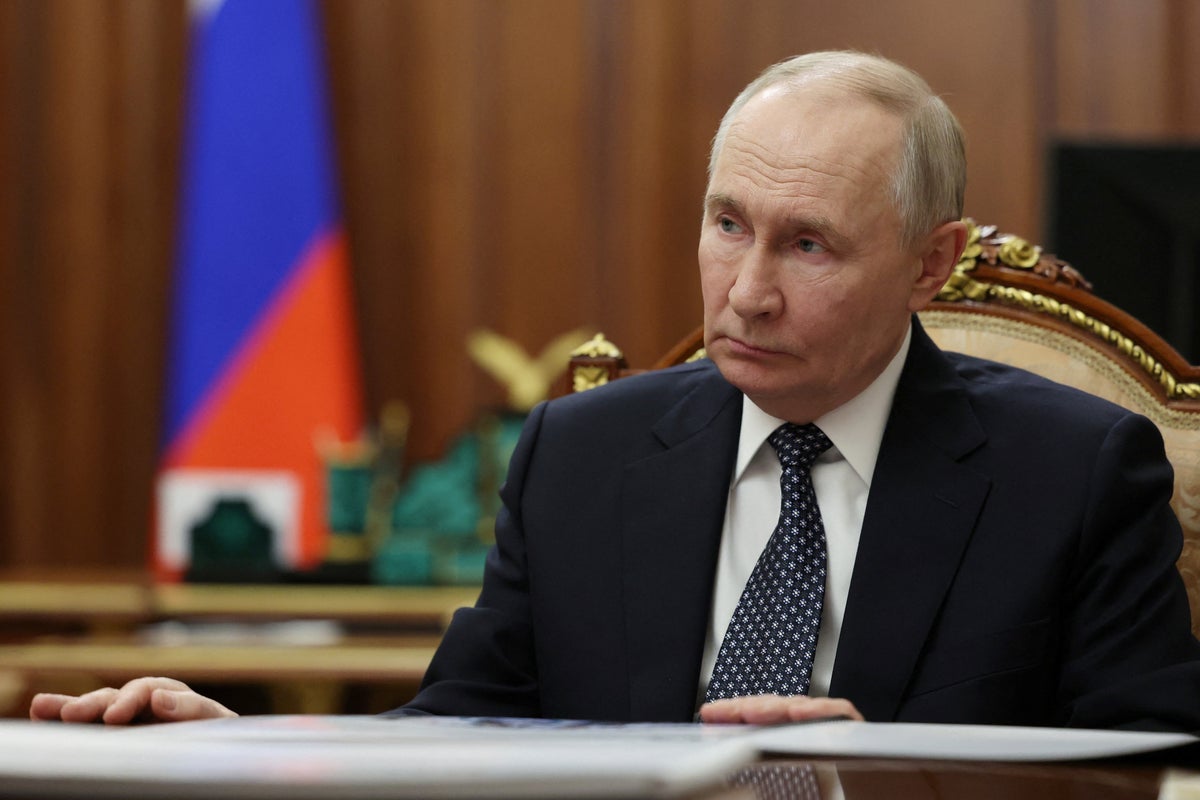
Russian President Vladimir Putin on April 9 declared a 32-hour ceasefire covering Orthodox Easter weekend, running from 4pm Saturday April 11 through end of Sunday April 12. Ukrainian President Zelensky accepted and said Ukraine would act accordingly, while simultaneously proposing an extension to 30 days. Russia's special envoy Kirill Dmitriev arrived in Washington the same day for talks with Trump administration officials on a broader peace framework. VP JD Vance publicly accused both Kyiv and Moscow of 'haggling over a few square kilometres' as the ceasefire was announced.
The Easter ceasefire is a ritual, not a signal. Russia has now announced two Easter truces in two years; both times it violated them while blaming Ukraine. The value of this ceasefire is not military. It is a test run of the blame structure that will define the end of the war: whoever fires first after Easter loses the narrative. Putin read that game correctly last year and is running it again.
Prediction Markets
Prices as of 2026-04-10 — the analysis was written against these odds
The Hidden Bet
The ceasefire reflects genuine Russian openness to de-escalation
Russia rejected a 30-day unconditional truce last year and is insisting on a comprehensive settlement rather than incremental steps. Every short ceasefire Moscow has announced has coincided with periods when it was consolidating battlefield gains or buying time for logistics. The timing here follows a month of elevated Russian artillery use.
Washington is a neutral facilitator pushing both sides equally
Vance's 'haggling over a few square kilometres' comment treats Ukrainian territorial sovereignty as a bureaucratic nuisance rather than a war aim. Zelensky acknowledged publicly that US attention has largely shifted to the Middle East and that Washington is 'currently reluctant to dedicate much more time' to Ukraine. The ceasefire is being negotiated in a context where the US mediator is already signalling impatience with Ukraine's position.
A 30-day truce, if agreed, would lead to a durable peace process
Ukraine's front lines span 1,250 kilometers and involve hundreds of distinct tactical positions. Any ceasefire long enough to matter requires verification infrastructure that does not exist. Russia has explicitly rejected international monitoring mechanisms. A 30-day pause gives Russia time to reconstitute forces without agreeing to anything that prevents resumption.
The Real Disagreement
The fork is this: either the war ends through Ukrainian concessions on territory, or it ends through Russian concessions on sovereignty. These cannot both be true at once. The Trump administration is pushing for speed, which implicitly favors concessions from the party with less leverage. Ukraine, facing conscription crises and Western fatigue, may not be able to hold out for the second option. The real disagreement is not about the ceasefire. It is about whether Ukraine's territorial losses are the price of peace or the reward Russia gets for starting a war. I would lean toward resisting the false urgency: a ceasefire accepted under pressure will not hold, and the incentive it creates is to invade again. What you give up is the principle that wars cannot be rewarded with territory.
What No One Is Saying
Russia's two Easter ceasefires, both announced unilaterally after initially ignoring Ukrainian proposals, follow the same script: force Ukraine to either reject the ceasefire publicly or accept it on Russian terms without reciprocal commitments. The second outcome lets Moscow claim moral credit for peace while the first generates propaganda. Neither outcome advances actual de-escalation. Zelensky accepted again, which means he has now twice validated a process that advantages Russia.
Who Pays
Ukrainian conscripts
Immediate to medium-term
A ceasefire that does not hold will resume with Russian forces in refreshed positions; Ukrainian soldiers on the front lines will absorb the next offensive. Zelensky has already said the spring-summer period will bring extreme battlefield pressure.
European governments
Medium-term
A US-brokered deal that cedes Ukrainian territory sets a precedent directly threatening NATO's eastern flank. European capitals are openly warning against territorial concessions but lack the leverage to prevent them if Washington decides to push.
Ukrainian civilians in contested territories
Immediate and slow-burn
Any peace deal that freezes the current front lines leaves millions of Ukrainians under Russian occupation with no legal recourse and subject to documented patterns of deportation and cultural erasure.
Scenarios
Ritual Violation
Both sides nominally observe the ceasefire while recording violations. Easter passes. Shelling resumes on Monday. The ceasefire is cited by each side as evidence the other cannot be trusted. Peace talks stall further.
Signal Reports of 'limited' shelling from Ukrainian military within hours of ceasefire start, matched by Russian counter-claims. Vance or another US official calls it 'unfortunately typical'.
Extended Truce
Zelensky's proposal for 30 days gains momentum, possibly because Dmitriev's Washington meeting produces a face-saving structure. A longer pause begins, but without verification mechanisms, it slowly erodes. The war restarts in May or June.
Signal A joint US-Russia-Ukraine statement within 72 hours of the Easter ceasefire accepting 30-day extension. European capitals notably absent from the communique.
Freeze and Deal
Under US pressure and midterm timing, Ukraine accepts a frozen-conflict settlement with de facto territorial losses. Russia gets what it came for. Europe is furious but impotent.
Signal Trump or Vance makes a public statement framing any peace as a US diplomatic win. Zelensky goes quiet on territorial demands for more than two weeks.
What Would Change This
If Russia publicly accepted international ceasefire monitoring mechanisms, or if it agreed to a 30-day truce without the escape clause of 'readiness to counter provocations,' that would indicate genuine intent. Neither has happened. The bottom line changes if Zelensky resigns or if the Ukrainian parliament fractures over peace terms.