Sotomayor Says the Supreme Court Did This to Itself
What happened
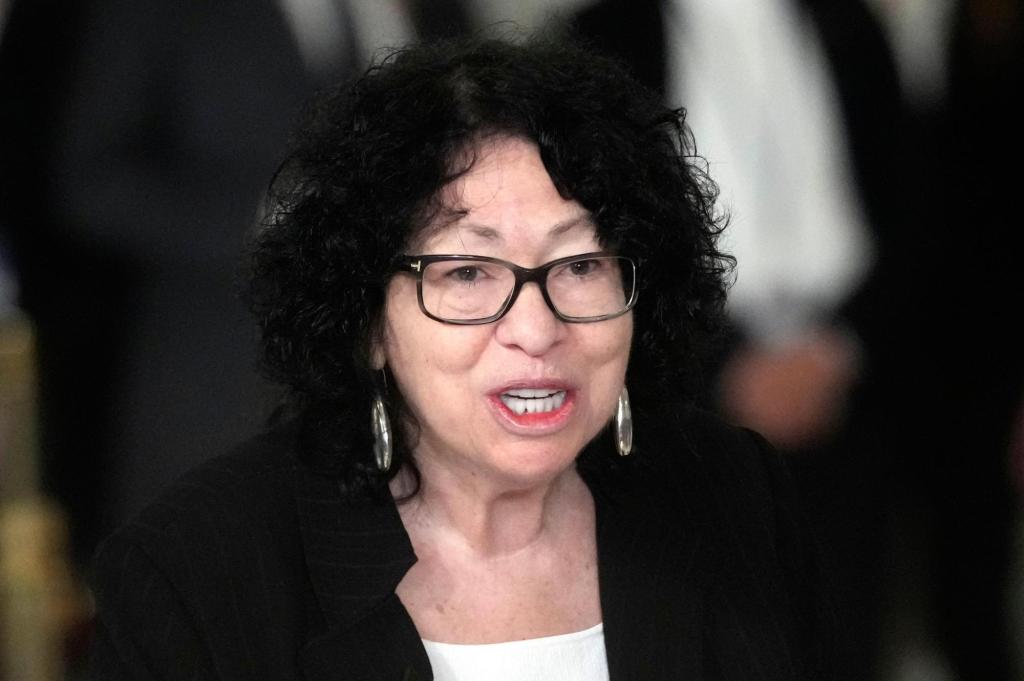
Justice Sonia Sotomayor delivered a speech at the University of Alabama School of Law on April 9 warning that the Supreme Court's use of its emergency docket has become 'unprecedented in the court's history.' The Trump administration has filed approximately 30 emergency applications to the Court in the 15 months since January 2025, and the Court has ruled in the administration's favor more than 80% of the time. Emergency stays were traditionally used to prevent irreparable harm while appeals proceeded; under the current pattern, they have functioned as substantive policy wins that allow the administration to implement policies that lower courts found likely illegal. Sotomayor argued the conservative majority created this dynamic by subscribing to the view that blocking executive policies is itself a form of irreparable harm, which makes granting emergency stays nearly automatic.
The Supreme Court's emergency docket is no longer a procedural tool. It is a policy veto, and the conservative majority has handed the Trump administration a key that opens it on demand.
The Hidden Bet
Emergency stays are temporary and will be corrected when the merits are decided
The Trump administration does not need permanent legal victories. If deportations proceed under an emergency stay, the deported people are gone. If federal agencies are reorganized under an emergency stay, the employees are fired and institutional knowledge is lost. If the emergency stay lasts long enough, the underlying case becomes moot. 'Temporary' in procedure is 'permanent' in outcome.
The 80% win rate reflects the administration bringing strong legal cases
Sotomayor's argument is different: the win rate reflects the Court's interpretive choice to treat executive power expansively and to view lower court blocks as presumptively inappropriate. Under a different interpretive frame, the same cases would have different outcomes. The win rate tells you about the Court's ideology, not the quality of the administration's legal arguments.
The shadow docket is a problem that a future administration can remedy
Once a procedural norm is normalized through use, reversing it requires the Court to discipline itself or the majority to change. The current 6-3 majority is not going away in the near term. A future Democratic administration would inherit the same emergency docket but would face a conservative majority that would not grant its applications at an 80% rate.
The Real Disagreement
The real fork is between two views of the emergency docket's purpose. The conservative view: blocking executive action causes immediate, concrete harm to the administration's ability to govern. Courts should not substitute their policy judgment for the executive's on contested legal questions before a full merits hearing. The liberal view: the emergency docket was designed for genuine irreversibility, like an imminent execution or a building being demolished. Using it to implement mass deportations or funding cuts, which courts have repeatedly found likely illegal, turns a procedural exception into a substantive override of judicial review. The lean is with Sotomayor's framing: the specific asymmetry she identifies is real. When the conservative majority grants Trump's emergency stays in cases where lower courts found likely illegality, they are making a substantive choice, not a procedural one. They are saying the administration's interest in governing without interruption outweighs the litigants' interest in not being harmed while the law is determined. That is a policy choice, not a neutral procedural rule.
What No One Is Saying
Sotomayor said 'we've done it to ourselves.' She did not say what the remedy is, because there is no remedy available to the minority. A dissenting justice cannot change an 80% win rate. She is not warning the administration; it already knows. She is warning the public, which means she believes the public is the last check on a Court that has used its own procedures to become an instrument of executive power. That is an unusual thing for a sitting justice to say, and the fact that she said it publicly, on the record, at a law school, is itself the news.
Who Pays
Immigrants subject to deportation under policies lower courts found likely illegal
Already happened; ongoing for active cases.
Emergency stays allowed mass deportations to proceed while legal challenges were pending. By the time courts rule on the merits, the people are deported. Reinstatement is difficult, sometimes impossible. The legal protection came too late.
Universities and research institutions whose federal funding was cut under emergency-stayed injunctions
Ongoing. NIH indirect cost cap ruling is one current example.
Funding cuts allowed to proceed while courts deliberated resulted in researcher layoffs, grant terminations, and institutional restructuring. Even if courts eventually restore funding, the positions and programs do not automatically reconstitute.
Future non-Trump administrations
Long-term, beginning at the next administration change.
The emergency docket norm now established will be available to any administration, but the conservative Court majority will not grant emergency stays to a Democratic administration at an 80% rate. The asymmetry is baked in until the Court's composition changes.
Scenarios
The Norm Persists
The current pattern continues. The administration files emergency applications on contested policies, the Court grants most of them. Lower court injunctions become irrelevant as a practical matter for the current administration. The legal challenges eventually produce merits decisions, but the real-world outcomes are already set.
Signal Next 5 emergency applications to SCOTUS result in 4 or more grants.
The Court Pulls Back
The conservative majority, sensing the institutional damage Sotomayor is describing, becomes more selective. Some major emergency applications are denied or narrowed. The administration adjusts its litigation strategy, relying more on trial courts favorable to its positions and less on emergency stays.
Signal A high-profile emergency application from the administration is denied or narrowed in a 5-4 or 6-3 decision where two conservatives join the minority.
Congress Acts
Democratic legislators propose legislation to reform shadow docket procedures, requiring explanations for emergency grants and limiting their scope. The proposal goes nowhere in the current Congress but establishes the legislative record for a future majority.
Signal Senate Judiciary Committee holds a hearing specifically on emergency docket reform.
What Would Change This
A Supreme Court decision on a major emergency application that explicitly acknowledges Sotomayor's asymmetry concern and sets a new standard for when emergency stays are appropriate would change the analysis. It has not happened. Alternatively, if the Trump administration loses two or three consecutive high-profile emergency applications, the 80% win rate would begin to look less like a structural advantage and more like a run of good cases.
Related
Justice Jackson Says the Supreme Court Is Rubber-Stamping Illegal Policies. She Is Probably Right.
powerThe Administration Has Defied Courts 31 Times. Nobody Has Stopped It.
powerAppeals Court Kills Trump's Asylum Ban. The Supreme Court Is Next.
powerThe Justice Who Said What the Court Won't