The Justice Who Said What the Court Won't
What happened
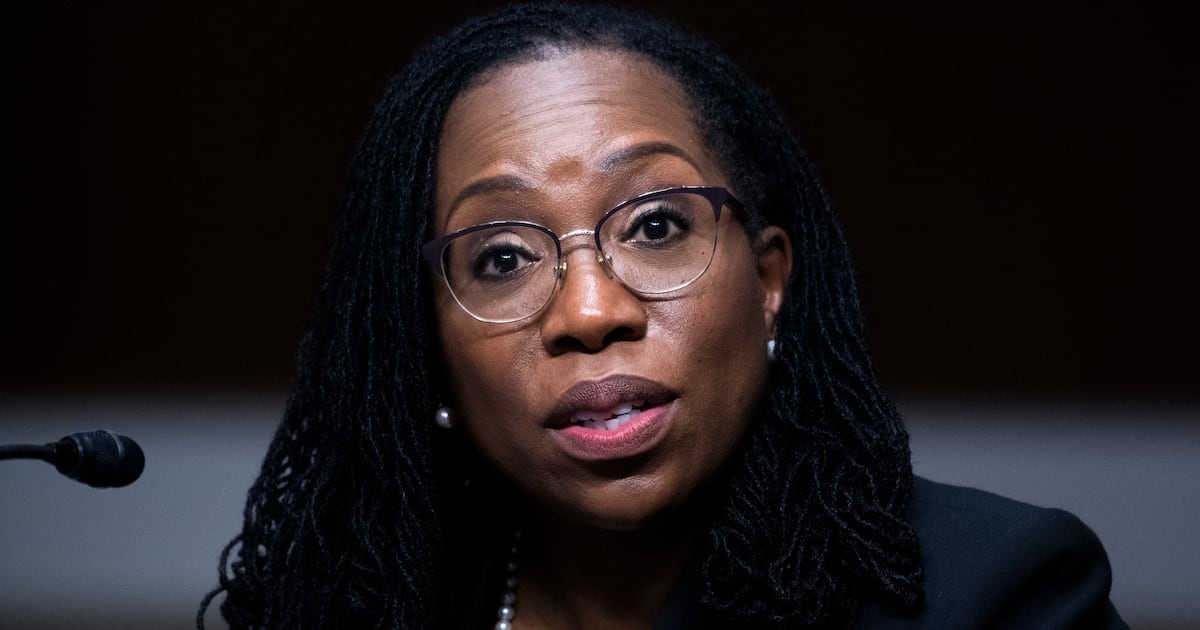
Supreme Court Justice Ketanji Brown Jackson delivered a speech at Yale Law School on April 13, 2026, directly attacking the conservative majority's use of the 'shadow docket,' the Court's emergency order process. She called the rulings 'at times utterly irrational,' described them as 'scratch-paper musings,' and warned they were having an 'enormously disruptive and potentially corrosive effect' on public trust. The Trump administration has filed 34 emergency applications in its second term; the Court has sided with Trump in over 80% of them. Those orders have enabled mass federal firings, immigration enforcement, and funding cuts that lower courts had blocked as likely illegal.
Jackson is not complaining that the Court is wrong on the merits; she is saying the Court has chosen a procedure that lets it be wrong without accountability, and that the procedure itself is now the constitutional crisis.
The Hidden Bet
Emergency orders are extraordinary and temporary
When a president files 34 emergency applications and wins 80% of them, emergency orders are no longer extraordinary: they are the primary mechanism of governance. The 'emergency' label obscures that the Court is setting policy on the merits without full briefing, oral argument, or written reasoning. The temporary nature of 'stays' is a fiction when the underlying policy has been implemented for months before a final ruling.
Jackson's criticism is purely principled
Jackson is a Biden appointee who loses almost every shadow docket vote. Her criticism of the procedure is also a criticism of the outcomes. Dissenting justices have incentive to attack the vehicle when they cannot win on the substance. That does not make her wrong, but the conflation of procedural objection and political frustration is worth naming.
The Court's legitimacy depends primarily on its written reasoning
The Court's rulings on the merits in recent years have also been controversial and have not obviously enhanced public trust. If the shadow docket disappeared tomorrow and the Court produced lengthy opinions reaching the same outcomes, Jackson's concern about the 'corrosive effect' might not be resolved. The crisis might be about outcomes, not procedure.
The Real Disagreement
The actual fork is whether judicial independence requires restraint about public speech or whether silence enables authoritarianism. The conservative view, implicit in the majority's behavior, is that justices should not publicly criticize colleagues and that the institutional norm of mutual deference protects the Court's authority over the long run. Jackson's view is that when the Court is being used to launder executive overreach, silence is complicity, and the norm of restraint is itself being exploited. Both positions have real costs. Jackson's public criticism may further politicize the Court in ways that erode its authority on cases where procedure is not the issue. But the conservative silence normalizes a process where major policy gets made without the public record that lets courts, scholars, or Congress evaluate it. I lean toward Jackson's position: when the procedural abuse is the message, naming it publicly is the only check that remains.
What No One Is Saying
An 80% win rate for the administration on emergency applications is not a record of a court independently evaluating legal urgency. It is a record of a court that has decided, in advance, which party it trusts. No one on the court will say that. Jackson came closest.
Who Pays
Federal employees who were fired and then ordered reinstated by lower courts
Already ongoing; the lag between illegal action and correction is now measured in the political calendar, not the legal one
SCOTUS emergency orders allowed firings to proceed while reinstatement orders were stayed. Many employees have now been out of work for months while their cases work toward a final ruling that may never come.
Future courts and litigants
Compounding over the remainder of Trump's term and beyond
Each shadow docket win without written reasoning creates informal precedent that the Court's conservatives can cite selectively. The lack of written reasoning is not neutral: it selectively advantages the party that won, because the winner does not need to explain the principle.
Scenarios
Entrenchment
The majority ignores Jackson's critique, continues to grant emergency stays at current rates. Jackson's dissents become increasingly pointed. Public trust in the Court continues to fall, but no institutional mechanism forces a change.
Signal More than five additional emergency grants in the next two months with no written explanation
Congressional response
Jackson's speech, combined with continued emergency rulings, prompts bipartisan legislative action on shadow docket transparency, requiring brief justifications for emergency orders. Passes the Senate with moderate Republican votes.
Signal A Senate Judiciary Committee hearing on shadow docket reform is scheduled within 60 days
Reversal on the merits
The Court rules against the administration on one of the major term cases, signaling that the emergency stays were not a preview of the final outcome. Jackson's critique becomes less urgent because the procedure produced a different result than advertised.
Signal SCOTUS rules for the plaintiffs in the immigration or federal employee cases on the merits, not just procedure
What Would Change This
If the Court issued even a one-paragraph justification for future emergency stays, Jackson's procedural critique would lose most of its force. If the underlying rulings on the merits split more evenly between the administration and challengers, the 80% win rate would look like a reflection of legal merit rather than political alignment.
Related
Justice Jackson Says the Supreme Court Is Rubber-Stamping Illegal Policies. She Is Probably Right.
powerThe New York Times Got the Supreme Court's Internal Memos. The Leak Matters More Than the Memos.
powerThe Administration Has Defied Courts 31 Times. Nobody Has Stopped It.
powerTrump Owes $159 Billion in Tariff Refunds. He Is Telling Companies Not to Collect.