Trump Threatened 50% Tariffs on Iran's Arms Suppliers. The Supreme Court Already Took Away His Authority to Do That.
What happened
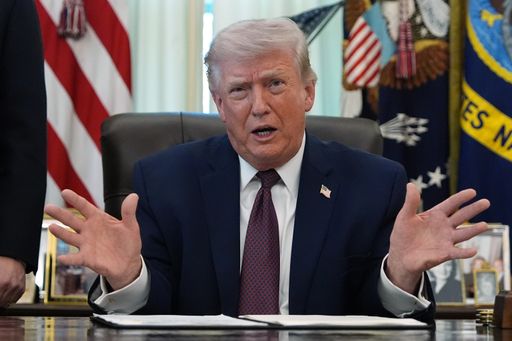
Hours after signing the Iran ceasefire on April 8, Trump announced that any country supplying arms to Iran would face 50% tariffs. He cited no specific legal authority for the threat. The announcement came just days after the Supreme Court stripped his primary tariff enforcement mechanism (IEEPA) and one week before a scheduled meeting with Chinese President Xi Jinping.
The Iran arms tariff threat is not a policy. it is a bluff with an expired check. Trump announced it on a platform that cannot enforce it, under legal authority that no longer exists, targeted primarily at China in the week before a Trump-Xi meeting. The entire maneuver is pressure theater, and Beijing knows it.
Prediction Markets
Prices as of 2026-04-09 — the analysis was written against these odds
The Hidden Bet
The Supreme Court's February IEEPA ruling leaves the president without authority to impose tariffs as foreign policy tools
The ruling was specifically about using IEEPA for broad global tariffs. not about targeted sanctions on specific countries for specific conduct. Section 232 (national security tariffs), Section 301 (trade retaliation), and the Arms Export Control Act all provide potentially applicable authority for targeted tariffs on specific countries engaged in specific behaviors. Trump's lawyers may be constructing a legal theory even as the Truth Social post went out. The question is which statute survives scrutiny.
China is the primary target and will feel the pressure
Russia also supplies Iran with weapons systems. But imposing 50% tariffs on Russian goods would be largely symbolic given existing sanctions. there are almost no Russian goods flowing into the US to tariff. The real leverage target is China, but threatening China publicly before a Xi meeting is a negotiating choice, not an accident. Beijing may interpret this as a signal that Trump wants concessions on Iran as part of a broader trade normalization deal, not as a genuine sanction.
The ceasefire itself is stable and represents a genuine de-escalation
Iran's concessions. temporary Strait reopening, nuclear talks, accepting the 10-point framework. are all reversible. Iran has made and broken ceasefire commitments before. The two-week window buys time for diplomacy, but the underlying Iranian military capability is intact, and the US has no mechanism to verify compliance. A resumption of hostilities within 30 days is a plausible scenario.
The Real Disagreement
The real fork is between two theories of what this tariff threat is actually doing. One says: it is coercive diplomacy aimed at China. Trump is using Iran as a lever to extract concessions from Beijing on trade, and the tariff threat makes that explicit by saying 'if you keep arming Tehran, you pay more.' The other says: it is domestic political performance. Trump just made a deal with Iran that his base views as soft, and the tariff threat reestablishes his tough-guy posture without requiring any follow-through. Both can be true simultaneously, which is the problem. The US cannot run coherent China deterrence policy if its threats are simultaneously diplomatic pressure and domestic theater. Beijing will correctly price the probability that this will not be enforced. Lean toward theater: the fact that no legal authority was cited in the announcement, and that the Supreme Court ruling was so recent, suggests the administration did not have a legal framework ready before the announcement.
What No One Is Saying
Iran accepted a 10-point framework that the US and Israel both claim credit for. The framework was, by all accounts, primarily drafted by Iran. A country drafting the peace terms of its own ceasefire after being bombed has extracted a significant diplomatic victory regardless of what the press release says. Trump's victory lap and the Iran arms tariff threat are both designed to obscure that the deal's structure reflects Iranian priorities: nuclear talks with explicit US economic cooperation, temporary Strait reopening as a negotiating chip, and no permanent concessions on missile capability. The administration is selling this as a win while executing the framework Iran proposed.
Who Pays
Countries that supply Iran with military components but depend on US market access. potentially India, Turkey, Serbia
Uncertainty is immediate; actual tariff imposition requires legal authority that does not currently exist
If the tariff threat is ever operationalized under any legal authority, these countries face a choice between Iran relationships and US market access. The uncertainty alone is a trade disruption. companies that route through these countries for US exports face elevated risk premiums now
US oil refiners and downstream industrial users
Within the two-week ceasefire window; the peace talks scheduled for April 10 are the near-term test
The Strait of Hormuz reopening drove oil prices below $95. Any resumption of the Iran conflict reverses this. A failed ceasefire. triggered by the tariff threat alienating Iran's arms suppliers and collapsing the diplomatic track. sends oil back above $110, reigniting the inflation that markets priced out on April 8
US allies managing their own Iran relationships
Legal uncertainty begins now; meaningful compliance costs within 60 days if the administration attempts to operationalize the threat
Europe maintains economic ties with Iran through JCPOA-era mechanisms. A US secondary tariff regime that targets Iran's arms suppliers without clear legal definition creates compliance uncertainty for European companies with any Iran-adjacent business
Scenarios
Theater That Lands
The April 10 nuclear talks produce a preliminary framework. China quietly reduces drone component shipments to Iran in exchange for US flexibility on trade terms at the May Trump-Xi meeting. The tariff threat is never operationalized but is credited as leverage.
Signal At the May Trump-Xi summit, Iran is mentioned in the communique as a point of US-China cooperation. that's the tell that the threat was always about the bilateral deal
Legal Void Exposed
An importer challenges the tariff in court on day one of enforcement. The administration cannot name the statute. Federal court issues an injunction within 30 days. The threat is revealed as unenforceable, and China draws the conclusion that SCOTUS has effectively disarmed the administration's trade coercion toolkit.
Signal No executive order formalizing the tariff is issued within 14 days of the Truth Social announcement
Ceasefire Collapse
Iran interprets the tariff threat as a signal that the US is not serious about the nuclear deal track, or internal Iranian politics force a rejection of the 10-point framework. Hostilities resume, Strait closes, oil spikes above $110. The tariff threat is forgotten in the new crisis.
Signal Iran's Foreign Ministry characterizes the tariff threat as 'incompatible' with the ceasefire framework in an official statement before April 15
What Would Change This
If the administration publishes an executive order citing a specific statute. Section 232, a new emergency declaration, or an Arms Export Control Act determination. the bottom line changes from theater to genuine policy. The absence of such an order within two weeks of the announcement is the clearest confirmation that this was a pressure signal, not an enforceable act.