The DOJ Just Sued New Mexico for Passing a Law Its Legislature Voted On.
What happened
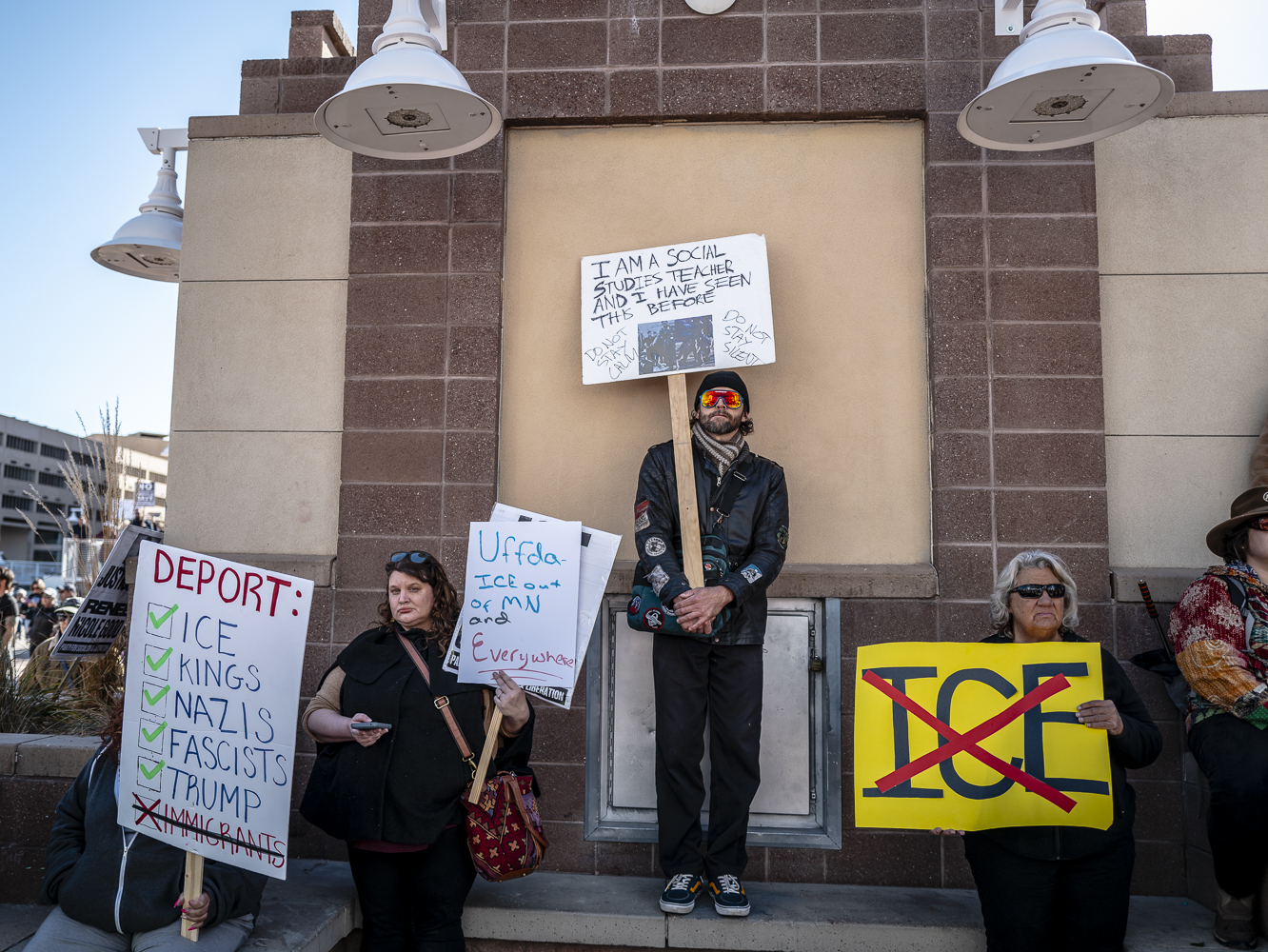
The US Department of Justice filed suit on May 8 against New Mexico Governor Michelle Lujan Grisham, Attorney General Raul Torrez, the City of Albuquerque, and Mayor Timothy Keller, seeking an injunction to block enforcement of the state's Immigrant Safety Act and Albuquerque's companion ordinance. The state law, passed by the legislature and signed in February, prohibits local governments from contracting with ICE for immigrant detention and from entering into cooperation agreements with federal immigration authorities. The city ordinance separately limits when Albuquerque police can assist ICE operations. DOJ argues both laws violate the Supremacy Clause and obstruct federal immigration enforcement. The state's three existing ICE detention facilities are expected to stay open, but the law would prevent renewal or new contracts.
The DOJ is not enforcing immigration law. It is suing a state for passing a law through its own legislature. The legal theory that states cannot limit their own cooperation with federal immigration enforcement has been litigated repeatedly and has a mixed track record. What is new is using a federal lawsuit as the primary enforcement tool rather than funding cuts or prosecutorial action.
Prediction Markets
Prices as of 2026-05-09 — the analysis was written against these odds
The Hidden Bet
Federal preemption doctrine clearly prohibits states from limiting their cooperation with ICE
The Supreme Court has held in multiple cases that the federal government cannot commandeer state and local governments to enforce federal law. New York v. United States, Printz v. United States, and City of Los Angeles v. Patel all establish limits on federal power to compel state enforcement cooperation. New Mexico is not obstructing federal immigration officers. It is declining to have its own officers and facilities used for federal purposes. Those are legally distinct claims, and the latter has survived court challenges before.
This lawsuit is about immigration enforcement
New Mexico is not a high-priority immigration enforcement state. The border is far from Albuquerque. The political target is the precedent: if New Mexico's law survives, other states will pass similar laws, and ICE loses its network of local detention partners and information-sharing agreements nationally. The lawsuit is a deterrence measure aimed at the other 30 states watching.
The existing detention contracts are safe under current law
The law does not void existing contracts. But it creates a legal environment where local officials who cooperate with ICE beyond the contractual minimum face potential state liability. Individual officers and county sheriffs in New Mexico may pull back from informal cooperation even where the formal contract remains. The chilling effect on day-to-day enforcement cooperation may be more significant than the contract prohibition.
The Real Disagreement
The genuine fork is between two readings of federalism: states retain the right to govern their own law enforcement resources and cannot be made to serve as arms of federal immigration enforcement; or immigration is a uniquely federal function and states cannot affirmatively obstruct it, even by declining to participate. Both have constitutional support. The anti-commandeering cases favor New Mexico. The Supremacy Clause and the specific ICE detention contract language favor the DOJ. The lean is toward New Mexico: the state is not deporting anyone or releasing anyone. It is declining to help. That distinction has mattered in prior rulings and is likely to matter here.
What No One Is Saying
The DOJ lawsuit names the governor and attorney general personally as defendants. That is a choice, not a legal requirement. The effect is to expose state officials to personal liability risk and to make it politically costly for Lujan Grisham to fight the lawsuit through its full course. She is a Democrat in a state with a significant undocumented immigrant population. The lawsuit is also a press release: it signals to Republican-led states that the federal government will back them up when they push sanctuary city cases up the chain, and it signals to Democratic governors that their personal assets are in the crosshairs when they sign protective legislation.
Who Pays
Undocumented immigrants in New Mexico detention
Immediate if preliminary injunction is granted; could take months to resolve
If the injunction is granted, the existing ICE contracts are locked in place and new ones can be added. The population in detention cannot appeal based on the state law's protections while litigation continues.
New Mexico taxpayers
Now through likely 2027 or longer litigation timeline
The state must now finance a major federal lawsuit defense. Governor Lujan Grisham has announced the state will fight the lawsuit, which means hiring outside counsel and diverting AG resources that would otherwise go to other enforcement.
Other Democratic governors watching the case
Medium-term; most consequential during whatever state legislative sessions follow the initial ruling
If the DOJ wins an injunction quickly, it creates a template for attacking sanctuary policies in Illinois, Colorado, Massachusetts, and Washington. If New Mexico wins, it sets a precedent those states can use to defend their own laws.
Scenarios
Injunction Granted, Chilling Effect
A federal judge grants the preliminary injunction blocking the Immigrant Safety Act before it takes effect. New Mexico appeals. The law is on hold while litigation proceeds. Other states that had similar legislation pending quietly delay. The DOJ treats the injunction as a win and files similar suits against two or three other states within months.
Signal A federal district court in New Mexico issues the injunction within 30 days of the filing
New Mexico Wins on Anti-Commandeering
The district court denies the injunction, citing the anti-commandeering doctrine. DOJ appeals to the Tenth Circuit. The law takes effect in New Mexico. ICE begins losing detention capacity in the state. The case eventually reaches the Supreme Court, which has to reconcile the anti-commandeering cases with the Supremacy Clause argument.
Signal The district court cites Printz v. United States in its ruling against the injunction
Settlement Before Decision
New Mexico negotiates with DOJ to preserve existing detention contracts and allow ICE information-sharing while prohibiting new facilities. DOJ drops the personal liability claims against the governor and AG in exchange. The law is amended by the legislature to carve out the specific practices DOJ objected to.
Signal State officials and DOJ announce 'ongoing discussions' within 60 days of filing
What Would Change This
If the Supreme Court issues a ruling in a parallel sanctuary city case that clearly establishes states cannot limit local ICE cooperation, the bottom line inverts. The current precedent favors New Mexico, but the current Supreme Court is not the one that decided Printz. What would also change this: if DOJ wins quickly and the Tenth Circuit upholds the injunction, the anti-commandeering doctrine in immigration contexts will need to be re-examined. But that has not happened yet.
Related
Connecticut Signed a Law Against ICE. The House Judiciary Committee Subpoenaed Arlington. States Are Drawing Lines.
powerFund ICE for Three Years. Also Build the Ballroom.
powerTrump's Policy of Jailing Immigrants Without Bond Hearings Is Heading to the Supreme Court
powerCongress Is Funding a Deportation Machine That Can't Be Turned Off