The Pentagon Has Picked Its AI Winners. Anthropic Isn't One of Them.
What happened
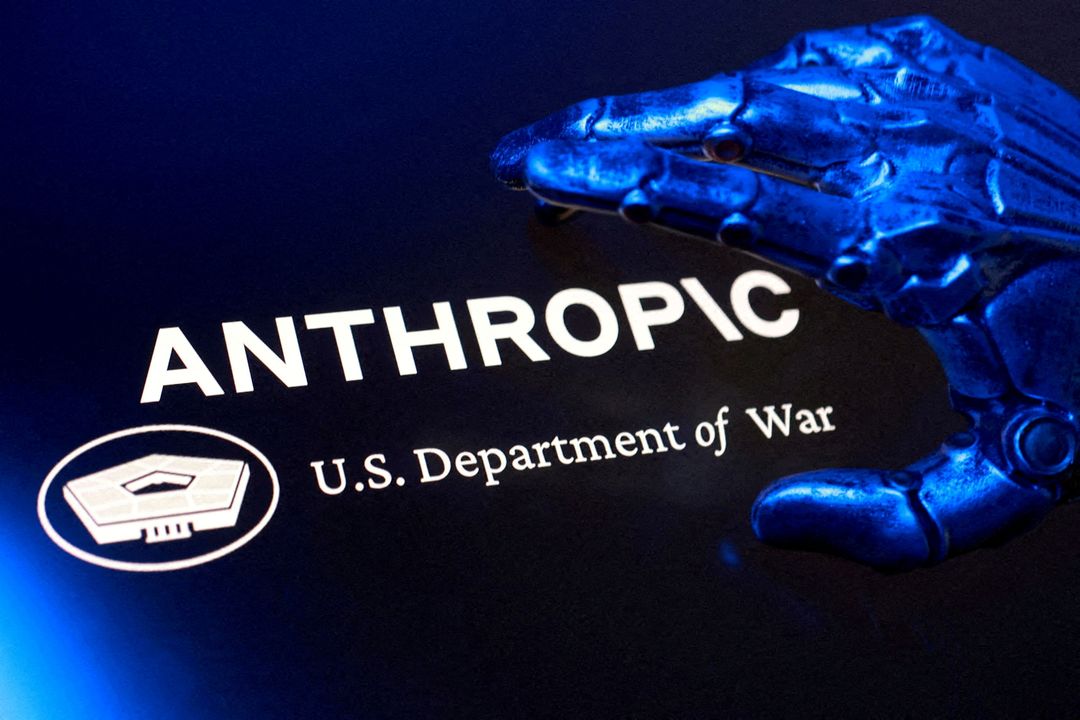
The US Department of Defense signed agreements with eight AI companies, including OpenAI, Google, Microsoft, Amazon, Oracle, Nvidia, SpaceX, and Reflection AI, granting their models access to Impact Level 6 and 7 classified military networks 'for any lawful use.' Anthropic, which had a $200 million contract canceled after refusing terms that would permit its Claude models to be used for autonomous weapons and civilian surveillance, was formally designated a supply chain risk, the first time that label has been applied to a US-based company. Pentagon Under Secretary Emil Michael said at an industry event Thursday that the DOD was previously 'single-threaded with Anthropic' and will 'never again' rely on a single provider, explicitly ruling out reconciliation.
The Pentagon didn't blacklist Anthropic because it was a security risk. It blacklisted Anthropic because it said no, and in a procurement ecosystem where 'any lawful use' is the price of entry, saying no is the unforgivable sin.
Prediction Markets
Prices as of 2026-05-08 — the analysis was written against these odds
The Hidden Bet
The eight firms that signed have resolved the same ethical tensions Anthropic refused to ignore
None of the signing companies have published what 'any lawful use' includes or excludes. Google employees were petitioning against the deal while it was being signed. The difference between Anthropic and Google may not be principles but politics.
Being excluded from defense contracts is a reputational or financial setback for Anthropic
Anthropic's Mythos cyber-defense model is reportedly under evaluation by 40 organizations including the NSA, despite the public fallout. The company may be building a parallel track where safety constraints are actually the product, not a bug.
The 'supply chain risk' designation is a legal mechanism with teeth
It has never been applied to a US-based company before. Its legal scope in domestic procurement is untested. Anthropic's lawsuit over the canceled $200M contract could establish precedent that limits the DOD's ability to use it punitively.
The Real Disagreement
The real fork is whether AI safety constraints in military systems are a genuine risk reducer or a liability shield for companies unwilling to make hard decisions. The Pentagon's position is that a model with hard-coded refusals is less useful than one that follows orders within legal limits, and that Anthropic's lines are too conservative for real operational conditions. Anthropic's position is that 'any lawful use' in a military context is an infinitely expandable category that will be stretched in ways that can't be undone. Both arguments are serious. The Pentagon's concern about operational reliability is legitimate. Anthropic's concern about mission creep is legitimate. The difference is which risk you think is recoverable. I'd lean toward Anthropic on this: a model that can be talked into crossing a line offers no guarantee at all, and the 'lawful' qualifier disappears quickly in a wartime legal environment.
What No One Is Saying
The eight companies that signed pledged compliance with 'any lawful use.' In a declared or undeclared conflict zone, the definition of lawful expands dramatically. None of these companies have published what their internal review processes look like when the Pentagon asks for something their models would otherwise refuse. The contracts may have removed the hard constraint but not replaced it with anything.
Who Pays
Civilian populations in conflict zones
Ongoing, wherever these systems are deployed operationally
AI-assisted targeting and surveillance at classified Impact Levels 6-7 has no public accountability mechanism. The 'lawful use' standard is self-certified by the deploying military unit.
Anthropic employees and investors
Immediate and compounding as defense contracts expand
The supply chain risk designation effectively locks the company out of $100B+ in federal AI procurement over the next decade unless the designation is litigated away or the policy changes.
Google employees who signed the petition
Near-term, as the deals move from signing to active deployment
Internal dissent at a company that just signed a classified military AI deal creates professional risk for those who went on record opposing it.
Scenarios
Anthropic wins in court, forces policy revision
Anthropic's lawsuit over the canceled $200M contract succeeds, establishing that supply chain risk designations cannot be used to punish companies for ethical refusals. The 'any lawful use' clause becomes legally contested and other companies face pressure to clarify their constraints.
Signal Watch for the court to allow Anthropic's case to proceed past motion to dismiss, and for Congressional hearings on the CRS report flagging the contradiction.
Anthropic gets quietly reintegrated via the NSA track
The Mythos cyber-defense model completes its 40-organization evaluation and gets approved for specific non-weapons applications. The public blacklist remains but is effectively circumvented. Anthropic takes defense money through a narrower channel.
Signal Watch for NSA or CISA announcements about approved AI vendors for defensive cyber operations.
The 'any lawful use' standard produces a visible incident
One of the eight signing companies faces internal or public exposure of a specific military use that employees or journalists identify as exceeding what was promised. Forces a reckoning similar to Project Maven in 2018.
Signal Internal leaks or Congressional inquiries about specific operational deployments; Google employee organizing escalating beyond petitions.
What Would Change This
If it emerged that Anthropic's models are already being used by defense-adjacent agencies via the Mythos track, it would undermine the entire framing of principled refusal. Alternatively, if one of the eight signing companies publicly disclosed what 'any lawful use' includes in their contract, it would either vindicate Anthropic's concerns or show they were overblown.