Europe Blinks on AI
What happened
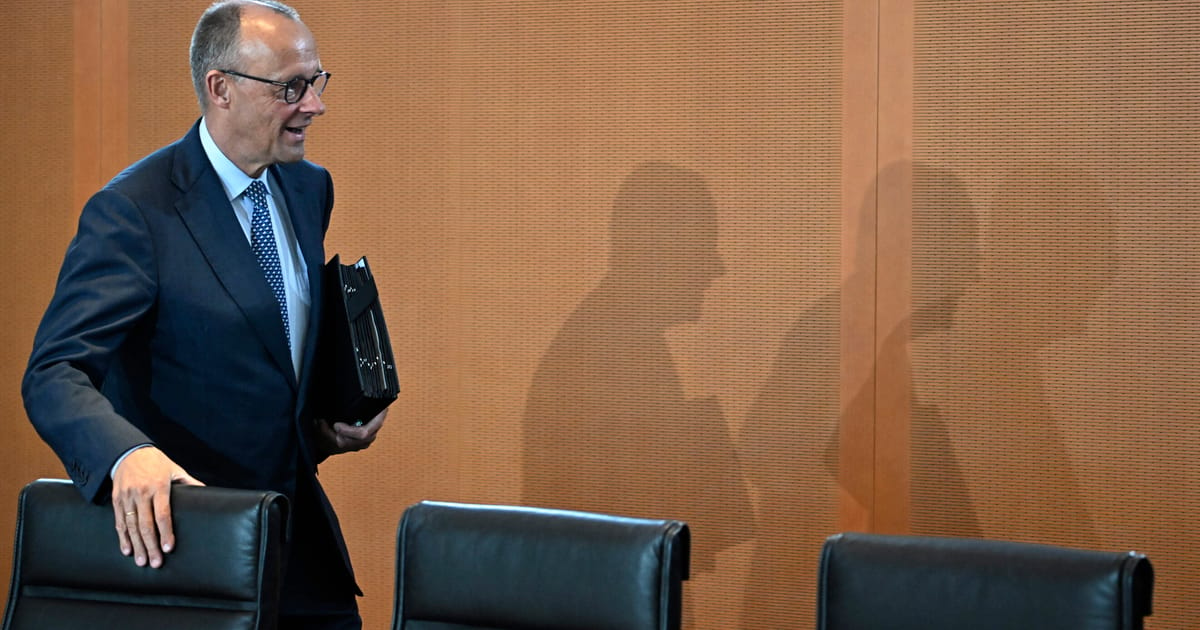
EU legislators reached a provisional agreement in the early morning hours of May 7 to amend the AI Act as part of the Digital Omnibus simplification package. The deal postpones compliance deadlines for high-risk AI systems from August 2026 to December 2027, an 18-month delay. It exempts industrial AI applications from the law's scope entirely, a direct concession to German industry after Chancellor Friedrich Merz personally pushed the change to protect Siemens and Bosch. AI tools that assist users are also no longer classified as high-risk unless their malfunction causes direct health or safety harm. The deal maintains a ban on nudifier apps and AI-generated child sexual abuse material. Formal parliamentary endorsement is still required.
The EU did not simplify its AI law; it defanged the parts that would have cost German industry money, then kept the parts that cost nothing.
The Hidden Bet
The exemption for industrial AI is a targeted, bounded change that preserves the law's core intent.
Industrial AI in Siemens and Bosch systems includes predictive maintenance on infrastructure, automated quality control affecting worker safety, and logistics algorithms managing supply chains. These are exactly the high-stakes, opaque deployments the AI Act was designed to reach. The 'machinery rules' that now govern them instead were written for physical equipment, not AI decision systems. The exemption is not bounded; it covers the most economically significant sector.
Delaying compliance to December 2027 gives companies time to build genuine safety infrastructure.
Companies under no deadline generally do not build safety infrastructure. The 18-month delay was specifically requested by companies that said they could not comply on time. The same companies will request another extension in 2027, citing the same implementation challenges. Deadline pressure is the only mechanism that produces actual compliance investment.
Keeping the ban on nudifier apps shows the core of the law is intact.
The nudifier ban was the politically easiest provision to keep. It costs industry nothing and generates good headlines. It is the fig leaf that makes the industrial exemptions and deadline postponements look balanced. The provisions that were removed or delayed are the ones that would have required companies to disclose training data, conduct conformity assessments, and maintain human oversight of consequential decisions.
The Real Disagreement
The core tension is between regulatory first-mover advantage and regulatory burden. Europe's bet with the AI Act was that setting high standards first would force global companies to build to European requirements, making EU standards the de facto baseline. The rollback bets on the opposite: that looser rules now will let European industry accumulate AI capability fast enough to compete, after which safety rules can be imposed from a position of strength. Both bets can be right; they cannot both be right at the same time. The first bet requires tolerating competitive disadvantage in the short run. The second requires believing that safety and capability can be sequenced rather than built together. The evidence from the US deregulatory environment is not encouraging: looser rules produce faster deployment, but not necessarily safer or more competitive systems in the long run. The EU needed to choose. It chose the second bet under industry pressure, not from a considered strategic analysis.
What No One Is Saying
Germany ran a protection play for Siemens and Bosch dressed as a competitiveness argument. The 'industrial AI exemption' is not about European AI strategy; it is about two large German companies not wanting to retool their factory automation systems for regulatory compliance. Every other country in the EU that lacks comparable industrial AI deployments just subsidized German competitive advantage by weakening rules they were actually going to enforce on smaller domestic players.
Who Pays
Workers in EU industrial facilities using automated systems
Ongoing through at least December 2027; longer if deadlines extend
Industrial AI systems now exempt from the AI Act's high-risk requirements will manage quality control, logistics, and some maintenance decisions without the transparency and human oversight provisions the Act mandated. When these systems fail or produce discriminatory outputs, workers have no mandatory disclosure or redress mechanism.
Non-German EU manufacturers
From now through the December 2027 deadline for other sectors
SMEs in Italy, Poland, and Spain deploying AI in sectors that are not covered by the industrial exemption still face full compliance requirements on their timelines, while German industrial giants got a carve-out. The competitive field is not level within the EU.
Non-EU AI companies seeking regulatory clarity
Immediate; compliance planning must restart
The deal was explicitly motivated in part by US pressure and competitive concerns. But the result is a law with complex dual deadlines, sector-specific exemptions, and a still-pending formal endorsement. The compliance landscape is now more uncertain, not less.
Scenarios
Extension requests start in 2027
Companies use the 18-month grace period to lobby rather than comply. In late 2026, industry groups file for another extension citing implementation complexity and competitive pressure from China and the US. The December 2027 deadline becomes a negotiating floor rather than a hard date.
Signal A major industry lobbying coalition publishes a 'readiness assessment' showing less than 20% of affected companies have begun compliance work by Q3 2026.
Medical device exemption is next
Liberal and centrist MEPs who said the current deal did not go far enough push for additional carve-outs in the next simplification package. Medical device AI, radio equipment AI, and education AI are removed or delayed, reducing the AI Act to a limited consumer protection law covering mostly generative AI products.
Signal The center-right EPP group files a formal amendment proposal to expand exemptions to medical devices within six months of this deal's formal ratification.
Formal endorsement stalls
Some Parliament factions reject the deal as insufficient protection for citizens and as a precedent of industrial lobbying overriding safety rules. A formal vote falls short, and the deal returns to negotiation with harder civil society input. The August 2026 deadline re-emerges as real pressure.
Signal Leading MEPs from the Greens/EFA and Socialists publicly announce they cannot support the provisional agreement in its current form before the formal vote.
What Would Change This
If independent conformity assessments conducted under the machinery rules produce evidence that the exempted industrial AI systems are causing material harms, public pressure could force a re-regulation. Alternatively, if a major industrial AI failure in a German or French facility occurs before December 2027 and the system is shown to have been exempt from AI Act requirements, the political cost of the exemption would become visible and immediate.
Related
The EU Just Rewrote Its AI Law Before It Took Effect. OpenAI Is Cooperating. Anthropic Is Not.
powerThe EU Spent Three Years Writing the World's Toughest AI Law. Then It Rewrote It.
decisionEU AI Talks Collapse at Midnight. August Deadline Is Back.
powerMeta Is Giving Rival AI Chatbots Free WhatsApp Access for One Month to Avoid a Fine It Cannot Afford Politically