Trump Officially Moved Terrorism's Address from the Middle East to Mexico City.
What happened
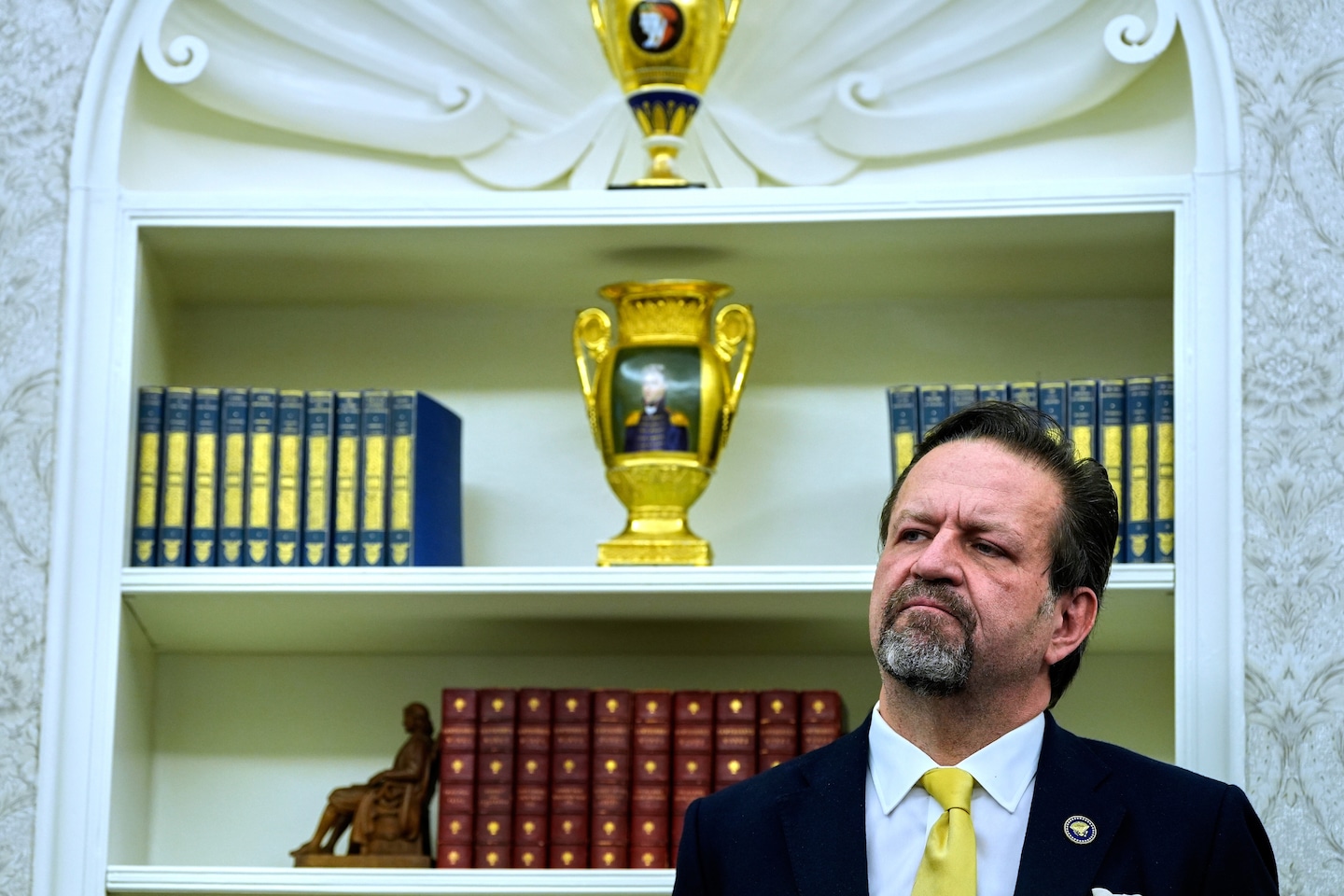
President Trump signed a 16-page national counterterrorism strategy on May 6, 2026, designating Western Hemisphere cartels and criminal organizations as the top priority of the U.S. counterterrorism apparatus. Islamic jihadist groups are explicitly ranked second. Sebastian Gorka, the senior director for counterterrorism, said the strategy 'prioritizes the neutralization of hemispheric terror threats' and acknowledged this represents a shift from most of his career focused on the Middle East. The strategy also targets domestic extremist groups including Antifa and right-wing organizations. It follows the administration's National Security Strategy, which also made the hemisphere the top focus, and reflects a posture already operationalized through cartel FTO designations and troop deployments to the southern border.
Calling cartels terrorists was the prelude. Making them the top priority of the entire counterterrorism apparatus is the escalation, and it requires either military operations in Mexico with Mexican consent, military operations without it, or a strategy that calls for escalation but cannot deliver it.
The Hidden Bet
Mexico will cooperate with a strategy that names Mexican cartels as the top U.S. security threat
Mexico's constitution prohibits foreign military operations on Mexican soil. President Claudia Sheinbaum has repeatedly rejected any U.S. military role in Mexican cartel operations. The strategy mentions Mexico 30+ times but has no legal pathway to the operational approach it implies without Mexican consent. A strategy that cannot be executed is either a domestic political document or a prelude to a confrontation with a neighbor that buys $450 billion in U.S. exports annually.
FTO designation is the primary tool and it is already working
Sinaloa and other cartels were designated Foreign Terrorist Organizations earlier in the Trump term. The designation was supposed to choke off financing through correspondent banking. Cartel revenue through fentanyl trafficking has continued at roughly the same scale. The financial pressure from FTO designation may be smaller than advertised, and the strategy's escalation does not specify new tools beyond the designation already in place.
Downranking jihadist groups is safe because the threat has diminished
AQAP, ISIS-Khorasan, and other jihadist groups were ranked second in the document. Gorka acknowledged this is a shift from the previous two decades. Intelligence agency assessments of jihadist capability are not public, but the threat did not disappear. Reallocation of counterterrorism resources away from groups that continue to operate creates risk that is obscured by the domestic political salience of the cartel threat.
The Real Disagreement
The actual fork is between two things that both seem true. First: the cartel threat to U.S. domestic security through fentanyl, human trafficking, and gang violence is real and has not been adequately addressed by previous strategies that treated cartels as law enforcement problems. Second: elevating cartels to the top of the counterterrorism apparatus generates pressure for military solutions that cannot work without Mexican consent, risks rupturing the most important bilateral trading relationship in North America, and may divert resources from jihadist threats that are less politically salient but operationally real. The strategy names both problems but resolves the tension by simply declaring the Western Hemisphere more important. That is a political judgment dressed as a strategic one.
What No One Is Saying
The strategy explicitly targets domestic extremist groups, including Antifa and right-wing organizations. That is an expansion of the counterterrorism definition beyond foreign actors. The same legal and operational framework the administration is building to dismantle cartel networks, including FTO designations, financial targeting, and classified environment operations, now has a domestic application that was not in previous counterterrorism strategies. Congress did not debate this expansion. The public rollout focused on cartels; the domestic targeting was a line item.
Who Pays
Mexico's government and economy
Pressure builds over 6-12 months as operational demands exceed diplomatic capacity
A strategy that names Mexican cartels as the top U.S. security threat, without Mexican consent to operations, creates sustained pressure for military confrontation or sanctions. Mexico is the U.S.'s largest trading partner by goods. A deterioration in the bilateral relationship over cartel operations creates supply chain disruption across agriculture, automotive manufacturing, and consumer goods.
U.S. counterterrorism resources diverted from Middle East
Ongoing, effects visible only when an attack that could have been prevented is not
Every analyst-hour, surveillance asset, and covert action capability reoriented toward the Western Hemisphere is no longer watching the 'top five' jihadist groups Gorka mentioned. AQAP and ISIS-Khorasan did not stop operating because they fell to second place in the U.S. strategy.
Civil libertarians and people named as domestic extremists
Immediate; the framework is in place
The strategy's inclusion of domestic groups including Antifa and right-wing extremists under the counterterrorism umbrella expands surveillance and operational authority to U.S. persons. The legal framework for counterterrorism operations has fewer civil liberty protections than domestic law enforcement.
Scenarios
Coercive diplomacy forces Mexican cooperation
Tariff threats and financial pressure (FTO designation enforcement against Mexican banks) push Sheinbaum's government to allow joint operations against specific cartel leadership. The strategy gets operational traction without formal military presence. Fentanyl seizures increase.
Signal Joint U.S.-Mexico operations announced targeting Sinaloa cartel leadership by Q4 2026
Strategy as document, not operations
The counterterrorism strategy becomes a political artifact. Mexico refuses cooperation, military options are constrained, and FTO designation tools produce modest enforcement results. The strategy exists to show domestic audiences the administration is serious about cartels without requiring the politically costly confrontation with Mexico that operational seriousness would require.
Signal No new enforcement tools or bilateral agreements six months after the strategy's release
Unilateral action, bilateral rupture
The administration conducts unilateral operations against cartel infrastructure in Mexico without consent, citing the FTO designations. Mexico suspends cooperation on immigration, trade, and security. The bilateral relationship breaks down in a way that disrupts supply chains.
Signal Reports of U.S. military or intelligence operations inside Mexico without disclosed bilateral authorization
What Would Change This
If Claudia Sheinbaum's government formally consents to joint operations against specific cartel targets, the strategy gains operational credibility and the bilateral rupture risk declines. If it does not, the strategy is either a document or a prelude to coercion. The next six months of U.S.-Mexico diplomatic traffic is the signal.
Related
The US Just Indicted a Sitting Mexican Governor for Running Cover for the Sinaloa Cartel
powerChina Did Not Fight in the Iran War. It May Have Won It Anyway.
powerThe Senate Has Voted Seven Times to End the Iran War and Lost Every Time. That Is Now the Point.
powerTrump's Tariff Playbook Has One Move Left and It Also Got Struck Down