Trump Pulls 5,000 Troops from Germany. NATO's Nervous System Just Got Cut.
What happened
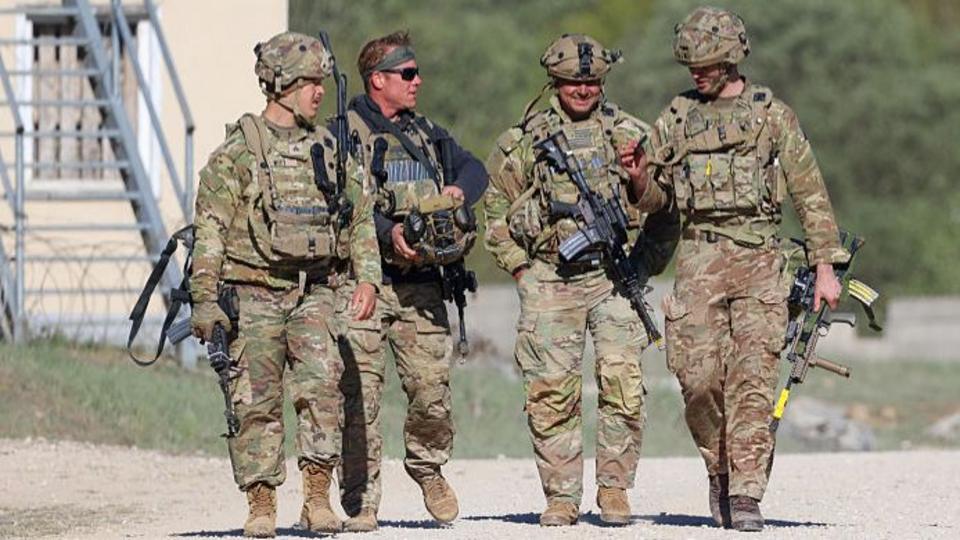
The US Defense Department announced it will withdraw 5,000 troops from Germany over the next 6-12 months, ordered by Defense Secretary Pete Hegseth. The move followed a public spat between Trump and German Chancellor Friedrich Merz, who told university students that the US had been "humiliated" by Iranian negotiators during ceasefire talks. Trump responded on Truth Social calling Merz incompetent, and then announced the troop withdrawal. Germany currently hosts more than 36,000 US troops, the largest American deployment in Europe, primarily at Ramstein Air Base.
Trump is using NATO's military infrastructure as a punishment mechanism, which means the deterrence value of every US troop in Europe now depends not on treaty commitments but on whether allied leaders say things Trump likes.
Prediction Markets
Prices as of 2026-05-02 — the analysis was written against these odds
The Hidden Bet
Germany's increased defense spending (3.1% of GDP by 2027) gives it enough leverage to absorb US troop cuts without strategic damage
Defense spending buys hardware, not decades of integrated command structures, intelligence sharing, and logistics. The US presence at Ramstein is not just about bodies in uniform; it is the nervous system of European air power. Money spent now does not replace what takes 20 years to build.
This is negotiating pressure that will be reversed once Trump gets concessions from Europe on Iran or trade
A prior 2020 proposal to remove 12,000 troops from Germany was blocked by Congress and reversed by Biden. But Trump now has a more compliant Congress and a Defense Secretary willing to execute. The institutional brakes that stopped the last attempt are weaker this time.
The withdrawal signals a genuine shift toward the Indo-Pacific, consistent with stated US strategic priorities
Hegseth said the decision reflects 'theatre requirements and conditions on the ground.' But the timing, one day after Merz publicly embarrassed Trump over Iran negotiations, suggests the real driver is retaliation, not strategic rebalancing. The Indo-Pacific framing is cover.
The Real Disagreement
The tension is between alliance credibility and executive autonomy. If allies can trigger troop withdrawals simply by speaking critically, the deterrence value of US forward deployment collapses: every US base becomes a hostage to allied silence rather than a guarantee of shared security. But if Congress or courts constrain Trump's ability to use troop deployment as a lever, you lose the genuine flexibility that makes alliances responsive to political reality. The harder position to hold, but the right one, is that some things cannot be treated as bargaining chips without destroying the thing itself. The moment a US ally must weigh 'will saying this get our troops pulled' before speaking, the alliance has already failed.
What No One Is Saying
Merz is correct about the substance and Trump knows it. The US Iran strategy has produced a ceasefire that is not holding, a Strait of Hormuz that remains effectively closed, and a 60-day War Powers deadline Trump is now arguing away with legal sophistry. Allies calling this what it is are not the problem; they are the only honest actors in the room.
Who Pays
Eastern European NATO members, especially Poland and the Baltic states
Immediate, in terms of confidence and planning; strategic damage accrues over months
Every US troop removed from Germany shifts the calculus on Russian deterrence. The signal is not that the US is leaving Germany; it is that the US is willing to treat forward deployment as revocable on political grounds, which undermines credible commitment everywhere on NATO's eastern flank.
Communities around Ramstein Air Base in Germany
6-12 months, per Hegseth's own timeline
Roughly 36,000 active duty personnel plus dependents and contractors. Local economies built around US bases face real contraction, not just a symbolic snub.
The Trump administration's own Iran diplomacy
Immediate
Pulling troops from Europe's largest US base while Iranian negotiators are reportedly still stalling sends a signal of internal discord within the US-led coalition. It reduces Trump's leverage precisely when he claims to need it most.
Scenarios
Cosmetic retreat
Congress pushes back, as it did in 2020, and Hegseth slows or halts the withdrawal in practice while Trump claims credit for 'pressure.' Merz quietly stops criticizing US strategy in public.
Signal Senate Armed Services Committee calls hearings; Republican members from states with Germany-based units publicly object
Full execution
The 5,000 troops leave on schedule. Trump then threatens Italy and Spain, as he has already suggested. NATO's Article 5 commitment becomes publicly understood as conditional on allied political behavior, not treaty obligation.
Signal Hegseth sets specific redeployment dates within 90 days; no Republican opposition materializes in Congress
Trade for Iran
The withdrawal is paused or reversed as part of a broader bargain in which Germany and other European allies publicly back Trump's Iran position and agree to participate in Hormuz operations. Merz is politically humiliated but the troops stay.
Signal A Merz-Trump phone call is announced; German language on Iran negotiations shifts noticeably within two weeks
What Would Change This
If Germany announced it was taking over operational command of Ramstein's functions through a European structure, and if other NATO members began building redundant command infrastructure, the withdrawal would lose its punitive power. That would require the EU to move faster on defense integration than it has in 70 years. The market says Merz has a 15.5% chance of losing the chancellorship before 2027, which means the Polymarket consensus is that this fight hurts him at home more than it forces Trump to back down.
Related
Europe Is Taking Over NATO. Washington Hasn't Noticed It's Losing the Alliance.
powerTrump Pulls Troops From Germany. Spain and Italy Are Next.
powerEurope Is Building a NATO Without the US. Germany Just Agreed to Help.
conflictTrump Pulls 5,000 Troops from Germany. NATO's Eastern Flank Is Now Improvising.