SCOTUS Signals It Will Let Trump Deport a Million People Without Court Review
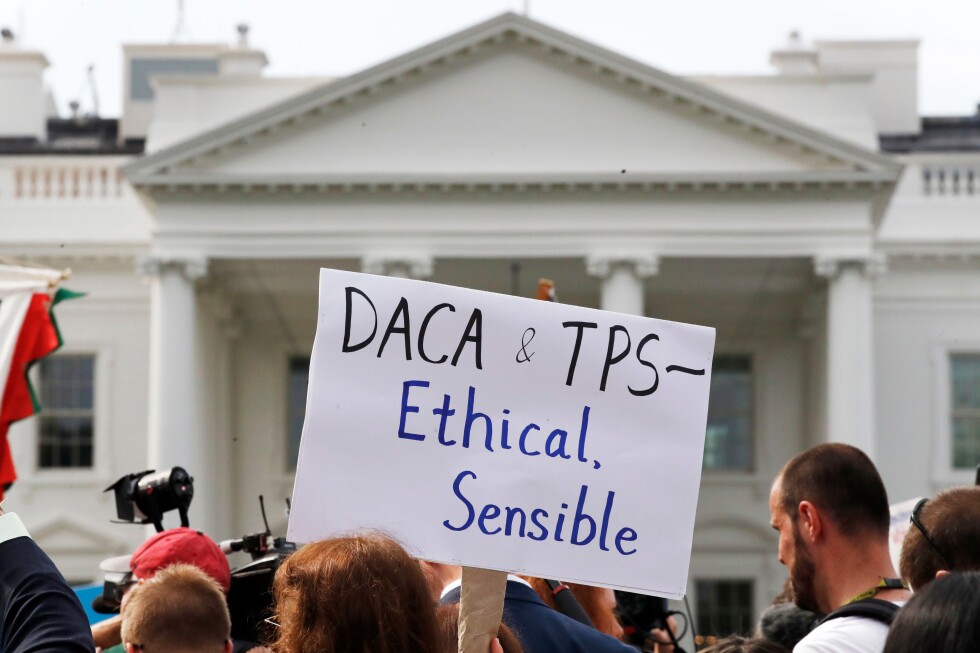
What happened
The Supreme Court heard oral arguments on April 29 in two cases, Mullin v. Doe and Trump v. Miot, over whether the Trump administration can end Temporary Protected Status for Haitian and Syrian immigrants without judicial review. TPS currently shields roughly 350,000 Haitians and 6,000 Syrians, and the Trump administration has moved to cancel the status for over 1 million people from 13 countries since taking office. Several conservative justices signaled sympathy with the administration's argument that the TPS statute strips courts of jurisdiction to review cancellation decisions. A ruling is expected before the court's term ends in late June.
The case is not really about Haiti or Syria. It is about whether the executive branch can make life-or-death decisions affecting a million people with no judicial check at all, and the current court is strongly inclined to say yes.
The Hidden Bet
TPS holders are recent arrivals with tenuous ties to the US
Many Haitian TPS holders have been in the US since the 2010 earthquake, 16 years. Many have US-citizen children, deep community ties, and established businesses. The 'temporary' in Temporary Protected Status has not been temporary in practice. Deporting these populations would have cascading effects on US communities, not just on Haiti.
The jurisdictional argument is a technical procedural question
Stripping courts of jurisdiction over TPS cancellations is a structural change to executive accountability. If upheld, the same logic could be applied to other immigration statuses where the statute contains similar language. The jurisdictional question is the whole game, not a procedural threshold.
Countries affected by cancellation can absorb returnees
Haiti has been in political crisis since the 2021 assassination of President Moise, with gang control of major urban areas. Syria remains under reconstruction after over a decade of civil war. Mass deportation to either country in current conditions would produce a humanitarian catastrophe that US foreign policy would then need to manage.
The Real Disagreement
The fork is between two readings of what humanitarian protection means. The administration's view: TPS is a discretionary executive tool, the statute explicitly limits judicial review, and courts have no role in checking how the executive exercises lawful discretion. The challengers' view: TPS, however discretionary in origin, creates legal status that triggers due process protections, and stripping courts of jurisdiction in cases involving potential persecution and death violates basic constitutional guarantees. These two positions cannot coexist. The court's conservative majority will likely choose the first, and the cost is removing the judiciary from the largest potential mass deportation in US history.
What No One Is Saying
Syria's designation for TPS was originally extended under both Republican and Democratic administrations specifically because conditions there were too dangerous for return. Canceling Syrian TPS now, while the Syria reconstruction is still in its early stages and armed factions remain active, contradicts the State Department's own country condition assessments. No one is asking why the State Department has not publicly contradicted DHS on the safety of return.
Who Pays
Haitian TPS holders with US-citizen children
Within months of a ruling; DHS can move quickly once judicial stays are lifted
Deportation separates US-citizen children from their parents, either because children cannot travel to Haiti due to gang violence or because they are American citizens with no legal basis to reside in Haiti
Agricultural, construction, and service sectors employing TPS workers
Immediate upon revocation of work authorization status
TPS holders make up a significant share of the workforce in specific industries in Florida, Texas, and the Northeast; sudden loss of work authorization creates immediate labor shortages
Haiti and its regional neighbors
Medium-term; the destabilization effect compounds over 6-18 months
Remittances from the US Haitian diaspora are Haiti's largest source of foreign income. Mass deportation collapses this income stream while simultaneously flooding a failing state with returnees who have no resources or support systems
Scenarios
Court Strips Jurisdiction
The majority rules that the TPS statute bars judicial review. DHS proceeds with cancellations for all 13 countries. Mass deportation processing begins, subject only to country-by-country negotiations.
Signal The ruling, expected by end of June, explicitly states courts lack jurisdiction to review TPS termination decisions on the merits.
Narrow Ruling
The court rules for the administration on the specific Haitian and Syrian terminations without reaching the broad jurisdictional question. Leaves open whether courts can review other TPS cancellations on different factual records.
Signal Ruling limits itself to the specific statutory language and administrative record in Mullin v. Doe, without issuing a categorical rule about all TPS decisions.
Court Preserves Review
A surprise outcome: the court finds courts retain jurisdiction to review TPS cancellations for abuse of discretion. Polymarket gives 88% odds on the birthright citizenship EO being struck down, suggesting the court is not uniformly deferential to Trump on immigration, but TPS is a different statute.
Signal One of the conservative justices, most likely Roberts or Kavanaugh, breaks with the majority in oral arguments to question whether Congress can truly strip courts of all review.
What Would Change This
If DHS produces updated country condition reports for Haiti and Syria showing conditions have materially improved and can support mass return, the humanitarian argument against cancellation weakens substantially. No such reports have been produced. Their absence is itself evidence.