Supreme Court Signals It Will End Deportation Protections for 1.3 Million Migrants
What happened
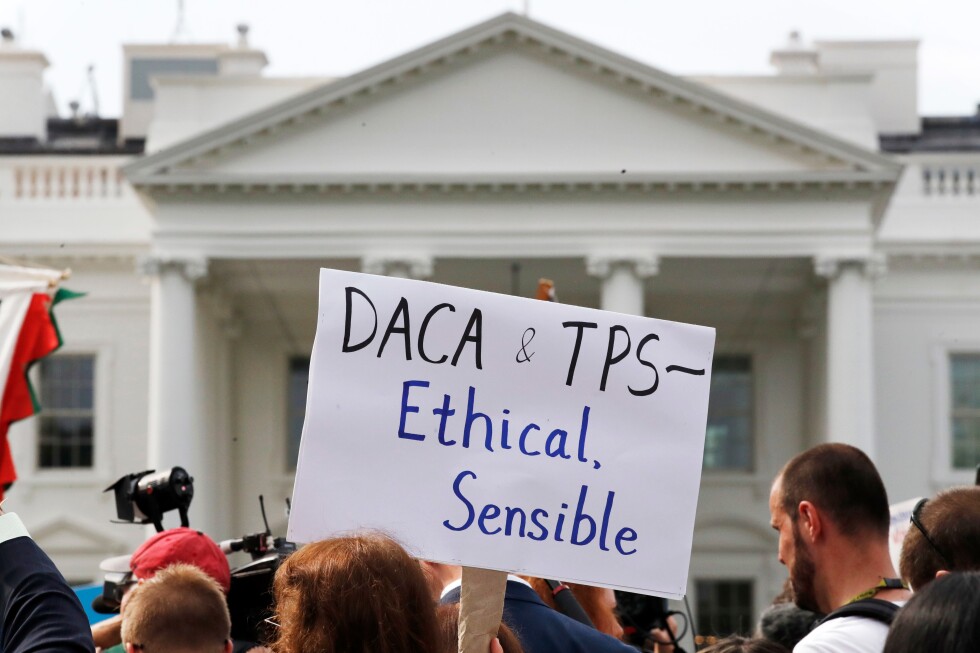
The Supreme Court heard oral arguments Wednesday in two cases challenging the Trump administration's termination of Temporary Protected Status for approximately 360,000 Haitians and 7,000 Syrians in the United States. Several conservative justices appeared receptive to the government's argument that the relevant statute bars courts from reviewing TPS termination decisions at all. The Trump administration previously ended TPS for Venezuelans, and the court allowed that termination to proceed twice via emergency orders. Congress created TPS in 1990 as a humanitarian program; every president since has used it. The outcome could affect up to 1.3 million people from 17 countries if the court's logic applies broadly.
The court is not just deciding whether these 360,000 people can be deported; it is deciding whether the executive branch has unreviewable authority to end a humanitarian program that a bipartisan consensus has supported for 36 years.
The Hidden Bet
The court's conservative majority will rule uniformly for the Trump administration.
Roberts and Barrett are wild cards. The racial animus claims -- that Noem's terminations were motivated by hostility to Haitian and Syrian people specifically -- give both a legally conservative path to rule against the administration without overturning the broader statute. The court ruled against the administration on the citizenship EO, suggesting the majority is not monolithic. Polymarket gives a 92.35% probability SCOTUS strikes down the birthright citizenship EO, which implies the court distinguishes between immigration powers and discriminatory applications.
Ending TPS will enable mass deportations of the affected populations.
Losing TPS does not automatically mean immediate deportation. Many TPS holders have pending asylum claims, other forms of relief, or US-citizen children whose presence creates legal complications. The administration's operational deportation capacity is also limited; deporting 360,000 people from Haiti and Syria would require sustained logistics, bilateral agreements, and resources ICE does not currently have.
This case is primarily about immigration policy.
The deeper issue is judicial review of executive discretion. If the court rules that the statute bars all review of TPS terminations, it creates a precedent for unreviewable executive action in other humanitarian programs. The holding would be about what courts can see, not just about who gets deported.
The Real Disagreement
The genuine fork is between treating TPS as a humanitarian commitment that the executive can modify but not unilaterally destroy without judicial check, versus treating TPS as pure executive discretion where the initial grant by a prior president creates no legal expectation of continuation. The first position is the position of every administration for 36 years; the second is the Trump administration's current argument. I lean toward the first, not on sentiment but because the court has already ruled that the birthright citizenship EO exceeded executive power -- showing a willingness to constrain the administration on immigration when the legal case is clear. The racial animus argument gives Roberts a similar off-ramp here. But the Venezuela precedent shows the same court allowing TPS terminations to proceed, which complicates that reading.
What No One Is Saying
Syria is a different case from Haiti in one important respect: Syria is an active conflict zone where deportees face genuine mortal risk. Every Haitian TPS holder deported returns to a country experiencing extreme gang violence and state collapse; every Syrian deported may be returning to a post-Assad government that is still unsettled. The administration's argument treats both populations as identical legal categories. The practical consequences are not identical.
Who Pays
Haitian TPS holders and their US-citizen children
Within months of a ruling, if it goes fully against TPS holders
Loss of legal work authorization, followed by potential deportation to Haiti, where gang violence has displaced more than a million people internally. American-born children face a choice between following deported parents and family separation.
Industries employing TPS workers
6-18 months after a ruling as work permits expire and deportations begin
TPS holders work disproportionately in construction, hospitality, and home health care -- sectors already facing labor shortages. Rapid removal of this workforce would accelerate wage and supply pressure in those industries.
Nonprofit and legal aid organizations
Immediate upon ruling, compounding over 2-3 years
A ruling eliminating judicial review floods immigration courts with cases people can no longer contest. The legal system that would process appeals would be handling millions of cases simultaneously.
Scenarios
Court rules TPS terminations are reviewable, racial animus claim proceeds
Roberts or Barrett joins the liberals on the statutory interpretation question. TPS holders retain legal status while lower courts examine whether racial animus motivated the terminations. Deportations delayed by 1-2 years minimum.
Signal Roberts asks pointed questions about the racial animus record at oral argument
Court rules for the administration broadly, TPS ends
Conservative majority holds the statute bars review. TPS for Haitians and Syrians ends. Administration extends the logic to other countries. Up to 1.3 million people face status loss.
Signal Decision issued in June with only Kagan, Sotomayor, and Jackson dissenting
Court rules narrowly, leaving the broader TPS regime intact
The court allows these specific terminations to proceed on narrow grounds without establishing a broad precedent against judicial review of all TPS decisions. Uncertainty persists for other TPS populations.
Signal Decision issued with a majority opinion joined by fewer than 6 justices
What Would Change This
If the court's majority opinion explicitly preserves racial animus as grounds for challenging TPS terminations, the administration's practical power to end TPS broadly is constrained even in a nominal loss for TPS holders in this case. That would be the meaningful signal to watch for in the opinion itself, not just the outcome.