The OpenAI Trial Is Not About Money
What happened
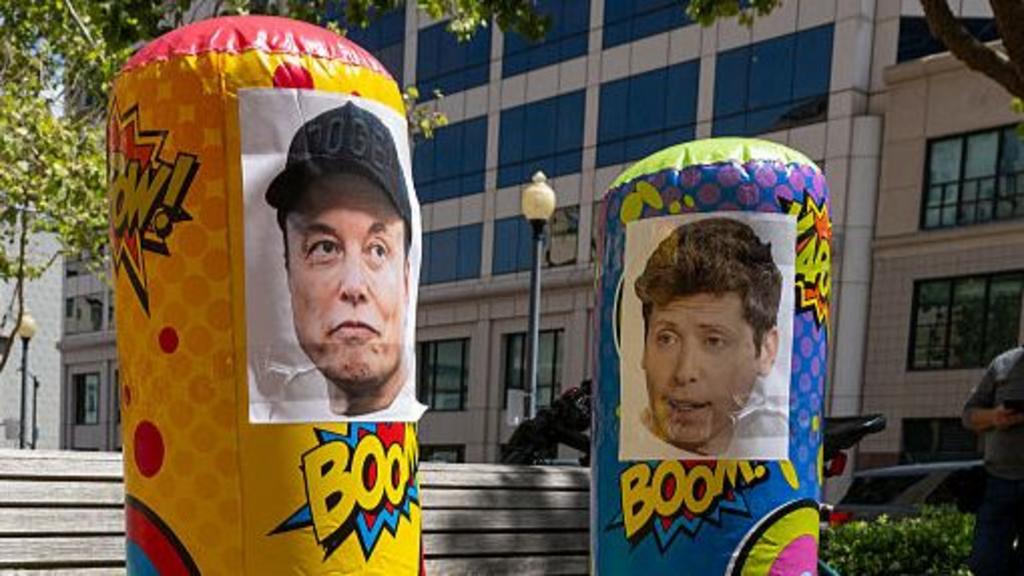
The trial pitting Elon Musk against Sam Altman and OpenAI opened in Oakland, California on April 28. Musk, who donated $38 million to OpenAI when it was a nonprofit, is claiming breach of charitable trust and unjust enrichment after OpenAI opened a commercial arm in 2018 and went on to become one of the most valuable private companies in the world. Musk took the stand on the first day, arguing that converting a charitable mission into a profit engine destroys the entire foundation of charitable giving. OpenAI's lawyers countered that Musk's lawsuit is motivated entirely by competitive jealousy: his own AI company, xAI, debuted a year after ChatGPT and has lagged behind. A verdict is expected in late May.
This trial is a referendum on whether 'mission-driven' is a legal commitment or a fundraising line, and the answer will determine how much money the next generation of nonprofit-to-profit conversions can extract from donors without recourse.
Prediction Markets
Prices as of 2026-04-29 — the analysis was written against these odds
The Hidden Bet
Musk's lawsuit is primarily about principle: protecting nonprofit law.
Musk's own AI company, xAI, competes directly with OpenAI. He is asking for billions in wrongful gains and the ouster of Altman, not just a structural remedy. The cure he wants is competitive, not charitable.
OpenAI's commercial pivot was a betrayal of its founding mission.
Altman and Brockman argue Musk understood the need to generate revenue and declined the CEO role he was offered. The nonprofit structure was always a temporary wrapper on a company that needed enormous compute spend to exist.
A Musk win would strengthen nonprofit law.
If Musk wins, the remedy would likely benefit his xAI, which is also a for-profit AI company. The precedent would be that large donors can use nonprofit law as a retroactive veto over corporate strategy, chilling donations to mission-driven organizations in the process.
The Real Disagreement
The crux is whether a nonprofit that builds something genuinely valuable is allowed to keep that value, or whether donors retain a permanent claim on the upside. Musk says donors gave to a mission, not to make Altman rich. Altman says the mission required the money, and the money required commercialization. Both positions are coherent. The real fork is between two models of nonprofit legitimacy: one where the founding charter is a contract with donors, and one where it is a statement of intent that circumstances can revise. The first model protects donors but makes ambitious nonprofit projects unfundable. The second enables ambition but gives founders unlimited discretion to redefine the mission after the donations clear. The Musk side has the law; the Altman side has the logic of how large technology companies actually get built. A narrow Altman win on the merits but a loss in public trust is the most likely outcome.
What No One Is Saying
Both sides are treating Musk's $38 million donation as the relevant number. The relevant number is the valuation differential: OpenAI is now worth roughly $300 billion. Musk is not fighting over the charitable mission. He is fighting over a missed investment that would have made him the controlling shareholder of the most important AI lab in the world.
Who Pays
Future nonprofit donors to high-tech ventures
Medium-term, as the legal precedent propagates through future fundraising disclosures
If Musk wins, donors gain a legal weapon to claw back value from any nonprofit-to-profit conversion. If Altman wins, donors have no recourse when a nonprofit quietly monetizes their contributions. Both outcomes discourage this category of donation.
OpenAI employees and early investors
Within weeks of a verdict, if Musk wins
A ruling that forces structural changes or asset transfers to the nonprofit arm would dilute equity and potentially unwind the Microsoft partnership terms.
Scenarios
Altman wins on the merits
The court finds OpenAI's commercialization was not a breach of charitable trust. Musk gets nothing. The case becomes precedent that charitable mission language in nonprofit charters is aspirational, not contractually binding on future pivots. OpenAI's IPO valuation rises.
Signal Watch for the judge to deny Musk's request for an injunction mid-trial, which would signal she sees no likely harm requiring emergency remedy.
Settlement before verdict
Musk and OpenAI agree on terms: Musk drops his claims in exchange for a seat at some future governance table or a payment into the nonprofit arm that lets him declare victory. The underlying legal questions go unresolved.
Signal Markets on this settled at 28.5% as of today. Watch for Musk to soften his public commentary on X or for a joint court filing requesting more time.
Musk wins structural remedy
Court orders OpenAI to transfer a significant portion of its commercial gains to its nonprofit arm, or orders restructuring. Altman is not removed. xAI gains no direct benefit but the ruling weakens OpenAI's ability to raise capital on its current terms.
Signal Watch for the judge's questions during testimony to focus on specific dollar amounts rather than corporate structure, suggesting she is calculating damages not remedies.
What Would Change This
If evidence emerges that Musk was explicitly told the nonprofit structure would be dissolved once OpenAI achieved scale, and he accepted those terms, the breach-of-trust argument collapses. Internal communications from 2015-2017 are the key battleground.