Trump Escapes the White House Correspondents' Dinner. Now He Wants to Escape the Venue Entirely.
What happened
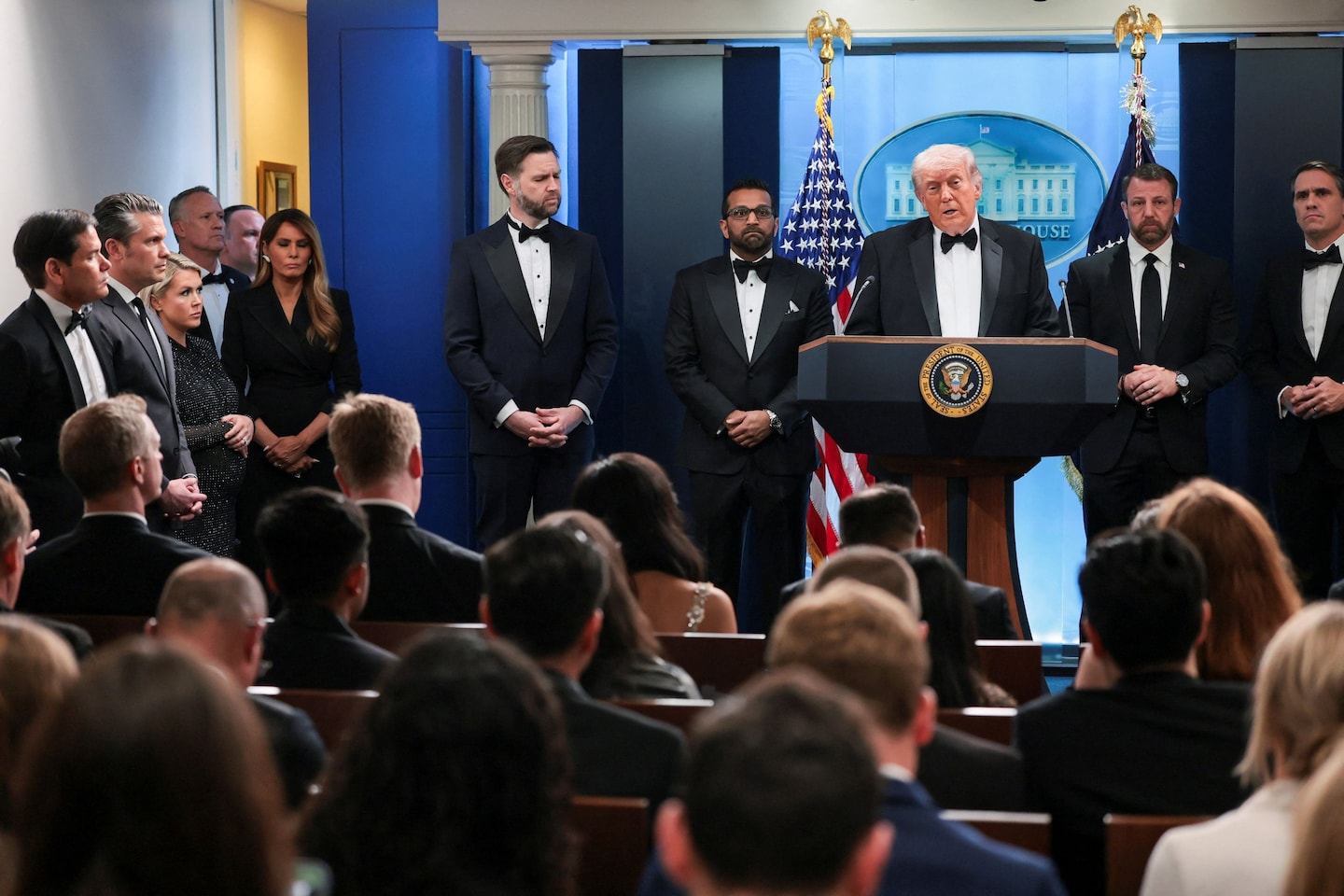
On Saturday night, Cole Tomas Allen, a 31-year-old teacher from Torrance, California, breached a security checkpoint at the Washington Hilton and fired at least six shots in the lobby leading to the ballroom where the White House Correspondents' Association Dinner was underway with President Trump in attendance. Allen was armed with a shotgun, a handgun, and multiple knives. He was subdued by Secret Service before reaching the ballroom. Trump and Melania were evacuated to a secure room; no guests were killed. Allen faces charges including assaulting a federal officer. Within hours, Trump was publicly arguing the incident proved he needed a ballroom built at the White House itself.
The real story is not the shooting but what happened 90 minutes after it: Trump converted a foiled attack into a political instrument to advance a project his legal adversaries had blocked, turning a near-tragedy into leverage before the victims had been interviewed.
The Hidden Bet
The security failure is primarily a Secret Service problem
Allen entered as a hotel guest, which is the outermost layer of a tiered security protocol. The failure is architectural: the annual press dinner was never designed to be a presidential event, and the perimeter has always been porous by design. The risk was known and accepted annually.
Trump's ballroom push is cynical opportunism disconnected from security logic
Holding a presidential event at a commercial hotel with 2,000 journalists, staff, and guests who cannot all be fully screened is genuinely harder to secure than a closed government facility. The policy argument has merit even if the timing is exploitative.
The press dinner will resume next year after some procedural review
Trump boycotted the WHCD through most of his first term and only returned this year. If he announces the event should now be moved or reconfigured, the Correspondents' Association faces a dilemma: refuse and lose presidential participation, or comply and lose editorial independence over the venue.
The Real Disagreement
The fork is between two genuine values: the White House Correspondents' Dinner as a symbolic institution of press access where the president answers symbolically to journalists in a neutral public venue, versus the security logic that a commercial hotel with open reservations cannot be adequately hardened for a presidential event. Both are real. The institution side argues the dinner's independence from government control is the point. The security side argues that independence is now lethal risk. If you believe press independence is structural and worth protecting even at cost, you resist moving the event. If you believe the president's security must come first, the venue is indefensible. The security argument wins on its merits: it is harder to counter. But moving the dinner to a government facility would transfer editorial control in ways that would outlast this administration. Lean toward protecting the venue's independence, but acknowledge the trade-off is real.
What No One Is Saying
The White House Correspondents' Association is in an impossible position. Refusing to move the dinner looks reckless after a shooting. Agreeing to move it to a White House facility gives the administration leverage over the most symbolically important annual event in the Washington press calendar. Trump knows this. The shooting did not create the leverage; it surfaced it.
Who Pays
Washington press corps institutions
If the Correspondents' Association agrees to any venue change, the precedent is set within months.
If the event relocates to a government-controlled venue, future administrations can condition or withdraw access, turning an independent institution into a managed one. The harm is not immediate but structural.
Cole Allen's victims and bystanders
Already happening.
The political instrumentalization of the shooting guarantees their experience will be processed primarily as a policy argument rather than a human event, within the news cycle.
Secret Service leadership
Within weeks.
The breach at a high-profile presidential event creates institutional pressure for personnel and protocol changes regardless of whether structural factors, not individual failures, caused it.
Scenarios
Venue moved, independence transferred
Correspondents' Association agrees to move the event to a White House or government venue after legal and security pressure. The dinner continues but its symbolic independence is gone.
Signal The Association announces a 'security review' that explicitly puts venue on the table.
Dinner suspended indefinitely
The Association declines to move but also cannot defend holding the event at the Hilton. The dinner does not happen next year, and the tradition quietly dies.
Signal No venue announcement by October 2026.
Status quo with protocol changes
Enhanced screening is introduced for hotel guests in the hours before the event. The dinner returns to the Hilton. The ballroom project stalls in court as before.
Signal AP and Correspondents' Association issue a joint statement defending the Hilton location within two weeks.
What Would Change This
If investigators establish that Allen had specific political targeting intent against Trump, the framing shifts from security-failure story to political-violence story, and Trump's ballroom argument loses its rhetorical ground. If Allen's motive turns out to be grievance against the press, the dynamic inverts entirely.