The Pentagon Keeps Losing in Court and Keeps Not Caring
What happened
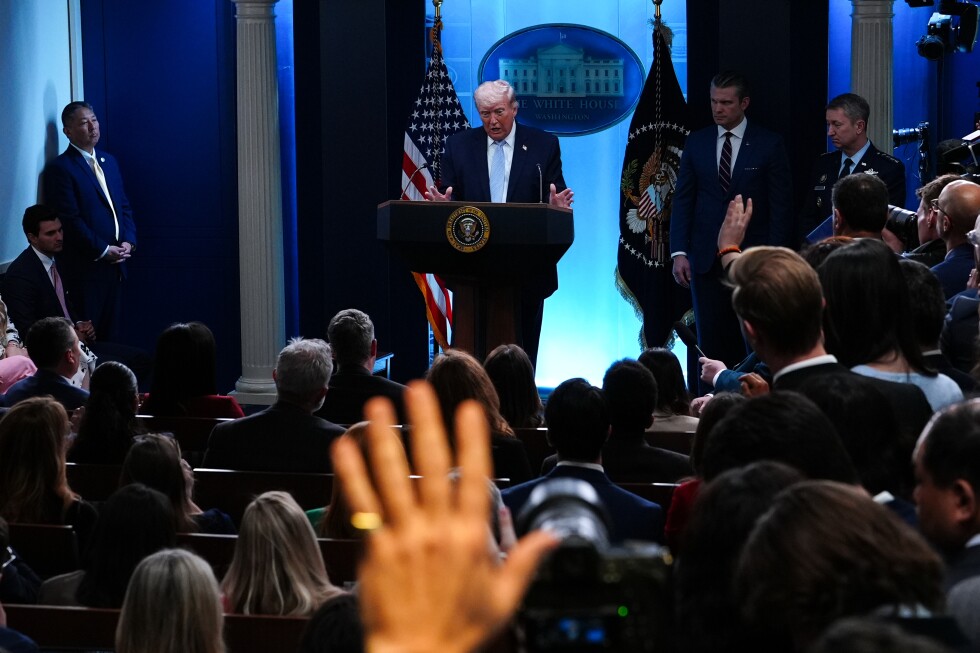
U.S. District Judge Paul Friedman ruled on April 9 that the Defense Department is in contempt of his March 20 order requiring it to restore press credentials to reporters. After Friedman struck down Hegseth's original policy as unconstitutional, the Pentagon issued a revised policy that closed the Correspondents' Corridor, required journalists to be escorted at all times, and limited access to pre-approved events. Friedman found this a 'transparent attempt to negate' his order. The Pentagon said it will appeal. The current press corps at the Pentagon is now almost entirely composed of conservative outlets that agreed to the original credentialing terms.
The administration has turned the Pentagon press corps into a curated audience. Every court loss is a public relations problem and a procedural speed bump, not a constraint on behavior.
The Hidden Bet
The courts are checking the executive branch on press freedom.
Each ruling requires the Pentagon to stop a specific action, not to restore the press to any previous state. The administration revises the policy, triggers a new legal challenge, appeals the ruling, and gains months of de facto restricted access while litigation proceeds. The judiciary's remedial power over executive press management may be weaker than the rulings suggest.
This is about security at the Pentagon.
Judge Friedman was explicit: the policy targets 'disfavored journalists' and constitutes 'viewpoint discrimination.' The escort requirement and corridor closure apply to credential holders who had unescorted access for decades. The security rationale does not explain why the new rules track partisan affiliation rather than security clearance.
Public reporting on the Iran war is being maintained through outside-the-building reporting.
Journalists outside the Pentagon can cover what officials choose to tell them. They cannot observe briefings, witness informal exchanges, or develop the source relationships that produce accountability reporting. The information deficit compounds silently.
The Real Disagreement
The core tension is between two things that are both true: the press has no constitutional right of access to specific government facilities, and the government cannot selectively deny access based on the viewpoint of the outlet. The administration has structured its policy to live in the space between those principles, revising each version just enough to force a new legal fight while preserving the practical outcome. Friedman's rulings are legally correct, but they may be strategically insufficient. The judge can stop each specific policy, but he cannot require the Pentagon to make itself hospitable to adversarial journalism. The administration's bet is that procedural delay outlasts judicial patience.
What No One Is Saying
The conservative outlets now credentialed at the Pentagon are functionally embedded with the institution they cover. That arrangement may produce favorable coverage today, but it also means those outlets are the only ones with access when the military's next significant failure occurs. They will face the same pressure to suppress inconvenient truths that all embedded reporters face, and they will lack the competitive check of rival outlets present in the building.
Who Pays
The American public during the Iran war
Immediate; each Iran war briefing is affected.
Hegseth has conducted Iran war briefings exclusively for friendly conservative media. Independent verification of casualty claims, operational claims, and war costs is unavailable to reporters who are locked out of the building.
Mainstream news organizations
Ongoing since October 2025.
AP, New York Times, major networks are reporting on a war with their primary institutional source inaccessible. The reporting gap cannot be fully closed from outside the building.
The judiciary's institutional authority
Slow-burn, visible over years.
Each time the executive revises a policy to technically comply while practically evading a court order, it erodes the norm that court orders must be followed in substance, not just in letter. The cost is cumulative and diffuse.
Scenarios
Appeal Delays Compliance
The Pentagon appeals Friedman's contempt ruling to the D.C. Circuit, which grants a stay while it considers the case. Restricted access continues for months. The administration maintains its press corps configuration through the duration of the Iran war.
Signal Pentagon files for emergency stay within 10 days of the contempt ruling.
Forced Restoration
An appellate court or SCOTUS upholds Friedman's order without a stay, requiring immediate full access restoration. Mainstream outlets return to the Pentagon. Hegseth faces persistent questioning at briefings.
Signal D.C. Circuit declines a stay; mainstream outlet reporters physically re-enter the building within a week.
Legislative or Political Intervention
Congressional pressure or a change in Hegseth's position leads to a negotiated settlement. The credentialing policy is revised to restore meaningful access without a full court loss.
Signal Bipartisan Senate letter to Hegseth demanding compliance; Hegseth faces confirmation-level pressure from the Armed Services Committee.
What Would Change This
The bottom line would be wrong if Hegseth actually complied with the contempt ruling in substance and restored independent journalists to the Correspondents' Corridor. There is no current evidence he intends to do so.