Trump Signed a Mail Voting Order. 23 States Sued Within Hours. The Midterms Are in 6 Months.
What happened
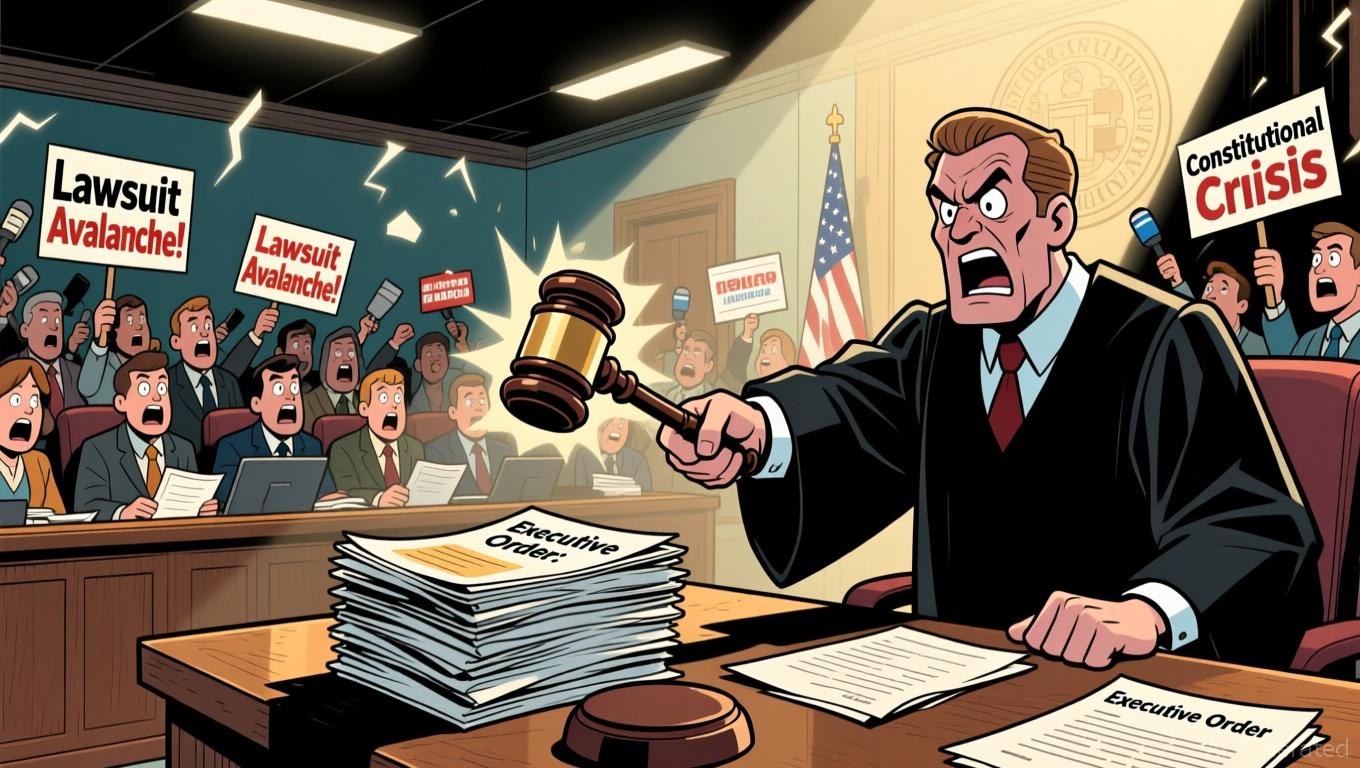
President Trump signed an executive order directing the U.S. Postal Service to deliver mail-in ballots only to voters on a federal citizen verification list, which the executive branch would create. The order also requires tracking barcodes on all ballot mail and 90-day advance notice from states that plan to mail ballots. Within hours, a coalition of 23 Democratic-run states filed suit arguing the order is an unconstitutional exercise of presidential authority over elections, which the Constitution assigns to states. A Senate vote on the SAVE America Act, the legislative companion requiring proof of citizenship to vote, was scheduled for this week but faces a 60-vote filibuster threshold.
The order is almost certainly unconstitutional and will almost certainly be blocked, but the legal fight will dominate the six months before the November midterms, forcing Democrats to organize around mail voting defense rather than economic messaging at the moment inflation is politically vulnerable.
Prediction Markets
Prices as of 2026-04-26 — the analysis was written against these odds
The Hidden Bet
The executive order is meant to restrict voting
The order may be designed primarily to lose in court. A quick injunction validates the narrative that courts are blocking legitimate election security efforts, energizes the Republican base around election integrity themes, and creates a midterm fundraising vehicle. The administration has no evidence of noncitizen mail voting at scale; the policy's operational premise is implausible.
USPS can implement this even temporarily
The federal citizen verification list does not exist. Creating one requires matching voter rolls across 50 states against Social Security, passport, and immigration databases. States use different formats, different identifiers, and different cutoff dates. USPS has no legal authority to refuse ballot delivery pending database verification; doing so would require intercepting sovereign state election mail.
This primarily affects Democratic voters
More than one in three American voters uses mail ballots, including large numbers of rural Republicans, elderly voters, and military personnel stationed abroad. A federal list requirement that creates uncertainty about whether ballots will be delivered could suppress Republican turnout in states that have expanded mail voting with GOP support.
The Real Disagreement
The fork is whether election security measures that are constitutionally dubious but politically effective serve democratic legitimacy or undermine it. The administration's position is that ensuring only citizens vote justifies aggressive legal risk. The states' position is that the Constitution's assignment of election authority to states is not negotiable and executive action in this space is inherently illegitimate. The question is not whether this specific order survives; it will not. The question is whether the pattern of executive action plus court loss plus rallying cry creates a durable political structure that benefits the administration regardless of legal outcomes.
What No One Is Saying
Trump himself used a mail-in ballot in Florida. The states that have most aggressively expanded mail voting over the past decade include reliably Republican states like Utah, which has conducted all-mail elections since 2012. An order that frames mail voting as a vehicle for noncitizen fraud implicitly attacks an infrastructure that Republican secretaries of state in multiple Western states have spent years building. They are not saying this publicly because the base narrative is set.
Who Pays
State election administrators in the 23 suing states
Immediate; the legal fight runs through November
Defending against federal interference requires legal resources and administrative capacity; any uncertainty about whether USPS will deliver ballots forces states to develop contingency plans, notify voters, and manage public communication about ballot security at their own expense
Voters who miss deadlines due to confusion
November 3 midterm elections; absentee request deadlines vary by state from 7-45 days prior
If the order creates public uncertainty about whether mail ballots will be delivered, some voters will not request them and may fail to find in-person alternatives in time; the order's chaos value suppresses turnout even if it is never enforced
Senate Democrats
This week on the Senate floor; advertisement impact runs through November
The SAVE America Act vote forces Democrats to filibuster a bill named 'election security'; Republicans will use the filibuster vote in midterm ads regardless of the bill's actual content or constitutionality
Scenarios
Quick injunction, order moot before midterms
A federal judge blocks the order within weeks. The administration appeals. The case does not reach the Supreme Court before November. Mail voting proceeds normally. The order's only effect is the fundraising and narrative it generated.
Signal A preliminary injunction issued within 30 days of filing, consistent with the speed of previous Trump election order blocks
SAVE Act advances in Senate
The SAVE Act, which requires proof of citizenship to register to vote, passes cloture with unexpected Republican unity or one Democratic defection. The legislative track makes the executive order legally redundant while the court fight continues on constitutional grounds.
Signal Senate Majority Leader Thune announces a cloture vote and gets 60 votes
USPS compliance creates a November chaos event
USPS partially complies with the order in states that do not have an injunction, creating different mail-ballot handling rules in different states. Ballot delivery delays and rejections trigger post-election legal challenges in multiple states simultaneously.
Signal USPS issues operational guidance implementing any element of the order before a court fully blocks it
What Would Change This
If evidence emerged of actual noncitizen mail voting at any meaningful scale, the constitutional and political calculus changes completely. No such evidence currently exists; the administration's own election security agencies have consistently found no evidence of systematic noncitizen voting. A confirmed case would transform the narrative and potentially affect both the court proceedings and the political dynamics around the SAVE Act.
Related
Trump Made the Post Office a Gatekeeper for Who Can Vote by Mail. USPS Is Losing $2 Billion a Quarter.
powerTrump Signed an Order Telling the Post Office How to Handle Ballots. The Post Office Answers to a Board That Answers to Nobody.
powerThe President Can't Run the Post Office. He's Trying Anyway.
powerThe SAVE Act Is Not About Noncitizens. It Is About Who Controls the Voter List.