The DOJ Restores the Firing Squad. The Pope Disagrees.
What happened
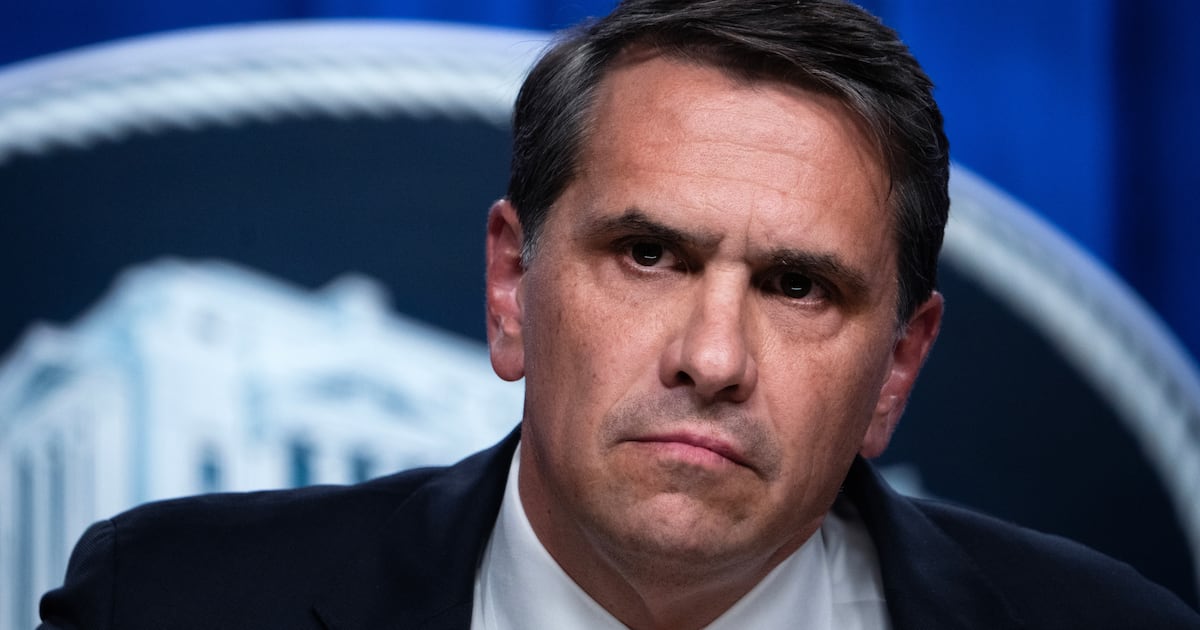
Acting Attorney General Todd Blanche lifted the Biden administration's moratorium on federal capital punishment and reinstated firing squads as an authorized method of execution alongside lethal injection with pentobarbital. The move follows a Trump executive order directing the DOJ to 'faithfully enforce' laws authorizing the death penalty. The DOJ simultaneously announced streamlined internal processes to shorten the time between conviction and execution. The reinstatement coincides with Pope Leo, elected earlier in April, publicly calling for the global abolition of the death penalty, placing the administration on the opposite side of the new pontiff.
The DOJ is not primarily executing criminals: it is executing a message that the federal government will not flinch from lethal force, and the collision with the new Pope reveals that the administration's 'pro-Catholic' coalition was always held together by culture-war issues, not theology.
The Hidden Bet
Reinstating firing squads speeds up federal executions
Federal executions remain rare and litigation-heavy regardless of method. Death row inmates will challenge firing squads as cruel and unusual punishment under the Eighth Amendment, and new legal battles over the method will delay the very cases the DOJ says it wants to resolve faster. The policy creates process friction, not less of it.
Catholic conservatives will tolerate the contradiction with Pope Leo's position
Prominent Catholic intellectuals and bishops have already aligned with Leo's abolitionist position. The administration built significant political capital with Catholic voters on the assumption that its cultural conservatism aligned with Church teaching. The death penalty is one of the clearest cases where it does not, and Leo is not backing down.
This is primarily a criminal justice policy decision
The DOJ statement emphasized deterrence of 'the most barbaric crimes' and made direct reference to the Biden administration's 'failed' approach. The real audience is not prison administrators but the Republican base. The policy is designed to generate a cultural signal, not reduce crime.
The Real Disagreement
The actual fork is between two positions that both have genuine defenders: the state is morally permitted to take a life when the crime is severe enough and the evidence is conclusive, versus the state should never be trusted with irreversible power over life because wrongful convictions are a structural feature, not an anomaly. This is not a liberal-conservative split: it runs through both camps. The Innocence Project has exonerated over 200 death row inmates. The deterrence evidence is weak. And yet: some crimes, documented beyond dispute, provoke a retributive response that a civilized society cannot entirely rule out. The first position has an integrity problem. The second has a cost. On the evidence, the second position is stronger, not because violence is never justified but because the state's death penalty apparatus has a demonstrated error rate that makes irreversibility unconscionable.
What No One Is Saying
Pope Leo is forcing an internal Republican reckoning that was always coming. The party spent a decade arguing it was the natural home of Catholic voters. The new Pope is a direct refutation of that claim on capital punishment, immigration, and poverty. The administration will ignore him, but Catholic bishops who cannot will face a choice between their institution and their party.
Who Pays
Federal death row inmates with contested convictions
As soon as the first execution under the new protocol is scheduled, likely within 12 months.
Accelerated timelines increase the risk of execution before appeals processes that could surface new evidence are completed.
Catholic conservative intellectuals and clergy
Immediately, as the Pope-DOJ contrast is now the dominant framing in Catholic media.
They are now publicly positioned against the Pope on a moral question where there is no theological ambiguity in Leo's statements. Silence becomes complicity.
States with firing squad legislation
Over the next 18 months as state legislatures act.
Federal normalization of the method accelerates state-level adoption and reduces political risk for governors who want it. The harm is diffuse: more executions nationally.
Scenarios
Legal challenge stalls first execution
A federal court grants a stay pending review of whether firing squad execution meets Eighth Amendment standards. The policy exists on paper but no execution occurs under it for years.
Signal An ACLU or federal public defender challenge filed within 60 days of the first scheduled execution under the new protocol.
First execution proceeds, Catholic coalition fractures
A firing squad execution takes place. Catholic bishops who stayed quiet on abortion politics cannot stay quiet here. A public statement from the US Conference of Catholic Bishops breaks with the administration on this specific issue.
Signal A statement from USCCB leadership explicitly citing Pope Leo's abolitionist position.
Policy is largely symbolic, execution rate unchanged
The DOJ announcement generates news but the litigation environment means no new federal execution methods are used for at least two years. The policy becomes a rhetorical marker rather than an operational one.
Signal No federal execution scheduled by end of 2026.
What Would Change This
If a wrongful conviction on federal death row were established through DNA evidence in the next 12 months, the public calculus shifts dramatically and the political cost of the policy becomes acute. Otherwise, the administration can sustain the contradiction indefinitely because abstract deterrence arguments are hard to disprove.
Related
Supermicro's Co-Founder Was Indicted for Smuggling $2.5 Billion in AI Chips to China. The Stock Jumped 18%.
powerThe DOJ Just Sued New Mexico for Passing a Law Its Legislature Voted On.
powerTrump Is Purging Voter Rolls Inside the 90-Day Window. The Courts Keep Saying No. He Keeps Going.
powerThe DOJ Charges Comey Over a Seashell Photo