Voters Approve the Map. A Judge Says No.
What happened
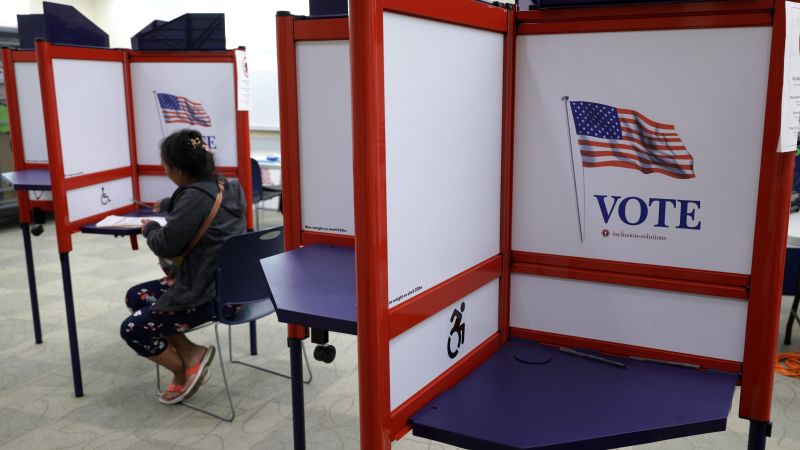
Virginia voters on April 22 approved a constitutional amendment allowing the Democratic-controlled legislature to bypass the state's bipartisan redistricting commission and implement congressional maps giving Democrats an advantage in 10 of 11 House districts. The measure passed narrowly, 51.5% to 48.5%. Within 24 hours, a Tazewell County circuit court judge barred certification of the results, calling the ballot language 'flagrantly misleading' and finding the legislature violated its own procedural rules. The Virginia AG is appealing immediately. The Virginia Supreme Court separately has a pending case on the same redistricting effort. Florida's Republican Governor Ron DeSantis has called a special legislative session for next week to draw new congressional maps targeting up to five Democratic seats.
Both parties have decided elections are now won before Election Day by drawing the map, and Virginia's voters just ratified that logic. The judge's block is a speed bump, not a stop sign, but it hands Republicans exactly the leverage they need: if Democrats want to gerrymander, they have to be willing to win in court too.
Prediction Markets
Prices as of 2026-04-23 — the analysis was written against these odds
The Hidden Bet
Virginia's map will be implemented in time for November's midterms
Filing deadlines for primaries have already passed. The Virginia Supreme Court case is still pending. If the state courts are still litigating through June, there may not be enough administrative runway to switch districts, print ballots, and run primaries on new lines before November. A legal delay doesn't just delay the map; it may effectively kill it for 2026 even if Democrats ultimately win the legal battle.
Mid-decade redistricting is a new partisan arms race that both sides are entering equally
Democrats control the redistricting process in fewer states than Republicans. The total seat count from all mid-decade redistricting gives Republicans a marginal edge even including Virginia. The real asymmetry is that Republicans started this with Texas (five seats) and Democrats are playing catch-up from a structurally weaker position. Virginia and California together barely offset Texas, Missouri, and North Carolina.
Voters approved this because they want Democrats to have more seats
The margin was 51.5-48.5% in a state Kamala Harris won by nearly 6 points and Governor Spanberger won by 15 points. Roughly 30% of people who voted Democratic in recent statewide elections voted against this map. The narrow margin suggests many Democratic-leaning voters have real discomfort with partisan gerrymandering, even in their favor. The 'yes' side won, but it exposed a ceiling on how far voters will follow their party into gerrymander territory.
The Real Disagreement
Democrats argue this is a legitimate defensive response to Trump's redistricting pressure campaign, using legal tools in states where they have the votes. Republicans argue this is Democrats doing precisely what they spent years condemning. Both are right, and the honest answer is that one party's willingness to accept the logic of gerrymandering accelerated the other's. The question that actually matters now is not who started it, but whether voters can distinguish between a map drawn to protect incumbents and a map drawn to reflect actual voter intent. Right now, neither party is asking them to. The lean is that this collapses into a pure litigation race and the side with better funded election-law teams at the state Supreme Court level wins, regardless of what voters said at the ballot box.
What No One Is Saying
The Virginia Democratic map gives Democrats an advantage in 10 of 11 seats in a state Democrats win by only 5-6 points in presidential years. That's not a fair map. It's an extreme partisan gerrymander in the opposite direction of the previous Republican extreme partisan gerrymander. Governor Spanberger said the new map is 'temporary' and the state will return to the bipartisan commission after 2030. No one who actually wants partisan maps ever means that when they say it.
Who Pays
Virginia voters in newly drawn Republican-disadvantaged districts
November 2026 and through 2030
In 10 of 11 districts, their representative will face minimal competitive pressure. Safe seats produce more extreme candidates and less legislative output. Rural Virginians who already voted against the map in large numbers will now be packed into a single safe Republican district.
House Republicans
November 2026
A four-seat net swing in Virginia, combined with Democratic redistricting gains in California, could be enough on its own to flip the House. Republicans currently hold a paper-thin majority. If Democrats gain 10 seats from redistricting alone plus normal midterm headwinds against the president's party, Republican incumbents who won in 2024 by under 10 points are at acute risk.
The bipartisan redistricting commission model
Long-term, next redistricting cycle
Virginia voters created a bipartisan redistricting commission in 2020 and just voted to bypass it four years later when it became inconvenient. Every state legislature watching this now understands the commission model has no teeth when one party controls the referendum process. This precedent makes future reform efforts harder.
Scenarios
Maps hold, Democrats flip the House
Virginia Supreme Court upholds the map on procedural grounds. New districts take effect for November. Democrats net 3-4 seats in Virginia and flip the House in combination with normal midterm dynamics.
Signal Virginia AG wins the appeal and Virginia Supreme Court dismisses the Tazewell challenge before June 1.
Legal jam, old maps for 2026
Courts cannot resolve the competing rulings before the administrative deadline to implement new districts. The 2026 election runs on the current commission-drawn maps. Democrats' redistricting investment produces nothing until 2028.
Signal Virginia Supreme Court issues a stay or delays ruling past the primary administrative deadline in late May.
Florida offsets Virginia
DeSantis's special session produces new maps that flip 4-5 Democratic-held Florida seats to Republican. The net effect of the entire mid-decade redistricting cycle still favors Republicans by 2-3 seats. Virginia's map passes legally but the House math is unchanged.
Signal Florida legislature approves new maps in the special session that begins next week.
What Would Change This
If the Virginia Supreme Court rules the entire redistricting effort unconstitutional on state constitutional grounds (not just the Tazewell procedural issue), the maps collapse regardless of the referendum result. That is the scenario that changes the bottom line.