Virginia Voters Approved a Gerrymander. Both Parties Cheered for Democracy While Doing It.
What happened
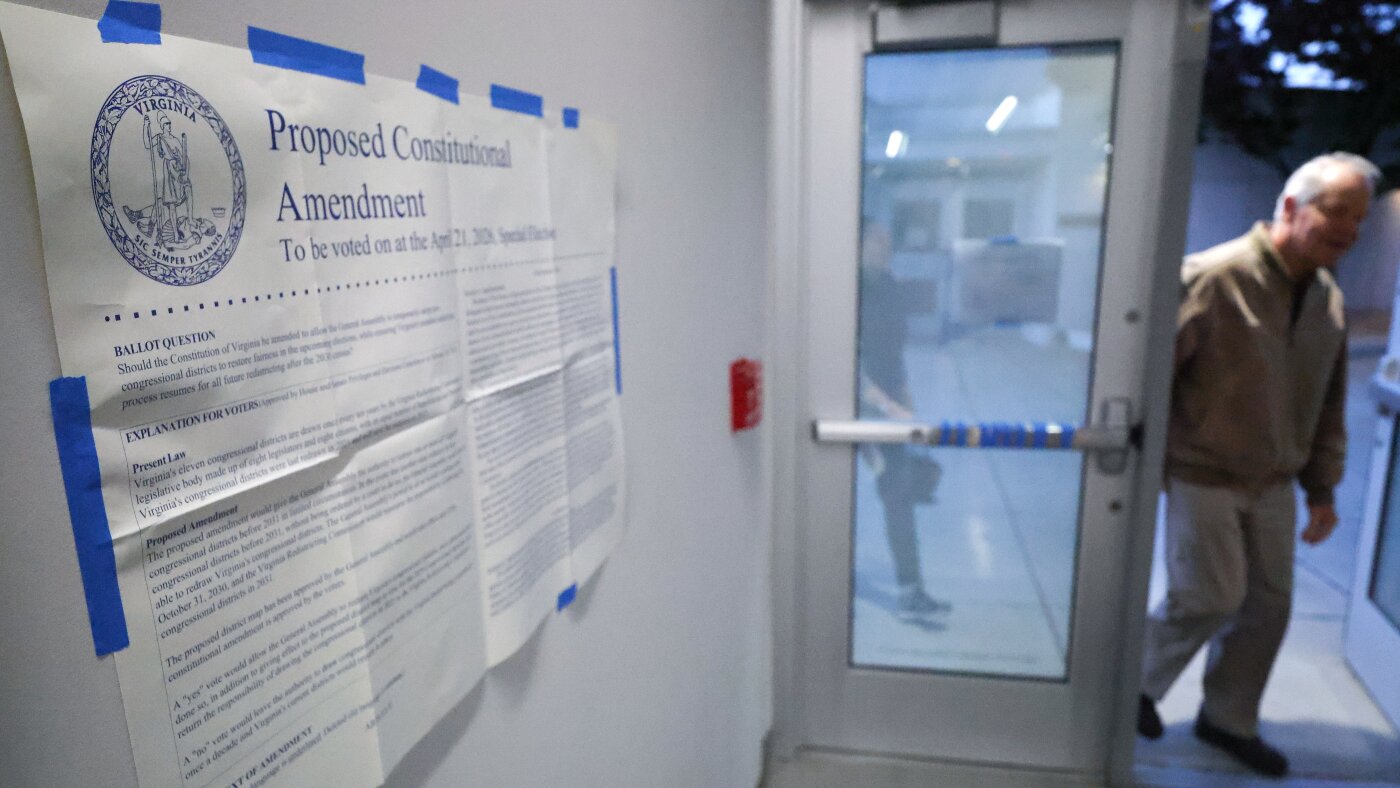
Virginia voters narrowly approved a constitutional amendment on April 21 that strips redistricting authority from the state's bipartisan commission and gives it to the Democratic-led legislature. The new map could push Virginia's congressional delegation from 6-5 Democratic to 10-1. The vote passed by about 3 percentage points from roughly 3 million voters. Multiple Republican lawsuits argue the amendment process itself was procedurally illegal, and the Virginia Supreme Court has accepted a case that could void the entire result before any new districts are used. Florida Governor Ron DeSantis has called a special legislative session for April 28 to counter with Republican-drawn maps.
Both parties abandoned their stated principles on independent redistricting the moment the partisan math turned against them. The result is an arms race that will produce more extreme maps than anything either side claimed to oppose.
Prediction Markets
Prices as of 2026-04-22 — the analysis was written against these odds
The Hidden Bet
The new Virginia maps will actually be used in November
The Virginia Supreme Court allowed the referendum to proceed but explicitly reserved the right to rule on its legality afterward. A lower court judge already ruled the process unconstitutional on procedural grounds. The odds that maps designed for a 10-1 Democratic delegation ever appear on a November ballot are substantially lower than either side is publicly admitting.
This redistricting arms race will materially determine House control
Polymarket gives Democrats an 84.5% chance of controlling the House after November. If the structural environment is that tilted against the party in power, new maps accelerate an already-likely outcome rather than creating it. Redistricting matters at the margins; a strong enough wave makes it irrelevant.
Democrats' use of gerrymandering in Virginia is a departure from their stated principles
Democrats argued this was a forced response to Trump pushing Texas, Missouri, and North Carolina. The principle they actually hold is competitive advantage, not neutral maps. The language of 'fighting back' lets both sides claim victimhood while doing exactly what they condemn.
The Real Disagreement
The genuine fork is whether mid-decade redistricting is ever legitimate or whether it is inherently an abuse, regardless of which party does it. One side says rules are symmetric: if Republicans redrawn in Texas, Democrats can respond in Virginia. The other side says the original post-census timing exists for structural reasons, not procedural ones, and violating it on either side degrades the legitimacy of the outcome. These cannot both be right. The symmetry argument wins on short-term politics but the structural argument is correct over time: normalized mid-decade gerrymandering means every new legislative majority will redraw maps immediately, turning districts into a rolling power grab rather than a stable representation framework. I'd lean toward condemning both, but that view is politically useless in a context where one side already started.
What No One Is Saying
Virginia voters approved a constitutional amendment to strip a commission that voters approved just four years ago. Nobody in either party is asking why voters keep being asked to vote on things they just voted on, or what it means that constitutional amendments can be cycled this quickly.
Who Pays
Virginia voters in competitive districts
November 2026 elections, if maps are upheld
The new map concentrates Democratic voters to guarantee 10-1 outcomes. Republicans in safe red areas retain representation; competitive district voters lose the only leverage that forces candidates toward the center.
The bipartisan redistricting commission Virginia created in 2020
Immediate institutional damage; structural damage permanent
The institution is now formally bypassed and will have reduced credibility even if it is restored after 2030. The lesson embedded in this sequence: nonpartisan commissions hold until the party that created them decides the math has shifted.
Republican incumbents in the four targeted Virginia districts
November 2026 if maps survive legal challenge
Their districts are redesigned to dilute their base voters, requiring them to run in fundamentally unfavorable terrain or retire.
Scenarios
Maps Nullified
Virginia Supreme Court voids the referendum on procedural grounds. Existing court-drawn maps stand. Democrats lose the four-seat gain. The national redistricting scoreboard reverts to a slight Republican edge, but the structural wave environment means Democrats still likely take the House.
Signal Virginia Supreme Court issues an emergency stay or ruling before June primary filing deadlines
Maps Hold, Democrats Take House
Legal challenges fail or are resolved after the election cycle. Virginia's 10-1 map contributes four new Democratic seats. Combined with California's five and Utah's one, Democrats enter November with 10 extra opportunities against Republicans' 9. The 84.5% market probability hardens into an actual outcome.
Signal Virginia Supreme Court rules narrowly on procedural grounds or declines to invalidate the referendum before candidate filing deadlines
Florida Escalates the Race
DeSantis' April 28 special session produces new Republican maps. Democrats challenge under the 2010 Florida Fair Districts Amendment. Federal courts block or allow them. The national balance shifts again. The arms race continues past November regardless of who wins.
Signal Florida legislature passes new maps at the special session; lawsuits filed within 48 hours
What Would Change This
If the Virginia Supreme Court upholds the maps on their merits rather than procedural grounds, it would signal that state supreme courts are willing to bless mid-decade partisan gerrymanders when the controlling party controls the court. That ruling would accelerate the arms race in every state with a unified government and a cooperative judiciary. It would also make the 2027-2030 period, when the next cycle opens, the most consequential redistricting period in modern American history.