Trump Got All 17 Pharma Companies to Say Yes. Now the Hard Part Starts.
What happened
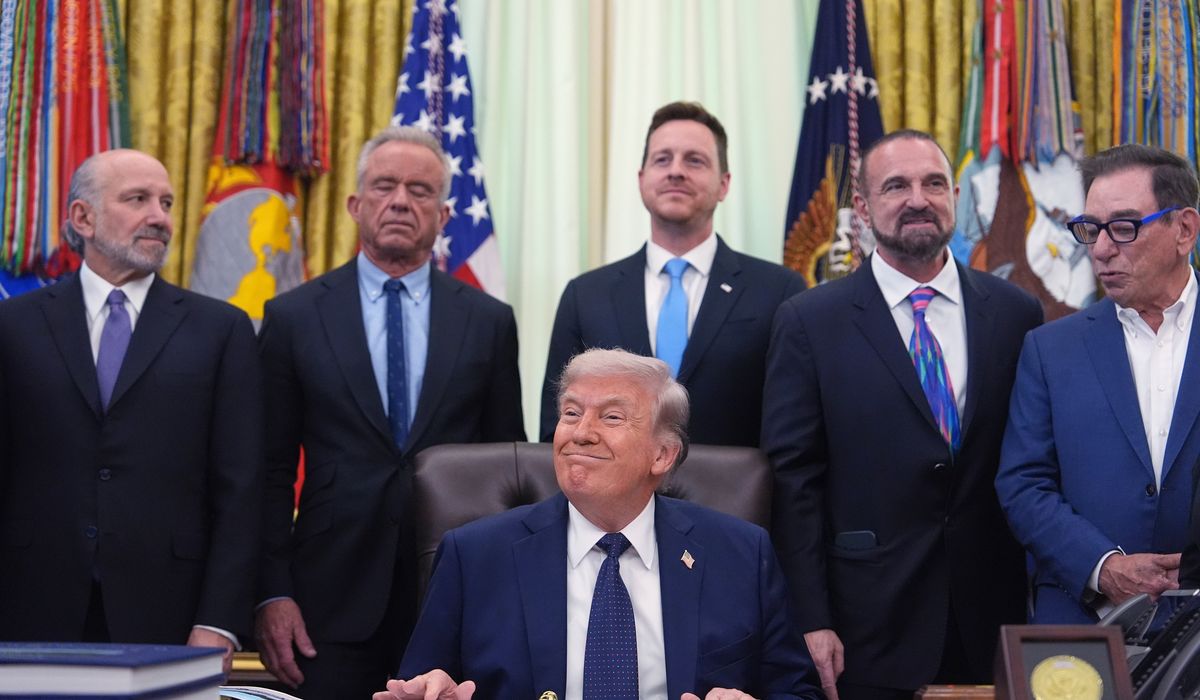
President Trump announced on April 23 that Regeneron has become the 17th and final major pharmaceutical company to agree to most-favored-nation pricing in the US. The deal requires Regeneron to lower prices on all current and future drugs sold to Medicaid to match what the company charges in other developed countries. Regeneron's cholesterol drug Praluent will be offered for $225 through the TrumpRx website, down from $537. In exchange, Regeneron receives tariff relief and has committed to investing $27 billion in US research, development, and manufacturing by 2029. The 17 companies collectively represent 80% of the US drug market. Total pharmaceutical investment pledges announced under Trump's administration now stand at $448 billion.
The administration completed a voluntary price control program and called it a market deal. Every company that signed received tariff relief in exchange, which means the federal government is now subsidizing drug discounts with revenue it isn't collecting.
The Hidden Bet
MFN pricing will actually lower what patients pay
The MFN deals apply to Medicaid and the TrumpRx website, not to commercial insurance or employer-sponsored plans where most Americans get drugs. The $448 billion in savings is calculated off list prices, not what insurers and PBMs already negotiate. Actual out-of-pocket reductions for most Americans may be marginal.
The manufacturing investment pledges are binding
Regeneron's $27 billion commitment is over four years, spans R&D and manufacturing, and is conditioned on tariff relief. If tariff policy changes, companies have implicit exit ramps. None of these agreements have been filed as enforceable contracts.
This is equivalent to international price controls
Countries with MFN pricing achieve it through statutory authority with penalties for non-compliance. Trump's deals are voluntary and exchange-based. Companies that sign can restructure their global pricing, move new drugs to faster-growing markets first, or delay launches in the US to avoid MFN-qualifying comparisons.
The Real Disagreement
The real fork is whether drug pricing control is best achieved through market leverage or statutory authority. Trump's approach uses tariffs and domestic investment pledges as inducements rather than law. The result is a two-tier system: large companies with political access get tariff relief and pricing flexibility; smaller biotechs without leverage do not. Statutory price negotiation, as in the Inflation Reduction Act's Medicare provisions, applies to all companies equally but faces constitutional challenges. Trump's voluntary approach is faster and politically cleaner, but the benefits concentrate among the largest players. The question is whether concentrated, voluntary price cuts are better for patients than universal, statutory ones. They are not the same thing.
What No One Is Saying
The companies signing MFN deals are getting tariff exemptions worth hundreds of millions annually. Those tariff revenues would have otherwise funded general government operations or been used as leverage elsewhere. The effective cost of these drug price cuts is being borne by the general public through foregone tariff revenue, not by pharma shareholders.
Who Pays
Smaller biotech and specialty pharma companies
Medium-term, as tariff exemptions compound over 2-3 years
They cannot match the manufacturing investment pledges required to earn tariff relief, so they face full tariff costs that larger competitors avoid, creating a structural disadvantage for new market entrants
Commercially insured patients
Ongoing
MFN pricing applies to Medicaid and TrumpRx. Commercial insurance premiums and cost-sharing are not covered by these deals. Patients with private insurance pay standard negotiated prices, which do not necessarily track MFN commitments.
US taxpayers
Immediate
Tariff relief granted to 17 pharma companies represents foregone government revenue. The administration is trading future tariff collections for present-day pricing announcements timed to the midterm election cycle.
Scenarios
Midterm Credit
The 17 deals generate favorable headlines through November. Actual patient savings are modest but visible on TrumpRx. Republicans claim a healthcare win. The structural enforcement gap is not exposed before the election.
Signal TrumpRx monthly active users grow past 1 million by September
Price Reclassification
Pharma companies restructure their global pricing strategies to reduce what they charge in comparison countries, making MFN pricing a moving target. US prices come down slightly, but the gap with international prices narrows from the other direction.
Signal Drug prices in the UK, Canada, or Germany rise noticeably within 18 months
Legal Challenge
A company that did not sign an MFN deal challenges the tariff exemption structure as discriminatory trade policy, triggering a court review of whether the deals constitute unlawful price controls through executive action.
Signal A mid-size pharma company files suit against the tariff exemption structure within 6 months
What Would Change This
If an independent audit shows actual patient out-of-pocket costs for these specific drugs falling by more than 30% at commercial pharmacies, the deals are working. If savings materialize only on TrumpRx and in Medicaid, the program is real but narrower than advertised.