Taiwan Sends a Minister to Its Loneliest Island
What happened
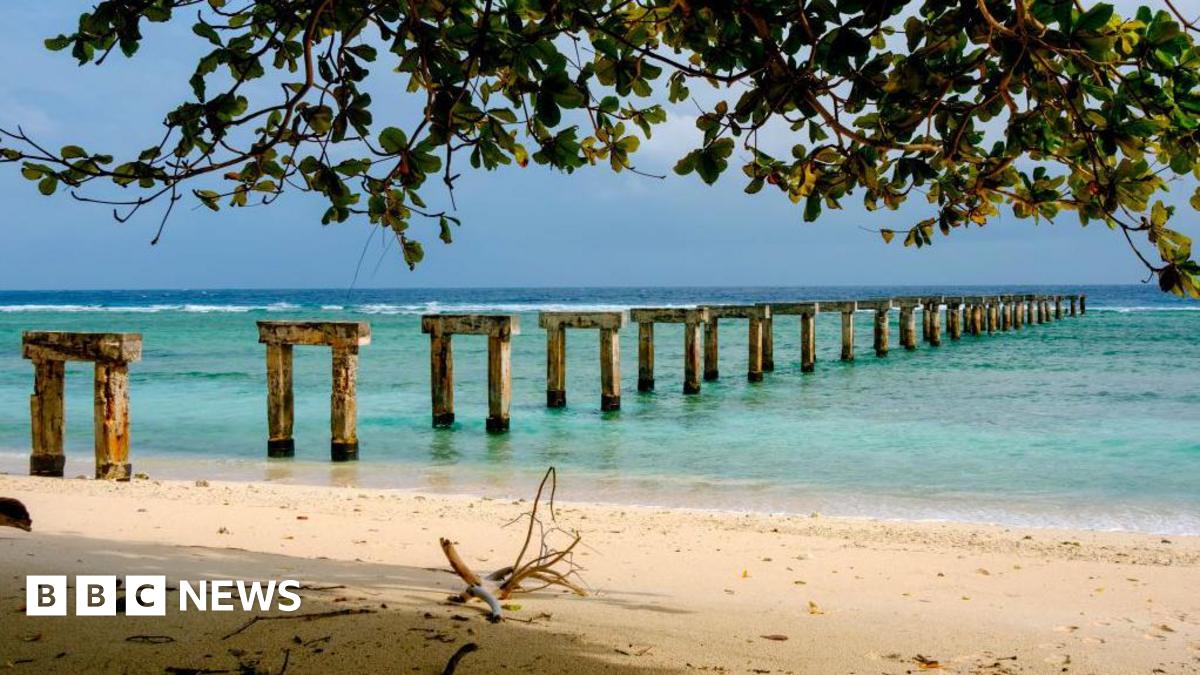
Taiwan's Ocean Affairs Minister Kuan Bi-ling made a rare visit to Taiping Island (Itu Aba) in the South China Sea on April 23, the first ministerial trip to the island in seven years. The visit involved coast guard drills including an armed boarding exercise where special forces intercepted a simulated non-compliant cargo vessel. Taiping is the largest natural island in the Spratly chain, held by Taiwan, and claimed by China, Vietnam, and the Philippines. The visit coincided with the largest-ever US-Philippines joint military exercises across the Philippines, China deploying a new amphibious warship to the South China Sea, PLA warships conducting rare transits near Okinawa in apparent response to Japan's Taiwan Strait passage, and US pressure on Taiwan to pass a NT$1.25 trillion defense budget.
Taiwan just sent its highest-level official to Taiping Island in seven years, in the middle of simultaneous US-Philippines drills, Chinese amphibious deployment, and PLA naval signaling near Japan. This is either a deliberate escalation of Taiwan's own South China Sea posture, or three countries accidentally layering provocations on the same week.
Prediction Markets
Prices as of 2026-04-23 — the analysis was written against these odds
The Hidden Bet
Taiwan's Taiping Island posture is separate from the Taiwan Strait standoff.
Taiwan's claim to Taiping is tied to its claim to be the legitimate government of China, which includes Chinese territorial claims in the South China Sea. If Taiwan moves toward formal independence or drops its mainland claims, it would technically lose the legal basis for holding Taiping. The island is a hostage to the ambiguity that keeps Taiwan's status livable.
China's military movements this week are coordinated signals.
The PLA near-Okinawa transit may have been planned before the US-Philippines drill announcement. China's amphibious warship deployment may have been scheduled independently. Multiple simultaneous signals can happen without coordinated intent, and reading them as a unified message may overstate China's operational coordination.
The 2016 tribunal ruling that Taiping is a 'rock' rather than an 'island' limits Taiwan's jurisdictional claims to 12 nautical miles.
Taiwan and China both rejected the ruling. The Philippines, which brought the case, now has to navigate a situation where its legal victory is unenforceable against the parties with ships in the area. The ruling created a legal outcome that no military actor in the region accepts.
The Real Disagreement
The real fork is whether Taiwan should actively assert its South China Sea presence or quietly manage it to avoid provoking China at a moment when the Strait situation is already tense. The assertion view says Taiping is legally and strategically valuable, and failing to signal commitment invites Chinese or Philippine encroachment. The de-escalation view says adding a South China Sea front while the Strait is already under pressure is strategically incoherent and gives China more levers to use. Taiwan's visit this week looks like assertion. The defense budget fight in Taipei, where parties are reportedly not cooperating on the $39.7 billion package, looks like de-escalation from internal paralysis rather than strategy. The two signals contradict each other.
What No One Is Saying
Taiwan controls Taiping Island partly because its claim derives from the same continental framework as Beijing's nine-dash line. If Taiwan ever formally abandons the Republic of China constitution and its mainland claims, the legal basis for its South China Sea presence evaporates. Taipei cannot fully internationalize its defense posture without undermining its South China Sea position. This is a structural contradiction that neither side of the Taiwan independence debate will say out loud.
Who Pays
Philippines
Ongoing, escalating
The Philippines won the 2016 arbitration ruling but cannot enforce it. Every display of force by Taiwan or China near Taiping normalizes the irrelevance of the legal outcome. The Philippines is the party most exposed if the South China Sea standoff militarizes further, as it sits between China's naval access routes and the open Pacific.
Taiwan's defense budget coalition
Near-term, next legislative session
US pressure to pass the NT$1.25 trillion special defense budget is a prerequisite for continued security assistance according to the Indo-Pacific commander. If internal partisan deadlock prevents the budget from passing, it signals to Washington that Taiwan is not credible as a defense partner, weakening the deterrence that keeps the Strait from escalating.
Scenarios
Managed signaling, no escalation
China issues a protest statement and logs the visit as a provocation for its diplomatic record but does not respond militarily. The US-Philippines drills end on schedule. The various naval movements disperse. Taiwan's budget passes in modified form.
Signal No additional PLA exercises announced within 14 days of the ministerial visit.
Philippines flashpoint
China escalates its coast guard presence around Taiping specifically, testing whether Taiwan will defend the island with anything more than symbolic visits. The Philippines faces pressure to choose between its treaty relationship with the US and its unresolved claim to Taiping.
Signal China's coast guard publicly intercepts a Taiwanese supply vessel near Taiping.
Defense budget collapse triggers reassessment
Taiwan's legislature fails to pass the NT$1.25 trillion defense budget before the US deadline. Washington signals reduced commitment to advanced arms sales. Taiwan's deterrence posture weakens, and China reads the budget failure as an internal legitimacy crisis.
Signal Pentagon postpones or conditions a scheduled arms sale to Taiwan.
What Would Change This
If Taiwan's legislature passes the full defense budget and the US delivers on the promised security assistance package, the deterrence argument holds and the Taiping visit looks like a coordinated confidence signal rather than a provocation. If the budget stalls, the visit looks like symbolic posturing with no material backing.