Social Security Is Closing Its Doors
What happened
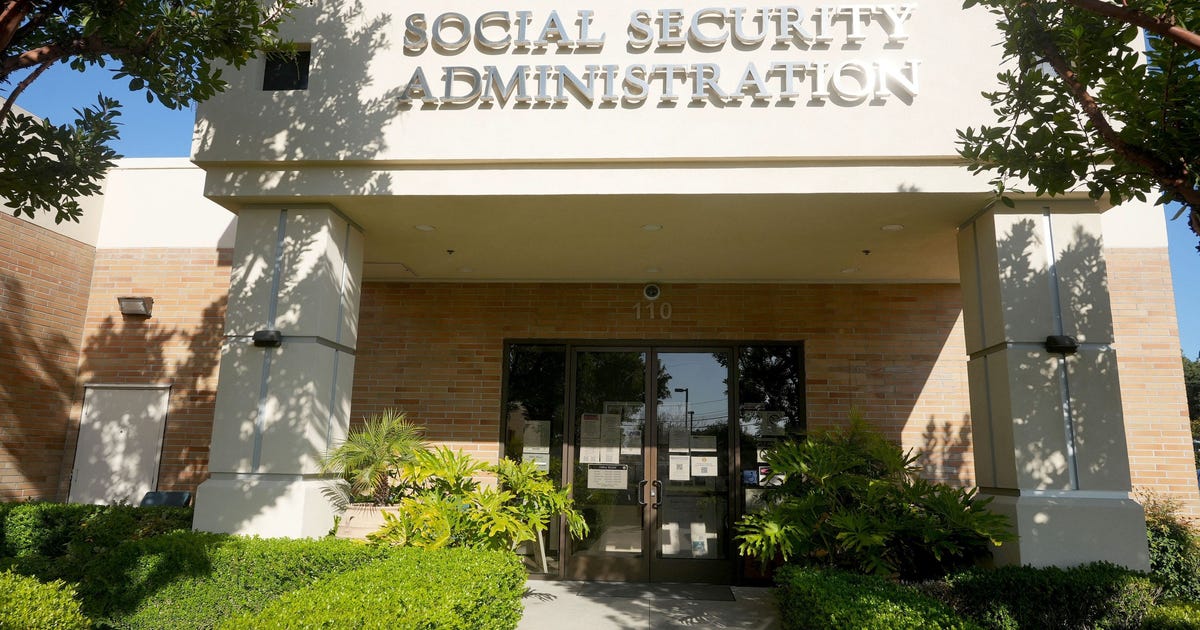
The Social Security Administration has suspended or severely limited in-person services at field offices across 12 states: Arizona, California, Florida, Hawaii, Iowa, Kentucky, Maryland, Michigan, Montana, Pennsylvania, Texas, and West Virginia. The closures follow the loss of 7,500 SSA employees, 13% of the workforce including 3,000 customer service positions, under DOGE's directive to cut 10% of the federal workforce. At the same time, the SSA ended phone-based applications, replacing them with mandatory online identity verification through biometric systems like ID.me and Login.gov. Those who fail the digital verification must appear in person, but are now arriving at offices that have closed or gone appointment-only.
DOGE did not cut bureaucratic waste from Social Security. It cut the people who answer phones and process claims for the elderly and disabled, then removed the phone option, then closed the offices.
The Hidden Bet
The office closures are temporary and attributable to facility problems.
The SSA's official language says 'building issues, staffing limitations, or other operational challenges.' The staffing limitations are the operative clause. Forty-seven field offices are targeted for permanent closure according to AP reporting on DOGE directives. Calling them temporary is a presentation choice, not a factual claim.
The move to digital identity verification modernizes and improves access.
The SSA's beneficiary population is disproportionately elderly, disabled, and rural. These are exactly the groups most likely to lack smartphones, stable internet access, or the technical literacy required for biometric identity verification. The modernization is calibrated for a user base that does not describe most SSA claimants.
Cutting 13% of SSA staff reduces government waste without reducing service quality.
SSA processing times for disability hearings were already years long before DOGE. The agency had a structural backlog problem that staff cuts can only worsen. An agency that was failing to process claims on time with 58,000 employees cannot process them faster with 50,500.
The Real Disagreement
The actual fork is whether the government has a binding obligation to deliver Social Security services in person to people who cannot use digital systems, or whether that obligation ends at making the benefit theoretically accessible somewhere. The obligation view says online-only is constructive denial for a substantial population of beneficiaries. The access view says the benefit exists and can be claimed; how someone navigates the process is their problem. Federal courts have generally held that benefit programs must be meaningfully accessible, not merely formally available. That standard has not yet been tested against the combination of office closures and mandatory digital verification.
What No One Is Saying
The hearing backlog for disability claims was already 18 months or longer before DOGE. People appealing denial decisions were waiting years. The closures will extend those timelines. The people in those queues are not statistics about government efficiency. They are people who were already told no and are waiting for someone to review that decision. Most of them will now wait longer.
Who Pays
Elderly and disabled Social Security beneficiaries without internet access
Immediate, ongoing
Cannot complete online identity verification and must travel to in-person offices that are now closed, appointment-only, or hours away. Benefit applications stall. Survivor claims for recently widowed spouses, like those trying to stop duplicate benefit payments after a death, hit walls within days.
Rural Americans in states with high office closure rates
Immediate
States with already sparse field office networks are losing offices, requiring longer travel for in-person services. For beneficiaries without cars or with mobility limitations, this is functional inaccessibility.
7,500 laid-off SSA employees, one year later
Already bearing cost, ongoing
NBC News reporting found many are still unable to find comparable employment a year after the DOGE firings. Federal pay and benefits do not translate cleanly to private-sector equivalents, particularly in areas where government employment was a dominant source of professional jobs.
Scenarios
Legal injunction
An advocacy organization or state attorney general sues on grounds that mandatory online verification combined with office closures constitutes a due process violation for beneficiaries who cannot complete the digital process. A federal court issues a preliminary injunction halting the new access requirements.
Signal A federal district court grants a temporary restraining order against the SSA's mandatory online verification policy.
Backlog becomes political crisis
Processing times for disability claims extend past 24 months. Local news coverage of elderly and disabled constituents unable to access benefits builds into a sustained political liability in competitive House and Senate districts. Republican members in those districts introduce legislation to reverse specific closures.
Signal A Republican co-sponsors a bill requiring SSA to restore phone-based application options.
Closures become permanent, quietly
The 47 targeted offices are formally closed. The SSA rebrands the reduction as a digital modernization success. Benefit denial rates rise and processing times extend, but the connection to closures is diffuse enough to avoid direct political attribution.
Signal The SSA's annual report shows reduced per-claim processing costs alongside increased denial rates and longer resolution timelines.
What Would Change This
If the mandatory online verification system achieved comparable claim accuracy and resolution times to the in-person process, the access equity critique would narrow to a genuine digital divide problem solvable through targeted support. There is no evidence that was studied before the rollout.