The Boycott That Became a Federal Case
What happened
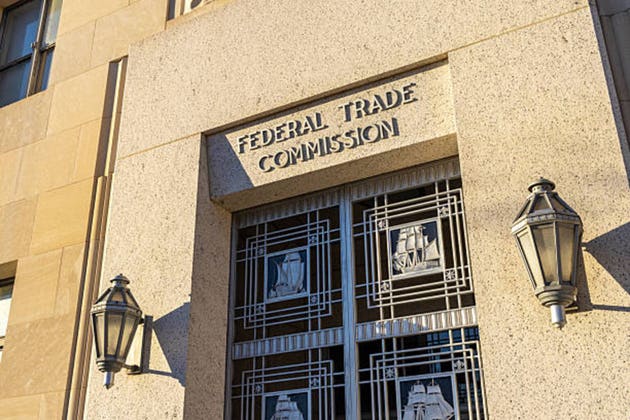
The Federal Trade Commission is in settlement talks with several major advertising firms to end an antitrust probe into whether they breached antitrust rules by collectively steering ad spending away from platforms including Elon Musk's X, according to the Wall Street Journal. The probe began last year and targets alleged coordinated action by advertising holding companies, the kind of coordination that is typically scrutinized on the seller side but rarely on the buyer side. X lost an estimated 50-70% of its advertising revenue after Musk's acquisition in 2022, as major advertisers paused spending following content moderation controversies. Musk has accused advertisers of coordinating through the Global Alliance for Responsible Media (GARM), which dissolved after Musk's lawsuit in 2024.
The FTC under a Trump-era chair is using antitrust law to punish companies that stopped advertising on Musk's platform, and the settlement talks confirm the probe is real and the agencies are scared enough to negotiate, which means the theory of the case, however legally novel, has some leverage.
Prediction Markets
Prices as of 2026-04-13 — the analysis was written against these odds
The Hidden Bet
This is a legitimate antitrust investigation based on neutral application of competition law.
Antitrust 'group boycott' doctrine has historically applied when sellers coordinate to deny access to markets. Applying it to buyers collectively deciding where not to spend money requires a genuinely novel legal theory. Advertisers deciding together not to advertise on a controversial platform could be anticompetitive, but it could equally be a coordinated brand safety decision. The FTC's investigation started after Musk became a central figure in the Trump administration. The timing and target suggest enforcement priorities influenced by politics.
A settlement means the ad agencies did something wrong.
Companies settle antitrust probes to avoid litigation costs and regulatory uncertainty, not only because they are guilty. A settlement with the FTC also avoids a public record of detailed discovery. For companies that depend on federal regulators for multiple business decisions, paying to end a probe that costs $50M in legal fees to defend is often rational regardless of the merits.
Resolving this probe will restore X's advertising revenue.
Advertisers left X for a mix of reasons: content moderation concerns, brand safety, declining user engagement metrics, and Musk's personal conduct. Even if the coordination theory is proven and sanctioned, advertisers are not required to return to X. A settlement at the agency level does not compel advertising spending. X's fundamental product and brand safety problems remain.
The Real Disagreement
The genuine fork here is between two visions of what antitrust is for. One view: antitrust protects market structure from dominant actors who use coordination to block competition, and advertisers acting together to defund a platform is exactly that kind of market distortion if the coordination was organized rather than independent. The other view: antitrust protects markets, not specific market participants, and advertisers have the right to spend their money where they choose, including away from platforms they find objectionable. I lean toward the second view, but the first view is not frivolous. The test is whether the coordination involved actual agreements to exclude X from markets it was otherwise competing in, which is different from independently reaching similar decisions about brand safety.
What No One Is Saying
X's ad revenue problem was not primarily caused by a boycott conspiracy. It was caused by a platform product that drove away advertisers through content quality degradation, erratic moderation, and an owner whose public behavior made brands uncomfortable. The FTC investigation lets Musk blame a conspiracy rather than his own product decisions. A settlement by ad agencies lets the industry move on without admitting anything. Both sides have structural reasons to accept a version of the story that is simpler than the actual truth.
Who Pays
Ad agency executives who negotiated GARM-related coordination
Settlement expected within months if talks succeed
Personal exposure in FTC proceedings; reputational damage; possible career cost at companies that settle under consent decree conditions.
Smaller publishers who rely on GARM-style brand safety lists
Following settlement; longer-term chilling effect on brand safety industry
If the settlement includes restrictions on coordinated brand safety activities, publishers on exclusion lists lose the cover of industry consensus and must fight advertiser exclusions one company at a time.
X users who benefit from advertiser pressure on content moderation
Long-term; accelerates if settlement includes non-coordination conditions
If advertiser leverage over X is legally constrained, Musk faces less external incentive to moderate content, which may degrade the platform experience for users not aligned with its current dominant culture.
Scenarios
Settlement with conduct remedies
Agencies pay fines and agree to specific conditions prohibiting future coordinated advertiser exclusion decisions; GARM-style industry bodies operate under explicit legal constraints.
Signal Watch for settlement terms that include consent decree restrictions on how brand safety councils can operate.
Settlement without admission
Agencies pay a fine, admit no wrongdoing, and the FTC issues a press release; X gets a win they can publicize but advertisers face no legal obligation to return.
Signal Watch for any agency to issue a statement specifically denying the underlying conduct while announcing a settlement.
Probe collapses or is withdrawn
Legal pressure on FTC commissioners or change in agency leadership leads to probe being dropped; signals limits of using antitrust to protect political allies.
Signal Watch for Polymarket on SCOTUS letting Trump fire FTC commissioners at 83.5% probability: if SCOTUS rules for Trump, FTC leadership becomes more politically volatile.
What Would Change This
If the FTC released the factual basis for its probe showing explicit documented agreements among ad agencies to exclude X, rather than parallel individual decisions, the theory of the case would be stronger. If courts reject the group boycott doctrine as applied to buyer decisions, the probe's legal foundation collapses.
Related
Meta Is Giving Rival AI Chatbots Free WhatsApp Access for One Month to Avoid a Fine It Cannot Afford Politically
powerThe Supreme Court Refused to Save Apple's App Store. The Consequences Are Still Loading.
powerSCOTUS Lets Apple's Contempt Finding Stand. Now a Judge Gets to Set the Rules.
powerMusk Takes the Stand Against OpenAI, Claims Altman Stole a Charity