India Revokes the Right to Know Who You Are
What happened
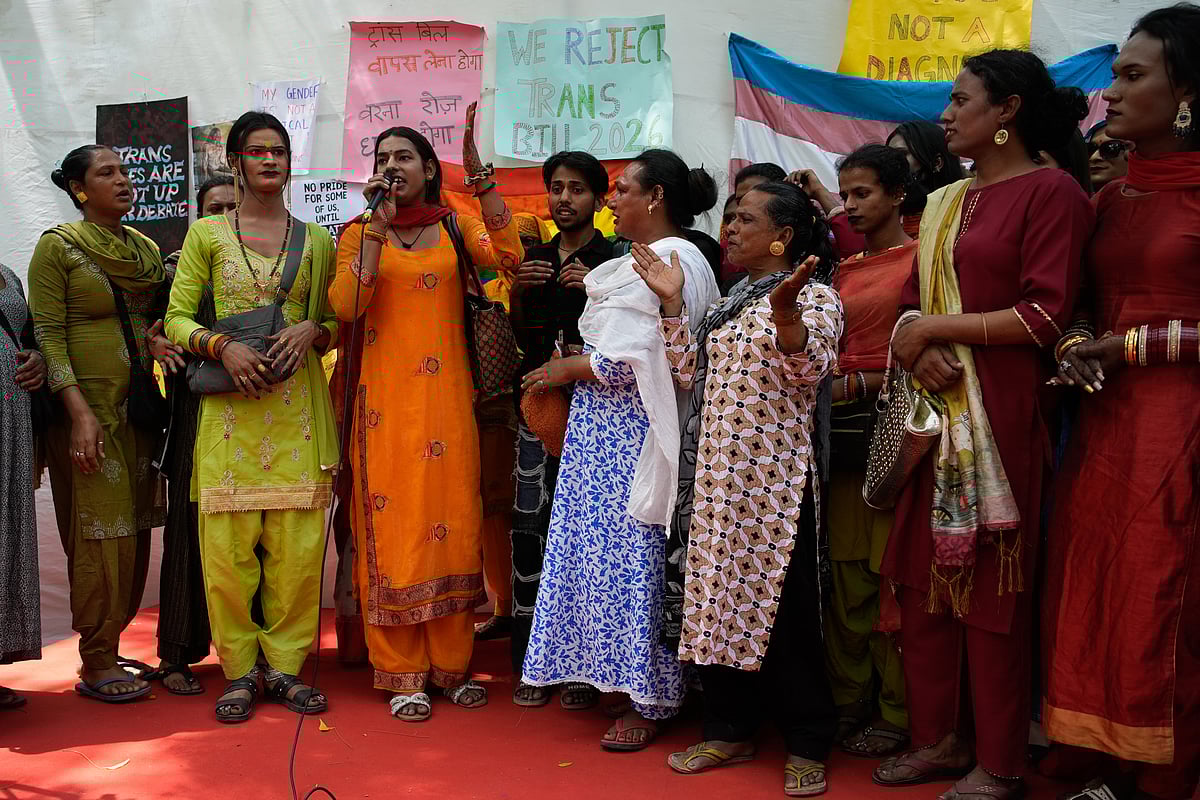
India's parliament passed an amendment to the Transgender Persons Act in 2026, replacing the self-identification framework established by a 2014 Supreme Court ruling (NALSA v. Union of India) with a system requiring approval from a District Screening Committee including medical professionals. Transgender Indians must now obtain government certification to have their gender legally recognized.
India reversed a constitutional right to self-identify gender and replaced it with a government medical board's permission. not because the 2014 framework failed, but because the current government needed to demonstrate that the state, not the individual, is the author of personal identity.
The Hidden Bet
The amendment addresses genuine administrative problems with the 2019 law.
The BJP government's stated rationale is targeting 'genuine beneficiaries' and preventing fraud. the same logic used historically to justify gatekeeping race, disability, and religion. The 2019 law had been in effect for seven years and produced no documented evidence of widespread abuse of self-identification. The fraud rationale is a pretext for a political goal: reasserting that gender is a biological and social fact determined by the state, not a constitutional right of the individual.
The amendment primarily affects urban trans communities who have the resources to contest it.
The communities most affected are hijra, kinner, aravani. socio-cultural identities explicitly retained in the amended law. but who now face medical board certification requirements that assume access to doctors, documentation, and bureaucratic systems. Rural trans individuals and those with no formal citizenship documentation are effectively excluded from any legal recognition, not just the revised framework.
Indian courts will intervene to restore self-identification rights.
The NALSA judgment that established self-identification in 2014 came from a court that was willing to read rights expansively into the Constitution. The current Supreme Court has been more deferential to executive authority since 2019. Legal challenges will take years; in the interim, the medical board gatekeeping functions as the de facto standard.
The Real Disagreement
The genuine fork is whether welfare rights. access to education, housing, and healthcare for trans communities. can be delivered through a scheme that requires state classification of identity, or whether the classification requirement is so harmful that it undermines the welfare it purports to enable. The government's position is that you need to identify the beneficiary to deliver the benefit. The opposition's position is that requiring medical board approval to access your own rights means many people will never qualify, and that's the point. Both cannot be right. The opposition is correct: a welfare scheme whose entry requirement functions as a near-impossible barrier for the most marginalized isn't a welfare scheme. it's a gatekeeping mechanism that happens to distribute minor benefits to the people who survive the gate. What you give up: the acknowledgment that some welfare targeting is administratively necessary and not all certification requirements are eliminable.
What No One Is Saying
The three bills passed in March 2026. Freedom of Religion in Maharashtra, Transgender Amendment nationally, and Uniform Civil Code in Gujarat. were passed in rapid succession by BJP governments across levels of government. The coordination is not coincidental. The BJP is testing whether it can progressively reconstitute personal life. who you love, what religion you convert to, what gender you inhabit. as matters of state approval rather than individual right. If the courts do not intervene with force, the principle that the Constitution protects self-determination against parliamentary encroachment is practically hollow.
Who Pays
Trans individuals in rural India and those without documentation
Immediate; the law is in effect as of March 28, 2026
Medical board certification requires navigating state bureaucracy that has historically been hostile to trans communities; those without formal ID, stable addresses, or access to urban medical facilities are functionally excluded from legal recognition entirely
Trans men and trans women specifically
Immediate and retroactive. the amendment specifies the new definition 'is deemed never to have included' self-identified trans persons
The amendment explicitly excludes these categories from the revised definition. meaning trans men and trans women do not qualify for protections under the amended law even with medical certification; they are erased from the legal framework, not merely regulated by it
LGBTQ+ activists and civil society organizations
Ongoing; chilling effects are immediate
The coordinated passage of three liberty-restricting bills across state and national level in one month signals a political moment where pushback carries escalating legal and social risk; community organizers face potential criminalization if they challenge conversion-related provisions of the Maharashtra bill
Scenarios
Entrenchment
Legal challenges to the amendment are filed but stall in courts for 2-4 years. The medical board certification regime becomes operationally embedded. state-level bureaucracies build their processes around it, making reversal increasingly costly. International human rights criticism is absorbed as diplomatic friction without policy change.
Signal Watch whether any BJP-governed state establishes functioning medical review boards within six months. administrative infrastructure is harder to dismantle than legislation.
Constitutional Rollback
The Supreme Court takes up a challenge and restores self-identification, citing the NALSA precedent. The BJP accepts the ruling but continues pursuing the same goals through different legislative mechanisms. religion conversion rules, UCC implementation. that don't require overturning NALSA directly.
Signal Watch for expedited Supreme Court petitions from trans rights organizations in the next 90 days. urgency of filing signals confidence in the legal case.
Model Export
The Indian framework. medical board certification for gender recognition. becomes a template cited by other governments pursuing similar rollbacks. The specific mechanism of replacing self-identification with state-licensed medical gatekeeping spreads to other jurisdictions.
Signal Watch for citations of India's 2026 amendment in legislative debates in other South Asian or Global South countries within 12 months.
What Would Change This
If the BJP had included any mechanism in the amendment for communities without access to medical facilities. mobile medical boards, community certification, or a non-medical track for recognized socio-cultural identities. it would have indicated genuine welfare intent. The total absence of access accommodations confirms that the certification requirement is designed to exclude, not to streamline.
Related
China Confirms What India Already Knew. The Problem Is Why They Said It Now.
conflictOne Year After Operation Sindoor: Both Sides Won, Neither Side Is Safer
conflictOne Year After Operation Sindoor, Pakistan's Army Chief Is Having Lunch at the White House
conflictOne Year After Operation Sindoor, Both India and Pakistan Are Preparing for the Next War