The GUARD Act Passed Committee 22-0. It Would Also Require All Adults to Show ID Before Using a Chatbot.
What happened
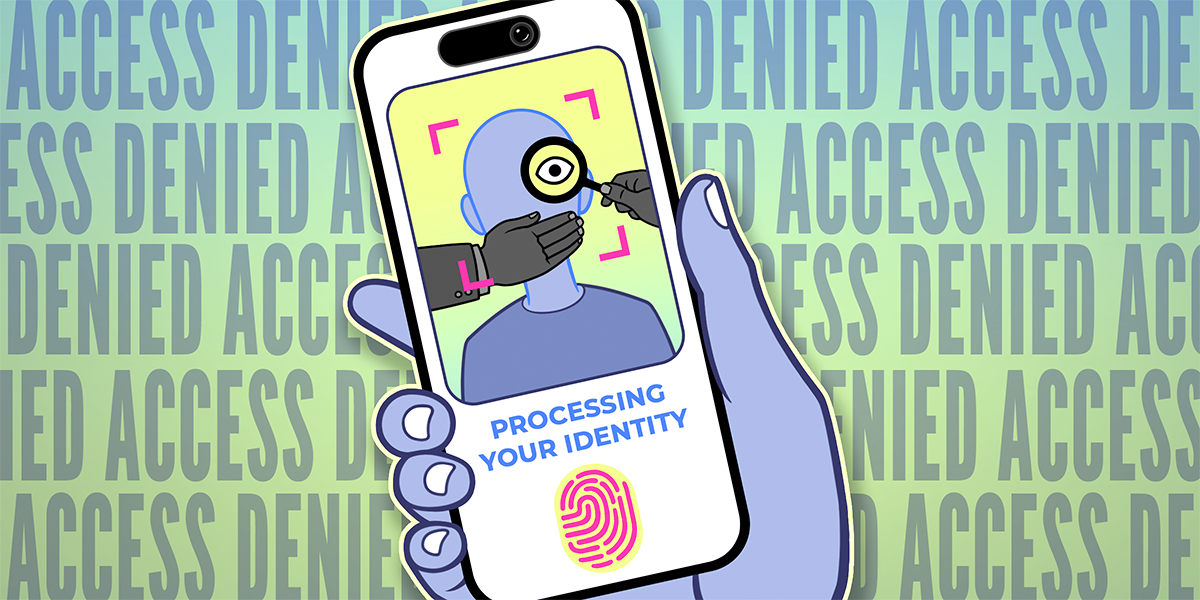
The GUARD Act, introduced by Republican Senator Josh Hawley with bipartisan support, passed the Senate Judiciary Committee 22-0 on April 29. The bill would ban minors from using AI companion chatbots, require all US users to verify their age before accessing any covered AI system, and allow criminal prosecution of AI companies for harm to children. Following criticism that the original bill would apply to nearly every AI tool, lawmakers narrowed it to focus on 'AI companions': conversational systems designed to simulate emotional or interpersonal relationships. EFF and civil liberties groups argue the narrowed bill still requires all adults to submit government ID or facial scans to use AI chatbots. Simultaneously, Australia has implemented a nationwide social media ban for under-16s that took effect in December, Ireland's Communications Minister threatened EU non-cooperation if Brussels doesn't back a similar ban, and the UK government is consulting on its own under-16 social media restrictions.
The protection-of-children frame is doing political work that would be impossible to do if the actual policy were described honestly: mandatory national ID verification for access to AI tools.
The Hidden Bet
Age verification can protect children from AI harms without creating new risks
Every age verification system creates a database of who accesses what kind of content and when. That database is a target. Australia's under-16 ban required platforms to implement enforcement mechanisms that, by necessity, mean platforms must now infer or collect age data for all users. The 'protection' creates the surveillance infrastructure that enables future abuse.
The harms from AI companions are primarily about age, and restricting minors' access addresses them
The grooming and suicide cases Hawley cited involve manipulation of emotionally vulnerable people. Emotional vulnerability does not have an age cutoff at 18. An 18-year-old in crisis is not protected by a law that applies only to under-18s. The bill's age framing may be more politically durable than the actual harm framing, but it addresses a subset of the problem while building infrastructure with no age limit.
The 22-0 committee vote reflects genuine bipartisan consensus on the policy
Committee votes on bills framed as child protection rarely reflect genuine policy alignment. Voting against 'protecting children from AI' is politically costly regardless of the actual policy mechanism. The floor vote and any subsequent compromise with the House will reveal whether the consensus holds when the implementation details become unavoidable.
The Real Disagreement
The genuine fork is between treating AI companions and social media as products that must be regulated for safety before they reach users, like drugs or cars, versus treating them as speech platforms where government access requirements constitute censorship by authentication barrier. The safety-product frame would apply the GUARD Act's age verification to everything. The speech-platform frame makes age verification unconstitutional under prior First Amendment doctrine. Courts have repeatedly struck down age verification requirements for online content on First Amendment grounds. The GUARD Act's narrowing to AI companions rather than general internet access is an attempt to thread that needle. Whether it threads it, or whether it simply creates a new generation of constitutional litigation while the underlying infrastructure gets built regardless, is the actual question.
What No One Is Saying
Meta's AI-powered age detection tools, announced the same week as the GUARD Act's committee vote, would partially satisfy the bill's requirements while expanding Meta's biometric data collection to every user who wants to access any AI feature. The bill and Meta's compliance mechanism were effectively designed for each other.
Who Pays
Adults with privacy concerns or marginalized identities
On the day the bill takes effect if signed into law
The requirement to submit government ID or facial scans to access AI chatbots forces disclosure of identity to platforms and potentially to government. For people who use AI tools to discuss health conditions, legal situations, or sexual identity, the ID requirement eliminates the anonymous access that made those conversations possible.
Minors in households without engaged parents
Immediately upon any ban taking effect
Age verification bans shift enforcement to parents, who vary enormously in their technical capacity and engagement. Children of less-resourced or less-engaged parents face either effective exclusion from tools their peers use, or unsupervised workarounds including VPNs and false identities, with no institutional support.
Open-source and small AI developers
Within the compliance window following any enacted law
Complying with age verification requirements requires significant legal and technical infrastructure. Large platforms like Meta, Google, and OpenAI already have user authentication systems. Smaller developers and open-source projects do not, and the compliance cost would either kill them or force them to use the large platforms' authentication rails, further centralizing control.
Scenarios
Constitutional reversal
GUARD Act passes, is signed, and faces immediate First Amendment challenge. Federal courts strike down the age verification requirement for AI tools as they did for websites in the 1990s and 2000s. The infrastructure gets built anyway during litigation.
Signal A federal district court issues a preliminary injunction against the age verification provision within 60 days of enactment
Platform-mediated enforcement
Major AI companies (OpenAI, Anthropic, Google, Meta) implement their own AI-based age detection as the de facto compliance mechanism, satisfying congressional intent without a government ID database. The EFF's concerns about biometric data are realized but through corporate rather than government collection.
Signal Hawley publicly endorses Meta's AI age detection announcement as a model for GUARD Act compliance before the floor vote
Global standards cascade
Australia, UK, Ireland, and the US all implement variants of the same age verification requirement. Platforms build one global compliance system that applies the most restrictive standard everywhere, effectively extending child-protection ID requirements to adult users globally.
Signal The EU endorses Ireland's proposed social media ban framework, creating legal harmonization pressure across jurisdictions
What Would Change This
If evidence emerged that the AI companion cases Hawley cited involved adults rather than minors, or that age verification did not reduce harm in the Australian social media ban's first six months, the protective framing would face serious empirical challenge. Alternatively, if a major AI company announced a privacy-preserving age verification system that satisfied the GUARD Act without creating an ID database, the civil liberties objection would lose its primary target.
Related
The Bill That Bans Kids from AI Chatbots Would Card Everyone Else
powerNorway, Indonesia, and Australia Are Banning Social Media for Under-16s. Meta Is Threatening to Leave States That Try It.
powerIndonesia Just Made Roblox Scan Children's Faces. No Other Country Has Done This.
powerTurkey Bans Social Media for Under-15s. The Global Wave Just Got Bigger.