Israel Seizes Gaza Aid Flotilla 1,000 Miles From Gaza
What happened
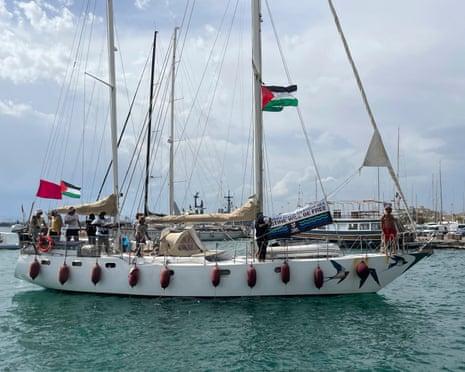
Israeli naval forces intercepted approximately 22 aid boats from the Global Sumud Flotilla in international waters near the Greek island of Crete on April 30, roughly 1,000 kilometers from Gaza. Around 175 activists were detained, with crew members sending SOS calls and reporting communication jamming by Israeli drones. The flotilla had departed Spain on April 15 carrying humanitarian aid for Gaza. This is the second major flotilla interception, following an October 2025 seizure north of Egypt. Polymarket prices the flotilla entering Israeli waters at 42% and actually reaching Gaza at just 2.25%.
Israel just asserted the right to board and seize civilian vessels in Greek waters, and every EU government's silence on that claim is as consequential as the interception itself.
Prediction Markets
Prices as of 2026-04-30 — the analysis was written against these odds
The Hidden Bet
This is primarily a humanitarian story about aid access to Gaza.
The flotilla has roughly 1,000 km of open sea to cross, meaning Israel conducted a maritime enforcement operation deep inside what the EU considers European waters. The legal question is not whether Israel can blockade Gaza: it is whether Israel can treat international waters off Greece as a conflict zone. That question is about maritime law and EU sovereignty, not Gaza aid.
The 42% Polymarket probability that the flotilla enters Israeli waters reflects a meaningful chance of success.
The market was set before today's interception. Given that Israel has now demonstrated willingness to intercept over 1,000 km out, the remaining boats face an adversary that has moved the enforcement perimeter far beyond any previous precedent. The 2.25% probability of actually reaching Gaza is probably the more honest number.
The detentions will be resolved diplomatically without lasting consequences.
Among the 175 detained are activists from EU member states. Greece, whose territorial waters border the interception zone, has legal obligations under UNCLOS. If Athens does not formally protest the seizure of vessels in its region of interest, it effectively ratifies Israel's maritime enforcement doctrine. That precedent has implications extending well beyond Gaza.
The Real Disagreement
The core tension is between Israel's stated right to enforce a blockade as a security measure and the right of states to transit international waters with civilian vessels. Both have legal standing under different bodies of international law. The question is which framework applies when a warring party acts 1,000 km from its declared conflict zone. I would lean toward the UNCLOS framework, which does not permit warring parties to extend enforcement operations into waters outside the conflict theater without host-state consent. But I would give up the pragmatic counterargument: that international law on maritime blockades is genuinely contested, and Israel's position has not been formally adjudicated by any court with jurisdiction.
What No One Is Saying
Greece is the country with the clearest legal standing to object to this operation, and it has said nothing publicly. A NATO ally's navy conducted seizures in the maritime zone of another NATO ally without notification. If that is acceptable because the target was a Gaza aid flotilla, it will be acceptable for the next operation with a different rationale.
Who Pays
Detained activists from EU states
Immediate; days to weeks
Held by Israeli authorities, legal proceedings under Israeli military jurisdiction, consular access uncertain
Greece and EU maritime sovereignty
Slow-burn over years
Precedent established that third-party naval enforcement can operate in European waters without EU protest, weakening the EU's ability to object in future cases with less sympathetic parties
Gaza civilians awaiting aid
Immediate
Flotilla mission ended; 22 boats seized; aid delivery not possible through this channel; alternative land routes remain closed
Scenarios
Quiet Release
Israel releases detained activists within 72 hours after consular pressure, no formal legal challenge filed by EU states, flotilla organizers announce future missions, Israel retains its enforcement precedent unchallenged
Signal Greek and EU foreign ministers issue only pro-forma statements; no formal protest under UNCLOS Article 110
Legal Escalation
Greece or a coalition of EU states files a formal protest through the International Tribunal for the Law of the Sea, challenging Israel's right to conduct enforcement operations in international waters off Crete
Signal Greek prime minister's office specifically cites UNCLOS in its response within 48 hours
Flotilla Martyr Effect
Detained activists become a cause, fundraising surges, a larger flotilla is organized with formal flag-state backing from EU members, forcing Israel to either back down or escalate dramatically
Signal A flotilla vessel requests formal flag-state protection from an EU government; European navy deployed as escort
What Would Change This
If Greece files a formal legal protest, this changes from a humanitarian story into a test of maritime law that Israel cannot ignore without making explicit its claim to extra-territorial enforcement rights. That would force a legal confrontation the US would have to take a position on.
Related
Hamas Will Not Disarm. The Peace Plan Requires It to Disarm.
conflictHamas Will Not Disarm Until Israel Withdraws. Israel Will Not Withdraw Until Hamas Disarms. The Ceasefire Is Expiring.
powerThe Democratic Party Has Broken on Israel. The Leadership Is Pretending Otherwise.
powerOrban Lost His Election. His Israel Policy Did Not.