A Federal Judge Ordered Trump to Unblock Wind and Solar. The Permits Were Being Delayed While Fossil Fuels Carried On.
What happened
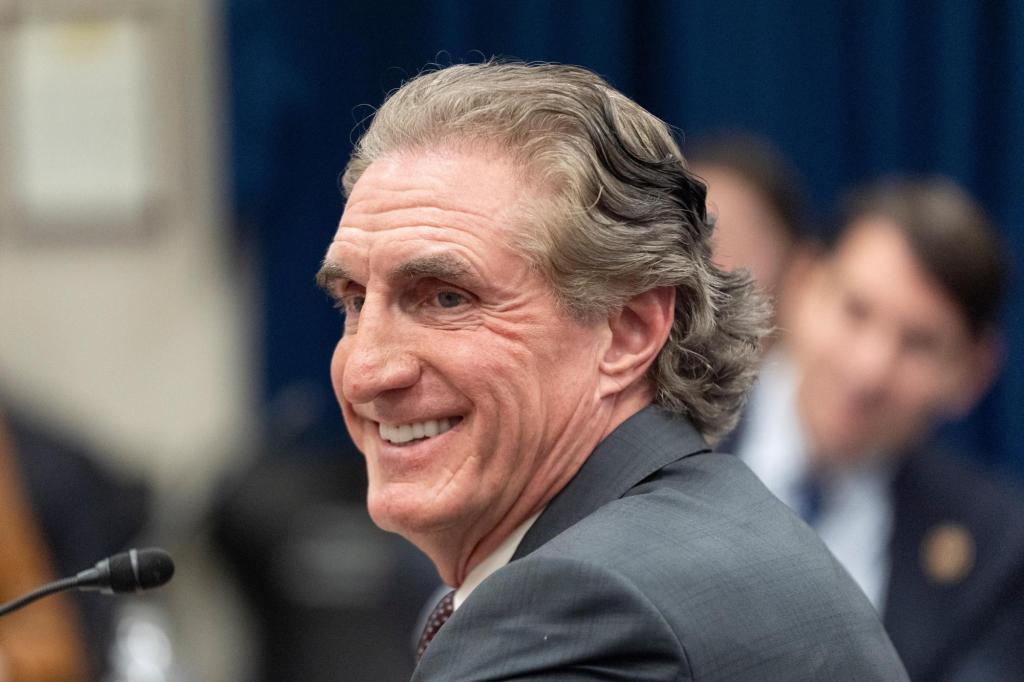
Chief U.S. District Judge Denise Casper in Boston issued a preliminary injunction on Tuesday blocking the Trump administration from enforcing five permitting policies that wind and solar industry groups said had created a discriminatory second-class status for their technologies. The policies, administered by the Interior Department under Secretary Doug Burgum and the Army Corps of Engineers, required additional reviews and approvals for wind and solar projects that did not apply to oil, gas, and other energy development on federal lands or where federal permits are required. Nine advocacy groups and trade associations sued in December 2025, arguing the policies had halted renewable energy development nationwide. The court found the plaintiffs were likely to succeed in showing the policies violated the Administrative Procedure Act.
The administration did not ban renewable energy. It imposed a second permitting track that made approvals slower, more expensive, and less predictable than for fossil fuels. The court found this discrimination is likely illegal, but the damage to pipeline economics has already happened.
The Hidden Bet
Restoring permitting parity is sufficient to restart the blocked projects
The permitting delays compounded a financing problem. Developers who missed construction timelines needed to renegotiate power purchase agreements. Some projects lost investors who needed certainty to close financing. A court order restoring legal parity does not restore the economic conditions the delays destroyed.
The administration will comply with the injunction without further action
The pattern from other rulings is slow compliance, new administrative actions pursuing similar objectives through different legal mechanisms, and appeals. Interior Secretary Burgum has been the most aggressive cabinet officer on energy permitting. The injunction restrains five specific policies, not the underlying intent.
Biden-era IRA tax credits will still be available for projects that come back online
The IRA production tax credits and investment tax credits have sunset provisions that the current Congress has shown no interest in extending. Projects delayed by six to eighteen months may return to permitting just as the financing advantage from those credits begins to expire.
The Real Disagreement
The structural tension is between two defensible readings of energy policy neutrality. One position: the government should not pick energy technology winners, so permitting should be equally permissive or equally restrictive across all sources. The other: fossil fuels have a century of permitting infrastructure built around them, and treating identical approval processes as neutral ignores that structural advantage. You cannot design a truly technology-neutral system without accounting for the baseline advantage incumbents already hold. The court sided with the second reading, but the administration's position was not incoherent.
What No One Is Saying
The administration's approach was procedurally clever: it did not ban renewable energy, which would have been immediately enjoined. It created friction through administrative process, which is much harder to litigate and took over a year to reach this injunction. The real lesson is that process can be weaponized as effectively as prohibition. The next version of this strategy will be designed to survive APA scrutiny.
Who Pays
Developers with projects in the 22 GW blocked pipeline
Losses already incurred; partial recovery possible over the next 18 months
Every month of delay is a sunk cost: carrying costs on development capital, extended permitting fees, renegotiated contractor schedules, and potential loss of interconnection queue positions. A court order reverses the legal barrier but not the economic losses.
Ratepayers in northeastern and southeastern US markets
This summer's peak demand season; ongoing through 2027
Renew Northeast and the Southern Renewable Energy Association represent markets where new wind and solar were scheduled to come online at lower marginal cost than existing gas peakers. Delayed clean energy means continued dependence on higher-cost dispatch during peak demand.
Clean energy workers in manufacturing and construction
Already happened; some recovery possible if pipeline restarts
Project cancellations and delays in the blocked pipeline directly reduced employment in wind turbine installation, solar panel racking, and associated supply chain manufacturing. Some of those jobs went to other jurisdictions.
Scenarios
Injunction holds, permitting restarts
The administration does not successfully appeal the preliminary injunction. The five blocked policies are suspended. Projects that had viable financing restart permitting, though some face timeline resets. The 22 GW pipeline partially recovers, though some projects with expiring tax credit eligibility are permanently uneconomic.
Signal Department of Interior issues formal guidance to field offices to resume processing wind and solar permits under standard procedures within 30 days.
Administration creates replacement barriers
Interior develops new review requirements for renewable projects that are substantively similar but structured differently to survive APA challenge, perhaps under environmental review or national security grounds. The permitting queue refills with new forms of delay.
Signal Any new Interior guidance creating additional review steps for wind or solar after the injunction takes effect.
Congress acts, IRA credits extended
The Big Beautiful Bill or separate energy legislation extends IRA tax credits and codifies permitting reform for renewables. The executive branch's ability to discriminate by technology is constrained by statute.
Signal Energy title in the Big Beautiful Bill includes explicit renewable permitting timeline requirements.
What Would Change This
If the administration successfully argued on appeal that the five policies served legitimate environmental or grid reliability purposes unrelated to energy source discrimination, the injunction could be lifted. The court would need to find a plausible non-pretextual rationale. Given that the policies explicitly targeted wind and solar while exempting fossil fuel development, that is a high bar.