The Fourth Time Is Not the Charm
What happened
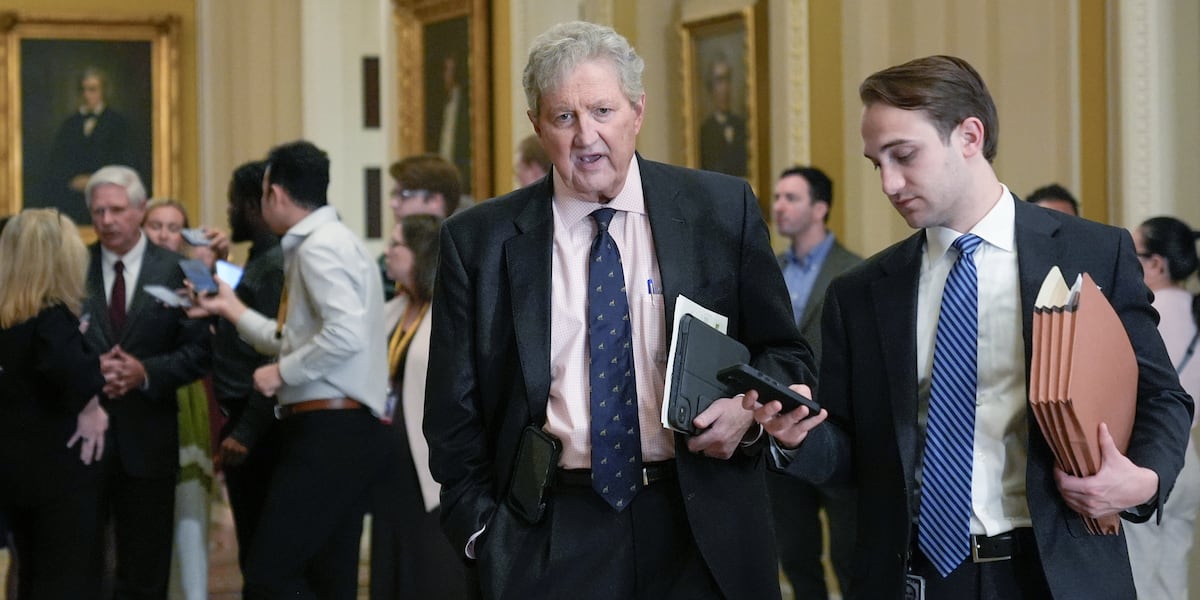
The Senate voted 52-47 on April 15, 2026, to block the fourth Democratic war powers resolution since the US-Iran war began on February 28. Only Republican Rand Paul crossed party lines to support the resolution; Democrat John Fetterman voted with Republicans to block it. The war has now been running for 47 days. Under the War Powers Act of 1973, the president must seek congressional authorization or withdraw forces within 60 days of commencing hostilities, a deadline that falls around May 1. The House was expected to hold its own war powers vote this week, with the outcome considered uncertain.
Senate Republicans are not defending the war. They are deferring to it, and those are not the same thing. The private conversations happening between Collins, Murkowski, Hawley, and Tillis reveal a caucus that has mentally checked out of unconditional support while refusing to pay the political cost of saying so publicly.
Prediction Markets
Prices as of 2026-04-16 — the analysis was written against these odds
The Hidden Bet
The War Powers Act deadline is a binding legal constraint on the president
Every president since 1973 has disputed the Act's constitutionality when it applied to their own military actions. The Trump administration has already offered multiple legal theories for the war's legality. The 60-day deadline is a political deadline enforced by congressional will, not a self-executing legal mechanism. If Congress won't vote to enforce it, it doesn't enforce itself.
Republican senators who want the war to end will eventually vote to end it
Collins, Murkowski, Tillis, and Hawley are all signaling discomfort. None of them voted for the resolution. The incentive structure is clear: they can talk about limits and timelines without paying the political cost of a defection vote. The war funding request, when it arrives, is the only vote that actually constrains them, and it hasn't arrived yet.
A ceasefire will remove the war powers pressure before the 60-day deadline
The April 22 ceasefire extension is still being negotiated, with significant gaps remaining. If the ceasefire collapses, the US resumes active hostilities past the 60-day mark without congressional authorization. That is the scenario that transforms this from a recurring symbolic vote into a genuine constitutional crisis.
The Real Disagreement
The real fork is between two positions that cannot both be right: that presidential discretion in active war is necessary and legitimate, and that Congress's constitutional authority to declare war means anything at all. If the War Powers Act can be defied four times in a row without consequence, the constitution's war power separation is not a check, it is a suggestion. The side I lean toward is that the Act's enforcement mechanism has always been political, not legal, and the current Republican caucus has demonstrated that political enforcement will not happen regardless of what individual senators say privately. The thing you give up in that position is the comforting fiction that constitutional structure is self-sustaining without legislative will to back it up.
What No One Is Saying
The war funding request has not arrived. Congress is still waiting. Senate Majority Leader Thune explicitly flagged this as the real 'inflection point.' What no one is saying out loud is that the funding request is the administration's trump card: once they ask for war funding, Republicans will have to vote yes or pull the financial plug on an active war. At that point, the war powers resolution becomes irrelevant. The administration has been slow-walking the funding request precisely to avoid giving Congress a moment of genuine leverage before the ceasefire dynamics are clearer.
Who Pays
American military personnel in theater
Now, for as long as the war continues without authorization
Operations continue without statutory congressional authorization, creating legal ambiguity about rules of engagement and limiting the legal protections afforded to troops in a congressionally authorized conflict
Democrats who opposed the war from the start
November 2026 midterms
Each failed vote strengthens the narrative that congressional Democrats are ineffectual; Kaine's framing that 'at least we'll make clear who owns this war' is explicitly a 2026 midterm strategy, not a policy outcome
Lisa Murkowski and the four wavering Republicans
Their next election cycle
The longer they signal discomfort without acting, the harder it becomes to claim meaningful independence; their constituents facing gas prices and war cost spillover will remember the private skepticism that produced public complicity
Scenarios
Clock runs out, war continues
No ceasefire extension. War powers deadline passes May 1 without congressional action. Administration claims a 30-day extension is automatic for national security reasons. Senate Republicans accept this framing. The constitutional question is kicked forward another month.
Signal White House invokes 30-day extension language in an official statement before April 30
Ceasefire holds, war powers pressure releases
A two-week or longer ceasefire is formalized before April 22. Active hostilities pause. Democrats continue their weekly war powers votes but they lose urgency. Republicans defer authorization until a peace deal or renewed conflict forces the question.
Signal Ceasefire extension announced before April 22; Senate war powers vote scheduled for the following week is canceled
House passes its own resolution
The House, where the outcome is described as uncertain, passes its own war powers resolution. Both chambers have now passed resolutions. The House version and Senate version must be identical for a bill to reach Trump's desk; they won't be, so it still goes nowhere. But the optics shift: Congress has now voted in both chambers to end the war, and the president has vetoed the will of the legislature.
Signal House floor vote this week passes with a small margin; Senate leadership immediately dismisses taking it up
What Would Change This
If a ceasefire collapses after the 60-day deadline and Trump orders renewed strikes without authorization, the constitutional argument moves from theoretical to live. At that point, Murkowski's authorization draft becomes urgent rather than precautionary. The scenario that breaks Republican discipline is not a vote: it is resumed hostilities after the legal window has closed.
Related
The Senate Has Voted Seven Times to End the Iran War and Lost Every Time. That Is Now the Point.
powerTrump Declares the Ceasefire He Controls Has Ended the War He Started
powerTrump Declared the Iran War 'Terminated.' US Forces Are Still There.
powerTrump Has Until Thursday to Get Congress to Authorize His War