The Court That Was Defied Just Got Its Inquiry Killed
What happened
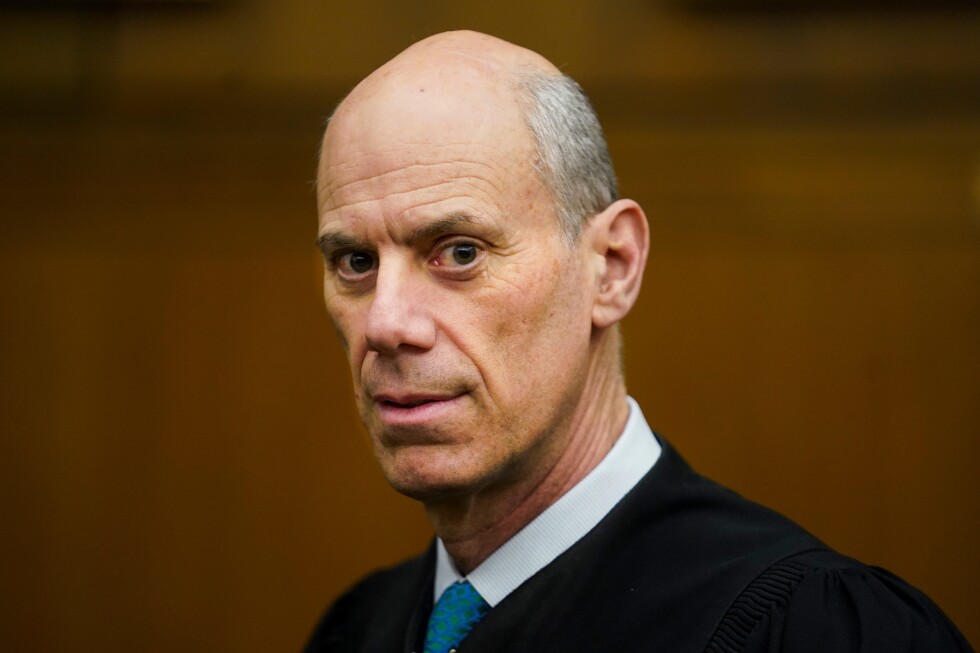
On March 15, 2025, two planes carrying Venezuelan migrants departed the US for El Salvador while a federal court order requiring their return was in effect. District Judge James Boasberg, chief judge of DC's federal court, has spent over a year trying to determine who defied his order and whether criminal contempt charges are warranted. On April 14, 2026, a DC Circuit panel ruled 2-1 that Boasberg's original order was insufficiently clear and specific to support criminal contempt, and ordered him to end the investigation. Both majority judges, Neomi Rao and Justin Walker, were Trump appointees; the dissent was written by Biden appointee J. Michelle Childs.
The Trump administration defied a court order, watched the DC Circuit kill the investigation twice, and now faces zero legal consequences. The judiciary's contempt power just failed its most direct test.
The Hidden Bet
Courts can hold the executive branch accountable through contempt proceedings
Contempt requires a clear and specific order, and this ruling establishes that courts must anticipate and explicitly prohibit every evasion in advance. A president who wants to defy a court simply has to find any ambiguity in the order's language.
The DC Circuit is a neutral arbiter of executive power
Both judges who ended this investigation were appointed by the president who would have faced criminal contempt exposure. This is not an accusation of bad faith; it is a structural problem that the ruling itself illustrates.
The original deportations were a one-time test of court authority
If defiance carries no consequence, it is not a test. It is a precedent. Any future administration, facing any court order it finds inconvenient, now has a playbook: act, claim ambiguity, wait for an appeals court staffed with appointees.
The Real Disagreement
The real fork is whether this ruling is legally correct or politically convenient. Rao's majority argues the original order was genuinely too vague to support criminal contempt. The dissent argues she rewrote the history of a clear order. Both cannot be right. The market for legal interpretation is not neutral here: the judges who ruled the order was too vague were appointed by the man who would have been exposed if the order was found clear. If you had to lean toward one reading, the dissent is harder to dismiss because the record shows Boasberg explicitly ordered planes turned around in real time on the phone with government lawyers. Giving up that reading means accepting that 'turn around the planes' is not clear enough.
What No One Is Saying
If the executive can comply or not comply with court orders based on whether friendly appellate judges later find them 'sufficiently clear,' then the courts are not a check on executive power at all. They are a delay mechanism that sophisticated administrations can exhaust.
Who Pays
Venezuelan migrants deported to El Salvador in defiance of the order
Already paid; accountability probe that was their only potential remedy just ended
They were transferred to Salvadoran detention with no legal recourse and no accountability for the officials who ordered the transfer
Future litigants seeking court protection against executive action
Immediate; precedent is set
Courts now face a higher burden to write orders that preemptively close every loophole, which is practically impossible in real-time emergency situations
Federal district judges
Ongoing
Their authority to enforce orders through contempt depends on appellate courts backing them; this is the second time in this case alone that the DC Circuit has declined to do so
Scenarios
End of the line
Boasberg complies, the investigation closes, no one faces contempt charges, and the deportation flights become the permanent precedent for executive defiance of court orders.
Signal Boasberg files no further challenge; no Supreme Court cert petition from Boasberg's side within 60 days
SCOTUS intervention
Boasberg or the ACLU seeks Supreme Court review of whether the DC Circuit correctly interpreted the specificity requirement for criminal contempt. SCOTUS takes the case and re-establishes or further erodes contempt power.
Signal A cert petition filed in the next 90 days, or a per curiam order from SCOTUS staying the DC Circuit ruling
Congress acts
Democratic leadership uses this ruling as evidence that courts cannot independently enforce their orders and pushes legislation requiring specific penalties for executive officials who defy named court orders.
Signal A bill introduced within 30 days by Senate Democrats with the specific contempt ruling cited in the text
What Would Change This
A Supreme Court ruling that Boasberg's order was, in fact, sufficiently clear and specific would reverse the precedent. Alternatively, a credible leak or document proving that senior administration officials explicitly discussed defying the order despite knowing about it would change the political calculus even if the legal case is closed.