OpenAI's Robin Hood Pitch
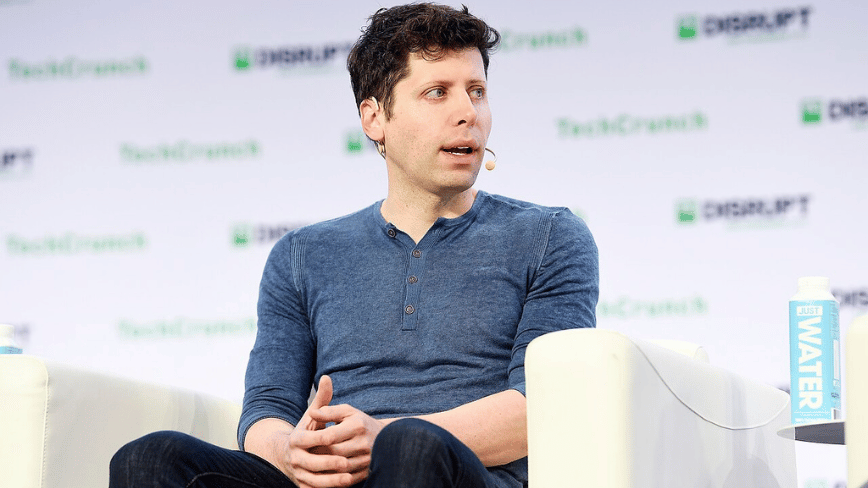
What happened
OpenAI published a 13-page policy paper in April 2026 proposing a 'robot tax' on AI-driven automation, a public wealth fund to redistribute gains, a four-day workweek, and guaranteed income floors for displaced workers. CEO Sam Altman presented it as a framework for ensuring AI benefits are shared broadly. The paper came weeks after OpenAI's $300 billion valuation and amid growing public concern about AI job displacement.
OpenAI is proposing that the government tax and redistribute AI's gains because OpenAI cannot be trusted to do it voluntarily. which means the policy document is an implicit admission that the company's profit motive and society's interests are not aligned.
Prediction Markets
Prices as of 2026-04-08 — the analysis was written against these odds
The Hidden Bet
The robot tax proposal is a genuine commitment to redistributive policy.
OpenAI published this ahead of congressional AI legislation debates. A company proposing its own regulation is almost always trying to shape that regulation toward the lightest possible version. The 13 pages set the frame for what 'responsible AI policy' looks like. a frame OpenAI controls. Congress will negotiate against OpenAI's starting point, not its own.
A public wealth fund seeded by AI companies can replicate the Alaska Permanent Fund model at national scale.
Alaska's fund works because oil is a finite, extractable, publicly owned resource. AI companies' contributions to a wealth fund would be voluntary or lightly taxed profits from a service. not resource extraction. There is no mechanism forcing OpenAI to seed the fund at the scale needed to provide meaningful citizen dividends, and the document is silent on enforcement.
The 4-day workweek pilot would neutrally test whether AI gains translate to worker leisure.
Companies experimenting with compressed workweeks typically do so when they want to retain talent or demonstrate efficiency. not when they are shedding workers. If AI automates significant portions of labor, the workers most likely to benefit from a 4-day week are professional-class employees whose roles are partially augmented, not the warehouse and service workers whose jobs are fully eliminated.
The Real Disagreement
The real tension is whether letting the companies most responsible for labor disruption design the safety net creates a better outcome than democratic governments designing it against corporate resistance. Altman's argument is that AI companies understand the disruption better than legislators and will propose more targeted solutions. The counter is that any safety net designed by the disruptor will be calibrated to minimize the disruptor's liability. I'd lean toward the counter: the history of industries designing their own safety regulations. tobacco, pharmaceuticals, financial services. is not encouraging. What you give up by taking that position: the practical reality that Congress currently lacks the technical literacy to write effective AI labor policy without industry input.
What No One Is Saying
OpenAI is approaching this from a position of weakness, not strength. The company faces antitrust scrutiny, ongoing litigation, a governance crisis, and mounting evidence that its competitors. particularly Chinese AI labs and open-source alternatives. are closing the gap faster than expected. The policy document serves multiple purposes simultaneously: it signals to regulators that OpenAI is a responsible actor, provides a defense against the accusation that it ignores social consequences, and subtly positions OpenAI as the indispensable partner for any AI governance framework. A company with no competitive threats doesn't need to be this proactively accommodating.
Who Pays
Clerical, administrative, and entry-level knowledge workers
Already underway; displacement accelerates as models become more capable over the next 18-36 months
The jobs OpenAI's models already automate most effectively. data entry, paralegal work, basic coding, customer support. belong to workers who will not see 4-day workweeks or wealth fund dividends large enough to replace their salaries during the transition
Social Security and Medicaid recipients
Medium-term; visible within 5-10 years if payroll tax revenues decline significantly
The document explicitly acknowledges that AI could 'hollow out the wage-and-payroll revenue that currently funds Social Security'. the robot tax is designed to prevent collapse of these programs, which means the proposal's urgency is real and the timeline is compressed
Non-US workers displaced by AI in countries without the political capacity to implement wealth funds or robot taxes
Concurrent with US displacement; no remediation timeline exists
The policy blueprint is explicitly American-centric. The same economic disruption hits call center workers in the Philippines, software developers in India, and manufacturing workers in Southeast Asia. with no equivalent safety net proposal
Scenarios
Lobbying Success
Congress passes AI legislation broadly aligned with OpenAI's blueprint. light robot taxes, voluntary wealth fund contributions, workweek pilot incentives. OpenAI shapes the regulation it proposed, limiting the redistribution mechanisms. Labor displacement proceeds faster than the safety net fills in.
Signal Watch for congressional AI bills that cite OpenAI's document as a framework and include no mandatory contribution floors for the wealth fund.
Backlash Regulation
A visible job displacement event. a large employer publicly credits AI with eliminating a significant workforce. creates political pressure for legislation that goes far beyond OpenAI's proposals. Congress passes automation taxes with mandatory floors, creating real friction for OpenAI's cost structure.
Signal Watch for the first Fortune 500 earnings call where a company explicitly credits AI for a large-scale headcount reduction. that becomes the political trigger event.
Document Ignored
Congressional AI legislation focuses on safety and liability rather than labor redistribution. OpenAI's wealth fund and robot tax proposals are treated as interesting ideas that don't make it into law. The status quo continues with minimal redistribution infrastructure.
Signal Watch whether any congressional AI bill introduced in the next six months references OpenAI's document at all. silence means the lobbying strategy failed to set the frame.
What Would Change This
If OpenAI committed to unilaterally seeding the wealth fund before legislation passes. putting a floor of, say, $500 million into it from OpenAI's own balance sheet. that would be evidence the company genuinely believes in the proposal rather than using it as regulatory pre-emption. The absence of any voluntary first-mover action is the tell.